
Archive report | The project-launch review took place on 17 March 2024; the original Chair-site archive is dated 29 March. This article records the research launch and discussion, with roles reported as they stood in 2024.
Meeting and cross-sector collaboration
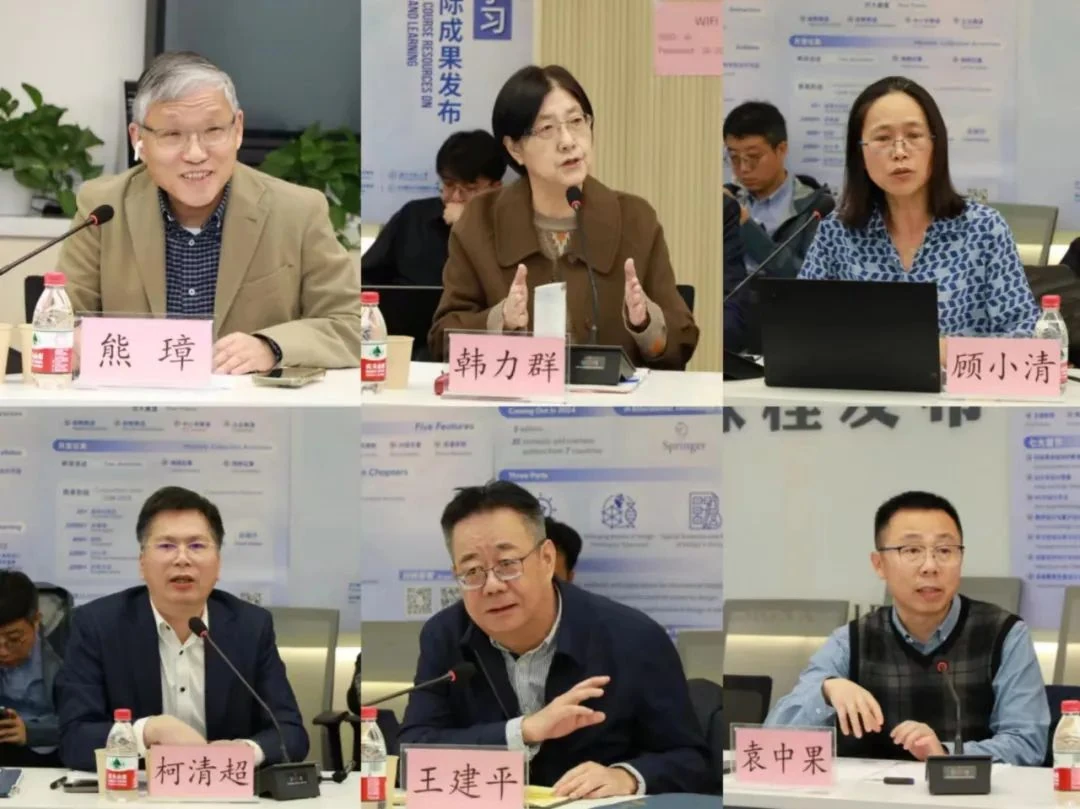
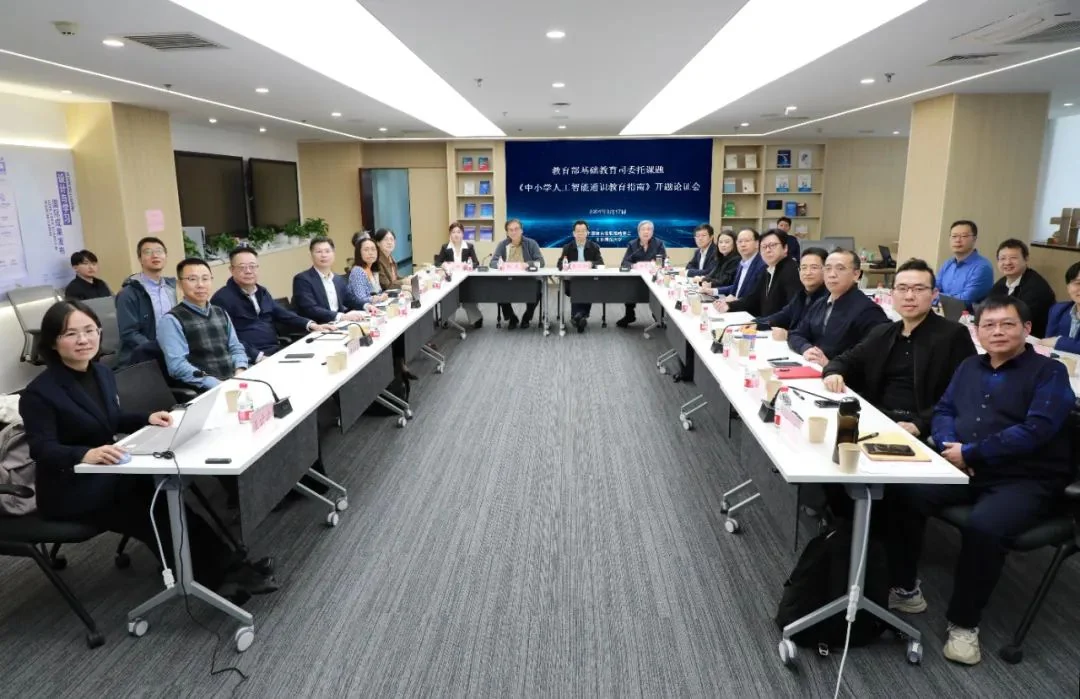
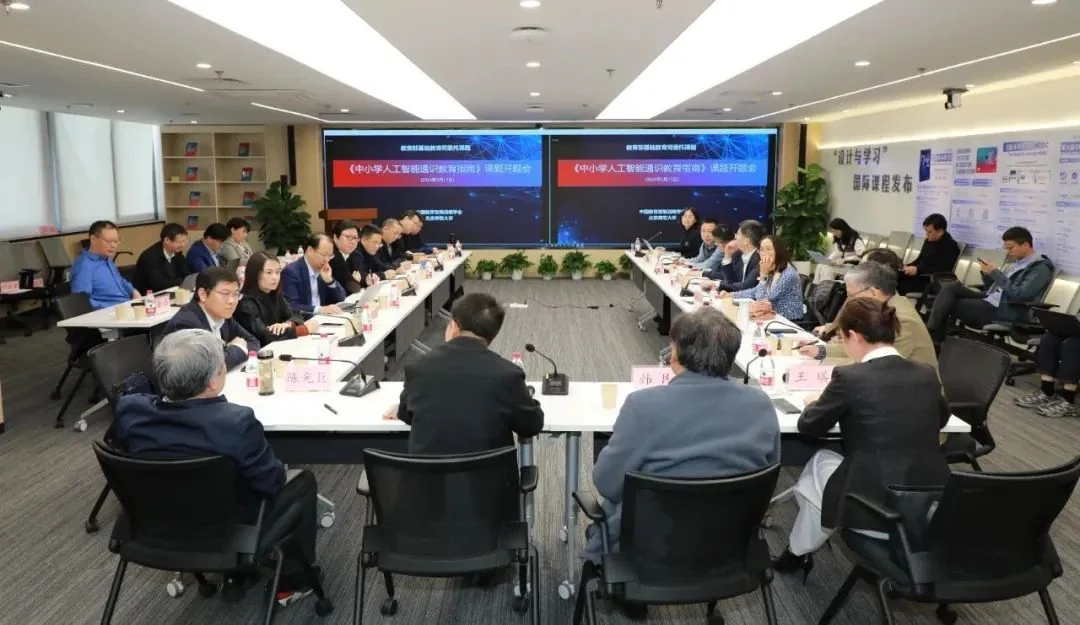
On the morning of 17 March 2024, Beijing Normal University (BNU) hosted the launch review for the research project Guidelines on General AI Education in Primary and Secondary Schools. The Ministry of Education’s Department of Basic Education had commissioned the Chinese Society of Educational Development Strategy (CSEDS) to undertake it. Han Min, the Society’s Executive Vice-President and Secretary-General, attended and addressed the meeting. Forty project-team members and representatives of pilot areas and schools participated. Professor Chen Guangju, a former BNU Vice-President, chaired the meeting. The six review experts are listed below.
- Panel chair: Xiong Zhang, Professor, University of International Business and Economics.
- Han Liqun, Professor, Beijing Technology and Business University.
- Gu Xiaoqing, Professor, East China Normal University.
- Ke Qingchao, Professor, South China Normal University.
- Wang Jianping, former Deputy Director of the Department of Education of Ningxia Hui Autonomous Region.
- Yuan Zhongguo, senior teacher at professorial grade, the High School Affiliated to Renmin University of China.

Han Min said that the project faced a tight schedule and substantial work. It required collaboration across AI research, digital education, frontline teaching and local education administrations, alongside attention to AI ethics. He described general AI education in schools as a major strategic research issue and hoped the team would pursue it carefully and develop an approach reflecting China’s circumstances.
Research organization and implementation
Project leader Wang Qi, Secretary-General of CSEDS’s Professional Committee on Educational and Teaching Innovation, explained the project’s background, significance, purpose and organization. She said the committee would use its strengths in innovation, bring together AI experts and classroom teachers, and integrate industry, universities and research to advance the work. It would pool expertise to develop the guidelines collaboratively and aim to complete the task to a high standard.
Research priorities and preliminary work
Professor Ronghuai Huang of BNU, the project’s chief expert, stressed the importance of a clear research remit and an appreciation of both urgency and rigour. He called for detailed study of six key dimensions, with the aim of producing broadly applicable implementation guidance supporting education, teaching and management.
- Educational objectives
- Teaching content
- Teaching methods
- Teacher requirements
- Implementation pathways
- Assessment models
Project-team representative Wang Huanhuan reported on the literature review and field investigation, outlining research content, approach, schedule and expected outputs.
Review panel’s recommendations
The review panel endorsed the project’s significance and launch proposal and offered detailed guidance. It regarded the direction as socially important, the plan as comprehensive, rich and detailed, and the methods as scientifically grounded. It also recommended deeper investigation of existing school AI education and AI-enabled education, providing more detailed evidence for the proposed guidelines.
Pilot-area and school contributions
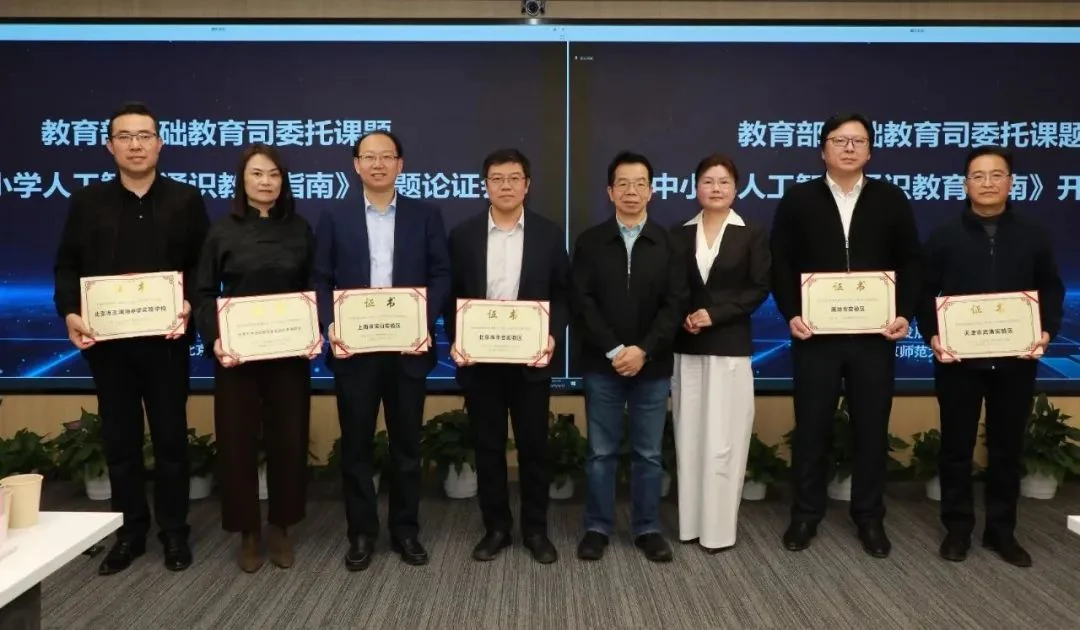
The following seven representatives of participating pilot areas and schools described local conditions and discussed their joint involvement in the research.
- Yang Xiaohui, Director of Beijing’s Fengtai District Education Commission.
- Zhi Mei, Dean of the Fengtai Branch of Beijing Institute of Education.
- Zhang Zhi, Director of Baoshan District Education Bureau, Shanghai.
- Xu Hongwei, Director of Langfang Municipal Education Bureau, Hebei.
- Li Wenhe, representative of Wuqing District, Tianjin; identified as a director in the original.
- Ma Yaoguo, Principal of Beijing Yuyuantan High School.
- Wang Ge, representative of the secondary school affiliated to Beijing International Studies University.
Closing remarks
In closing, Chen Guangju said that the six experts’ guidance had provided clear directions and valuable suggestions for the next stage. Undertaking the Department of Basic Education’s commission was a significant achievement deserving congratulations, as well as a weighty responsibility. He urged the team and pilot-area leaders to understand its significance, organize the research carefully in accordance with requirements, and produce high-quality work contributing to general AI education in schools.
Sources and editorial notes
Original credit: Chinese Society of Educational Development Strategy. This edition was checked against the independent full-text repost by BNU’s Smart Learning Institute. The Society’s abbreviated name, the missing reference to the launch-review meeting in the opening sentence and a duplicated reporting phrase have been normalized while retaining the historical information and research scope.
- The event and SLI source are dated 17 March 2024; the original Chair page is dated 29 March. Both are retained. This is a historical report on a research launch, not a statement that the proposed output had already become an issued policy. SLI full report
- The Society’s website gives its official name as Chinese Society of Educational Development Strategy, abbreviated CSEDS. The original naming is standardized accordingly and its source credit retained. Society’s official profile; SLI full report
- Roles and institutional descriptions are archived as reported in 2024. Li Wenhe’s title remains director; the original does not specify the particular institution. All five images retain their complete contents, with captions confined to the meeting context and source information. SLI full report
Continue with the 2024 China-region AI Olympiad seminar, research on educational robots’ applications and governance, and AI and STEM learning resources.
Original link: https://aiedchair.bnu.edu.cn/news-6479-en/