
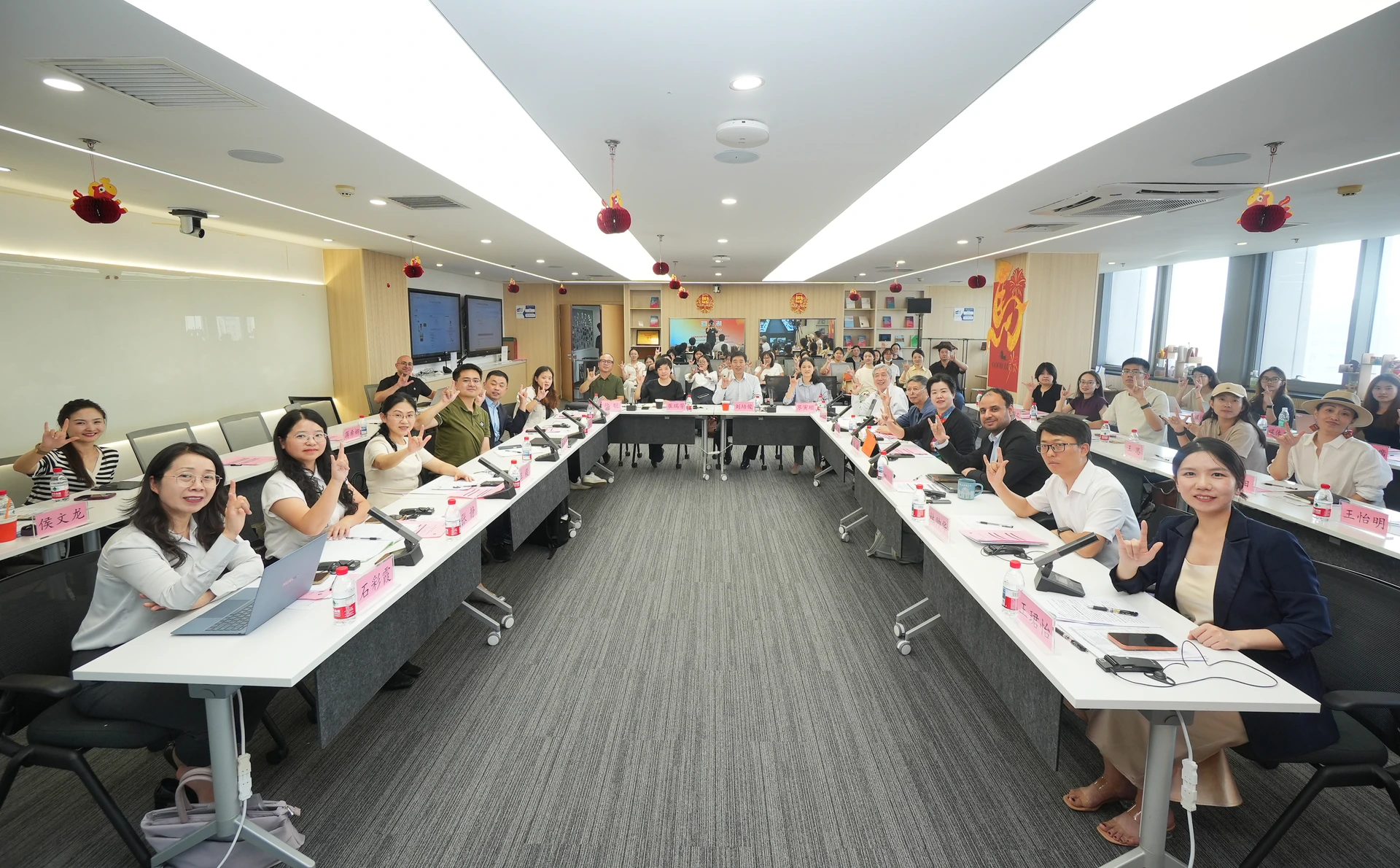
On 23 September 2026, the International Day of Sign Languages, Beijing Normal University (BNU) and the Arab League Educational, Cultural and Scientific Organization (ALECSO) jointly held “One World, One Love”, a thematic event and seminar on AI and special education in Beijing. Focusing on sign languages, disability and digital technology, the event brought together representatives from China, the Arab region and Southeast Asia, alongside international organisations, academia, disability communities and the technology sector.
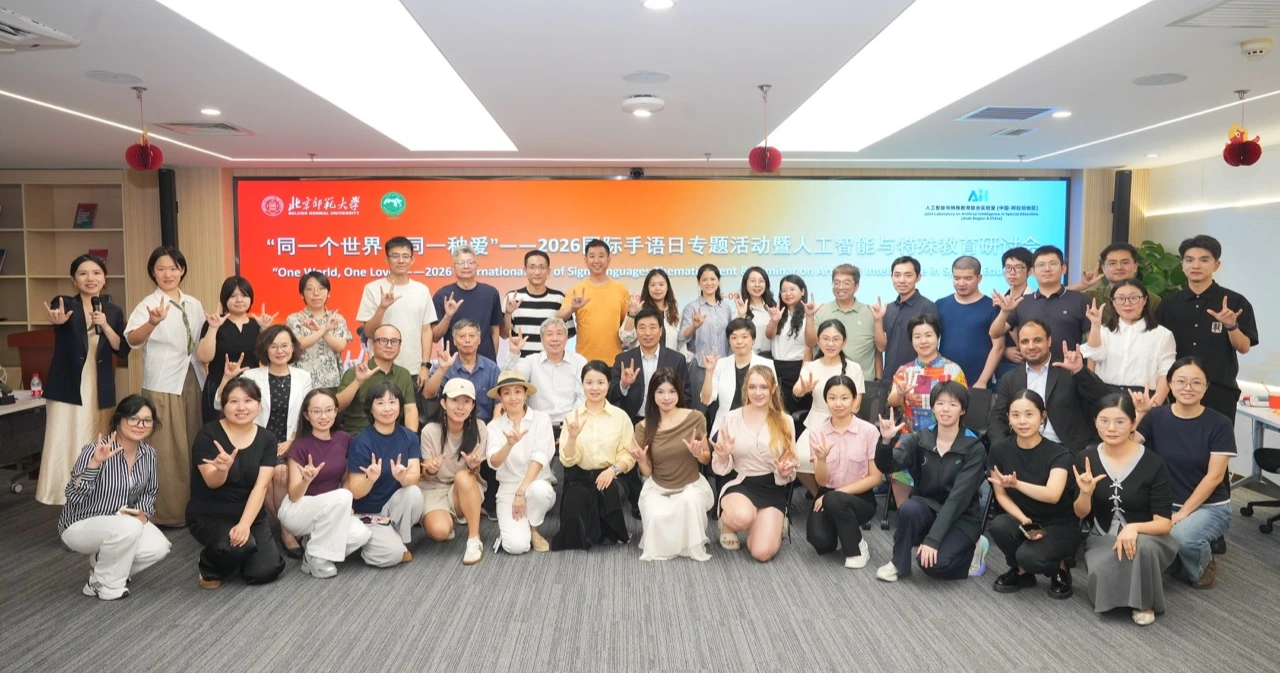
AI, big data and virtual reality are creating new opportunities for the digital development of special education. China’s Fifteenth Five-Year Action Plan for the Development and Improvement of Special Education calls for digital development, greater use of new technologies, international cooperation and shared digital resources. Through project demonstrations, a global sign-language video, expert presentations and a roundtable, participants explored opportunities and challenges in communication, inclusive education, digital accessibility and disability rights, seeking more inclusive, accessible and human-centred digital education.
Inclusive design for equal participation
In his opening remarks, Liu Peijun, Director-General of the Ministry of Education’s Department of Language Information Management, outlined continuing work on sign-language policies, research and standards. He said modern technologies, including AI, would support more professional, standardised, digital and international approaches to sign languages and strengthen their contribution to special education and social participation.
ALECSO Director-General Mohamed Ould Amar said digital technology and AI can help remove barriers when inclusive design and human needs come first. Technology should serve people. ALECSO is ready to work with countries and international partners towards more inclusive societies, equitable education and human-centred technologies.
Shahbaz Khan, Director and Representative of UNESCO’s Regional Office for East Asia, said AI and digital technologies can expand education, communication and participation for persons with disabilities, while poor inclusive design can create new barriers. Digital transformation should include sign languages and deaf and hard-of-hearing communities, follow principles of inclusion, ethics and accessibility, and involve persons with disabilities in technology development and governance.
Cui Ruifang, Deputy Director-General of the Education and Employment Department of the China Disabled Persons’ Federation, described work on laws and policies, sign-language research and standards, and talent development. She called for deeper integration of AI with sign languages and special education, stronger digital sign-language services and international cooperation, so technology better supports learning, daily life and development.
Zheng Xuan, Professor in BNU’s Faculty of Education, emphasised that sign languages carry the languages and cultures of deaf communities and that digital technologies can bridge barriers to equal participation. Digital transformation in special education concerns not only innovation but also everyone’s right to be heard, understood and accepted with dignity, guided by “Nothing about us without us”.
Chen Guangju, Deputy Director of BNU’s Smart Learning Institute, attended and delivered remarks. The event was chaired by Wang Junyi, Senior Programme Manager at the Institute’s Centre for International Exchange and Cooperation.
A joint laboratory and cross-regional cooperation
BNU Associate Professor Ahmed Tlili and postdoctoral researcher Chen Ying introduced the background, objectives and practical work of the Joint Laboratory for AI and Special Education (China–Arab Region). Established by BNU and ALECSO, it brings together universities, international organisations and other partners to connect China and the Arab region while opening cooperation globally in research, knowledge sharing, technological innovation and practice.
According to the presentations, the laboratory has developed several practical initiatives in special education and digital accessibility. Demonstrations included an AI-assisted gamified intervention platform for autistic children, an AI sign-language learning platform, a wearable silent-speech interaction system, multilingual learning-resource generation tools, EEG feedback and attention-training systems, and motion-sensing interaction for deaf and hard-of-hearing children. These cover communication, social-emotional development and personalised learning. The work has also attracted attention within the United Nations global dialogue on AI governance.
The laboratory released the “One World, One Love” global sign-language video. Launched three months earlier, the call received 35 submissions from 12 countries and brought together seven sign languages: six used in the Arab region and Chinese Sign Language. Mohamed Jemni, Director of ALECSO’s ICT Department, presented the video, describing it as a way to connect countries, cultures and communities through shared human feeling and inclusion.
Expert dialogue and practical demonstrations
Keynote speakers were Deng Meng, Director of the Institute of Inclusive Education at East China Normal University; Ashraf Othman, Head of ICT Accessibility Innovation and Research at Qatar’s Mada Center; and Mohamed Ali Khenissi, a researcher at the University of Tunis’s LaTICE laboratory. They stressed that sign-language innovation and safety for deaf people concern both technology and rights. Human–machine collaboration, expert review and community participation should help technology support practical action, understanding and protection in critical situations.
A roundtable brought together nine participants from universities, special and inclusive schools, technology companies and disability communities. They discussed policy research, educational practice, product development, user experience and rights protection. Wang Yan, Professor at BNU’s School of Special Education in the Faculty of Education, moderated the discussion.
The exhibition and experience session featured six initiatives: a body-sensing interactive system for deaf and hard-of-hearing children, brain–computer interface technology, wearable vibration-based speech collection, a game system for autistic children, a Braille translation platform and the “Sign Language Microcosm” project. They address hearing, autism and visual-access needs across interaction, neurotechnology, speech capture, games, Braille and sign-language learning.
Using the International Day of Sign Languages as a platform, the event connected regions and disciplines to advance accessible, inclusive digital design through cooperation among disability communities, academia and industry. BNU will continue to apply its academic and technological strengths to policy and practice in support of quality, inclusive and accessible special education.
The event was co-organised by BNU’s UNESCO Chair on AI in Education, its School of Special Education in the Faculty of Education, and the Joint Laboratory for AI and Special Education (China–Arab Region). Support came from UNESCO’s Regional Office for East Asia, the Southeast Asian Ministers of Education Organization Regional Centre for Special Educational Needs (SEAMEO SEN), and the National Research Center for Sign Language and Braille.
Original link: https://aiedchair.bnu.edu.cn/news-sign-languages-ai-special-education-2026-en/