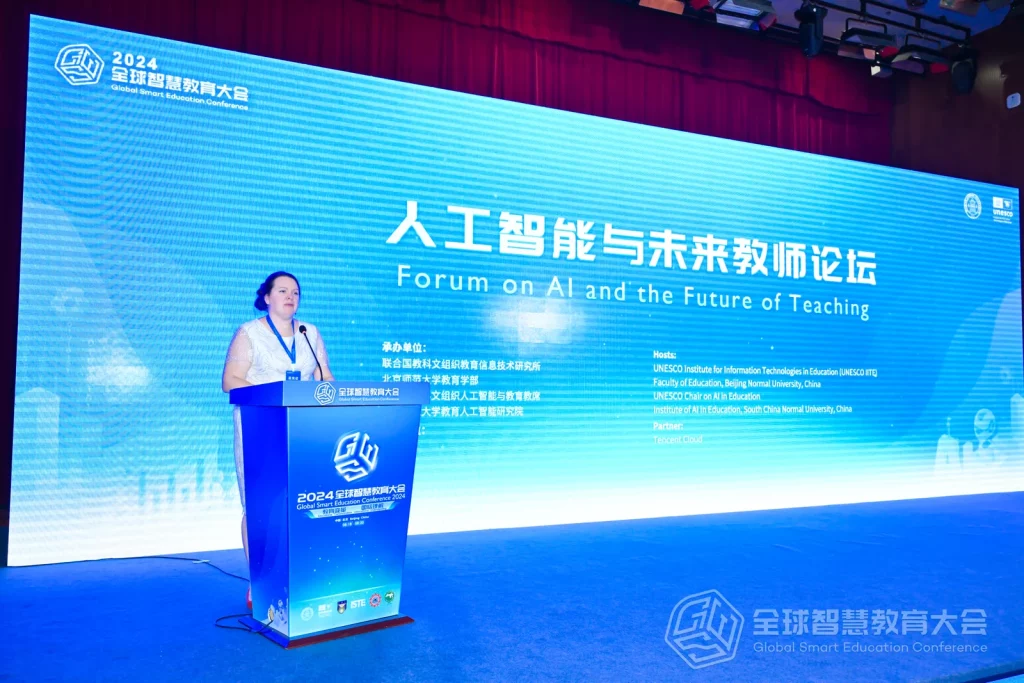
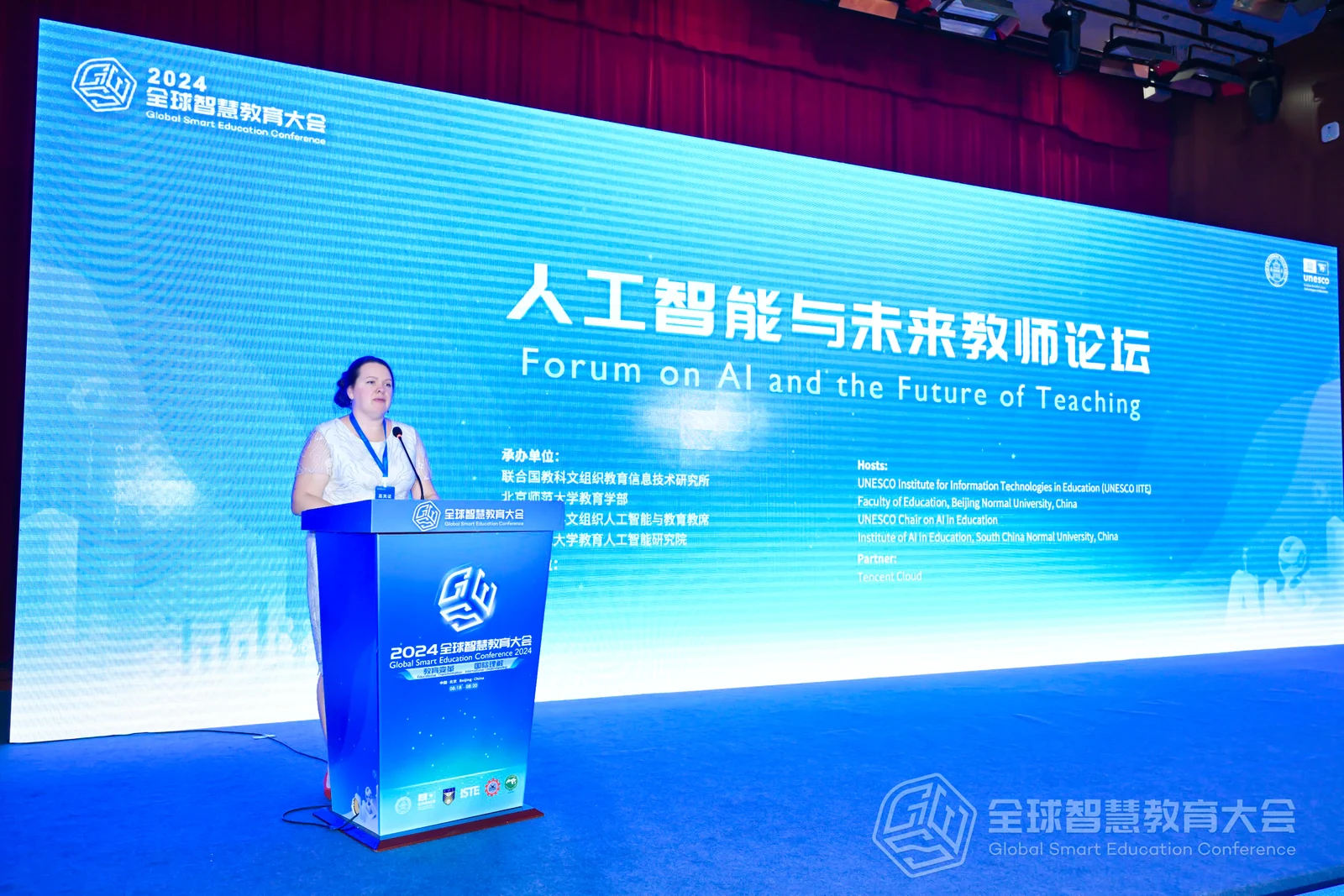
The Forum on AI and the Future of Teaching took place at Beijing Normal University on the morning of 20 August 2024. Co-hosts were UNESCO Institute for Information Technologies in Education (UNESCO IITE), BNU’s Faculty of Education, the UNESCO Chair on Artificial Intelligence in Education, and South China Normal University’s Institute of Artificial Intelligence Education, with support from Tencent Cloud. Representatives from China, France, Russia, Bangladesh, Malaysia, Ethiopia, Morocco and elsewhere discussed AI and teacher development.
Opening remarks: teachers and educational change
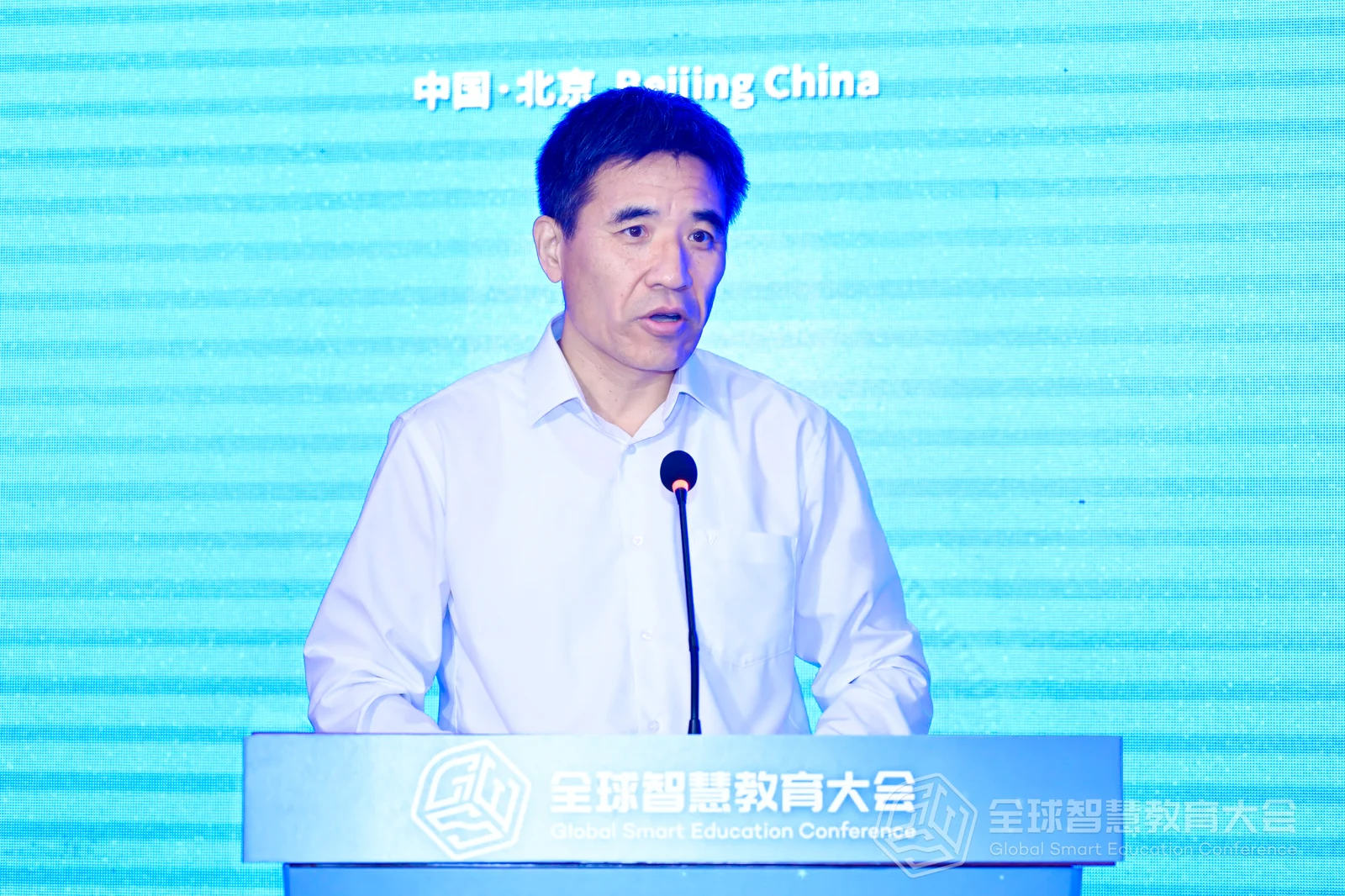
Lu Xuzhong, a Level I Division Rank Official in the teacher-development division of China’s Department of Teacher Education, emphasized teachers’ willingness and ability to use AI effectively. In his view, AI would not replace teachers, but their command and thoughtful use of it would affect how they respond to educational change.
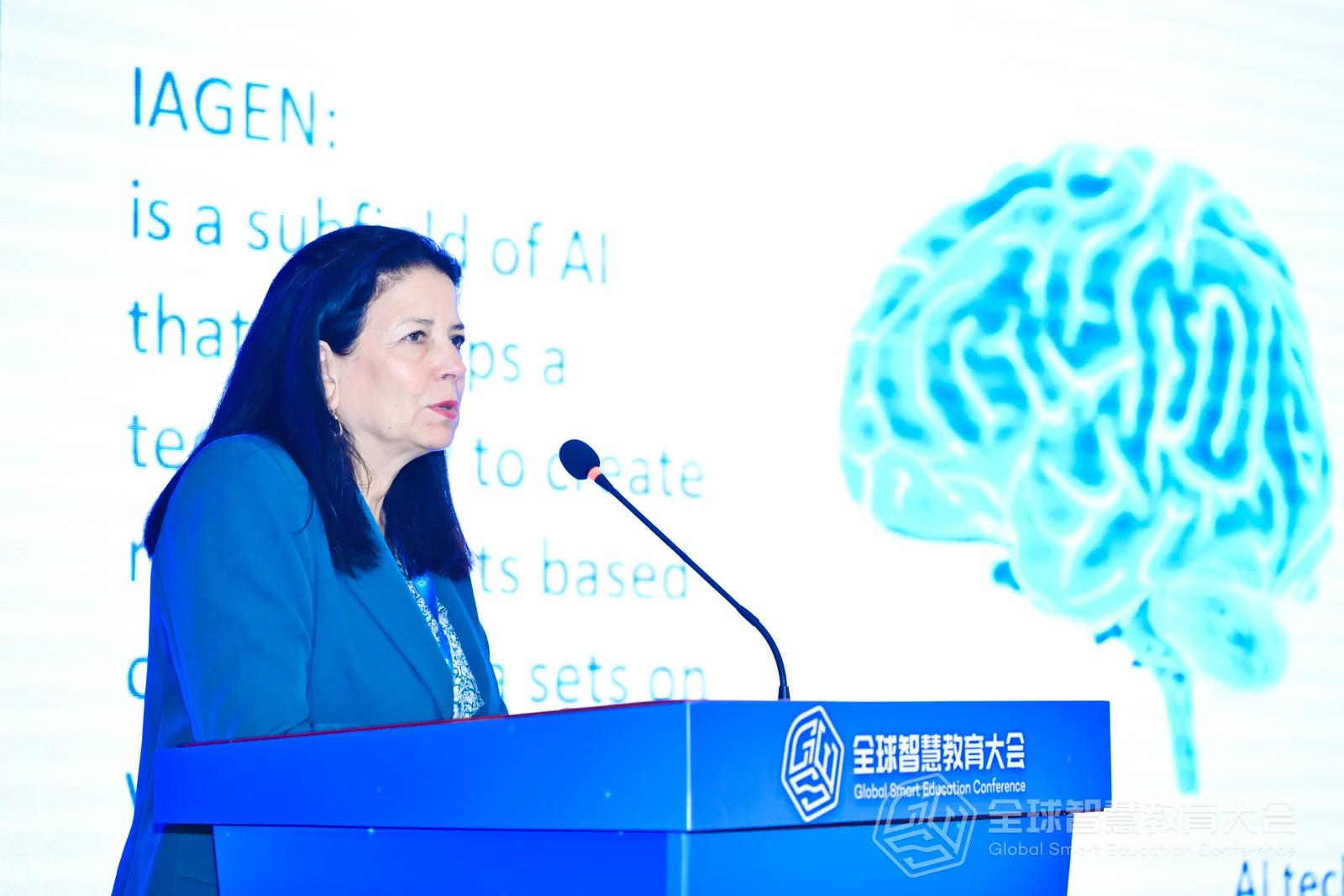
Amal El Fallah Seghrouchni, Executive President of the Moroccan International Center for Artificial Intelligence, described generative AI’s impact on educational environments. She discussed combining AI and neuroscience to explore brain activity and experiences of post-traumatic stress disorder (PTSD). This records a research direction proposed by the speaker, rather than confirmation of diagnostic capabilities.
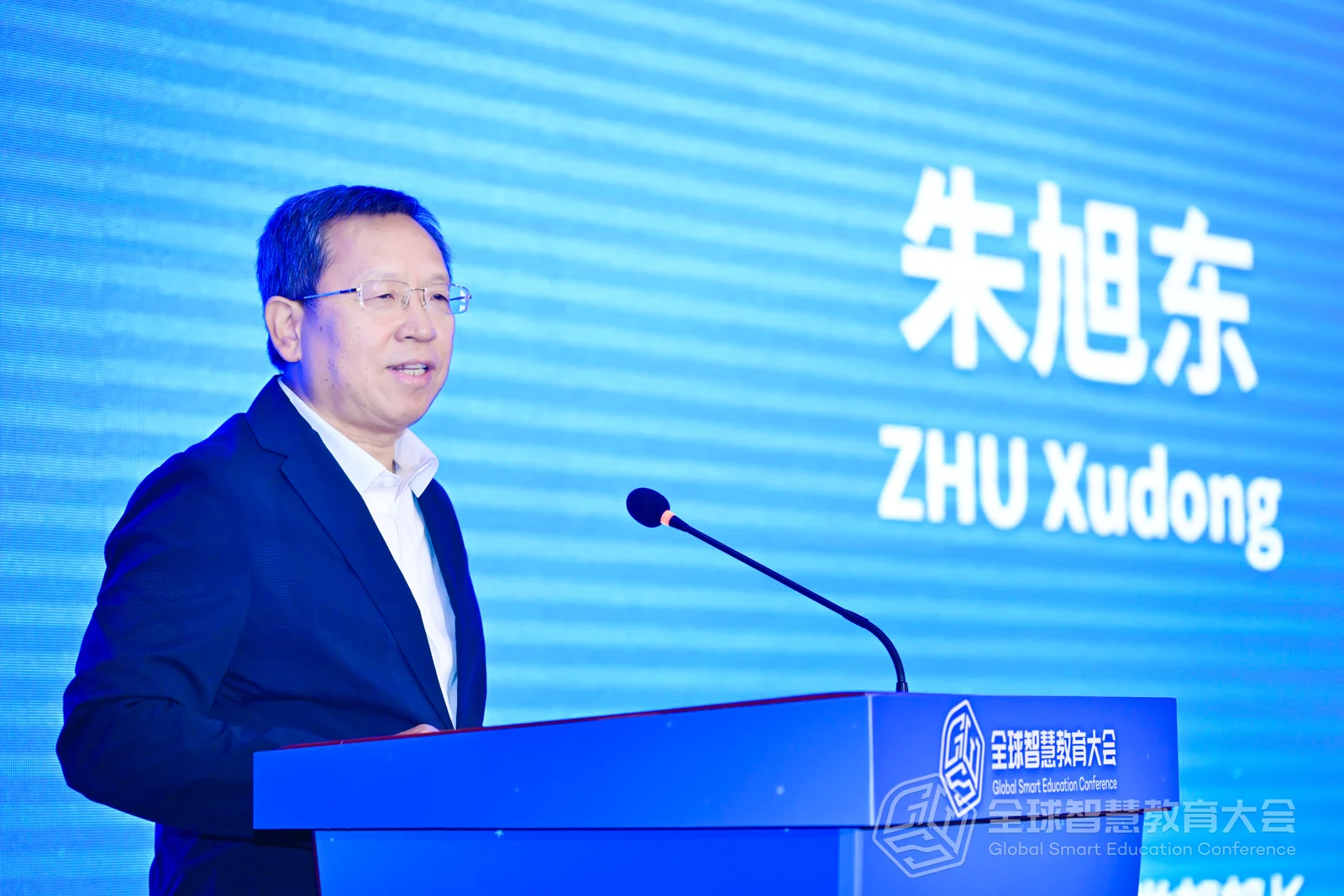
Zhu Xudong, Dean of BNU’s Faculty of Education, advocated integrating AI across educational disciplines. He argued that exploration should extend beyond educational technology into initial teacher preparation and teacher education, responding to systemic changes in professional preparation and educational research.
Keynotes: classrooms, capacity and initial teacher preparation
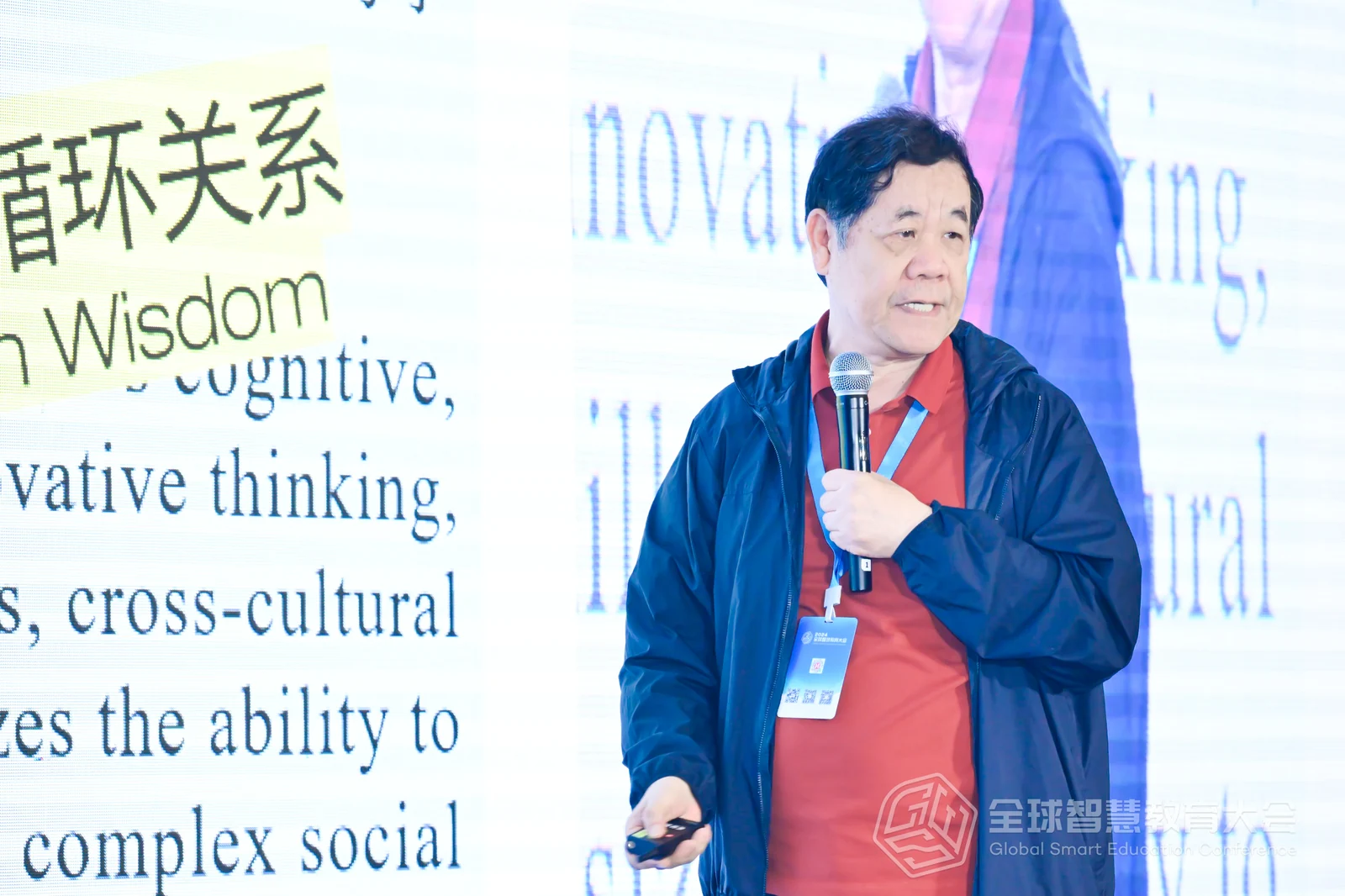
Zhu Zhiting, Tenured Professor at East China Normal University, presented a framework for data- and intelligence-enabled fusion education. Educational wisdom, he argued, combines data wisdom, teaching wisdom and cultural wisdom in a mutually reinforcing, “multiplicative” relationship. His proposed intelligence-integrated classroom brings AI into teaching to support multidirectional interaction between teachers and students.
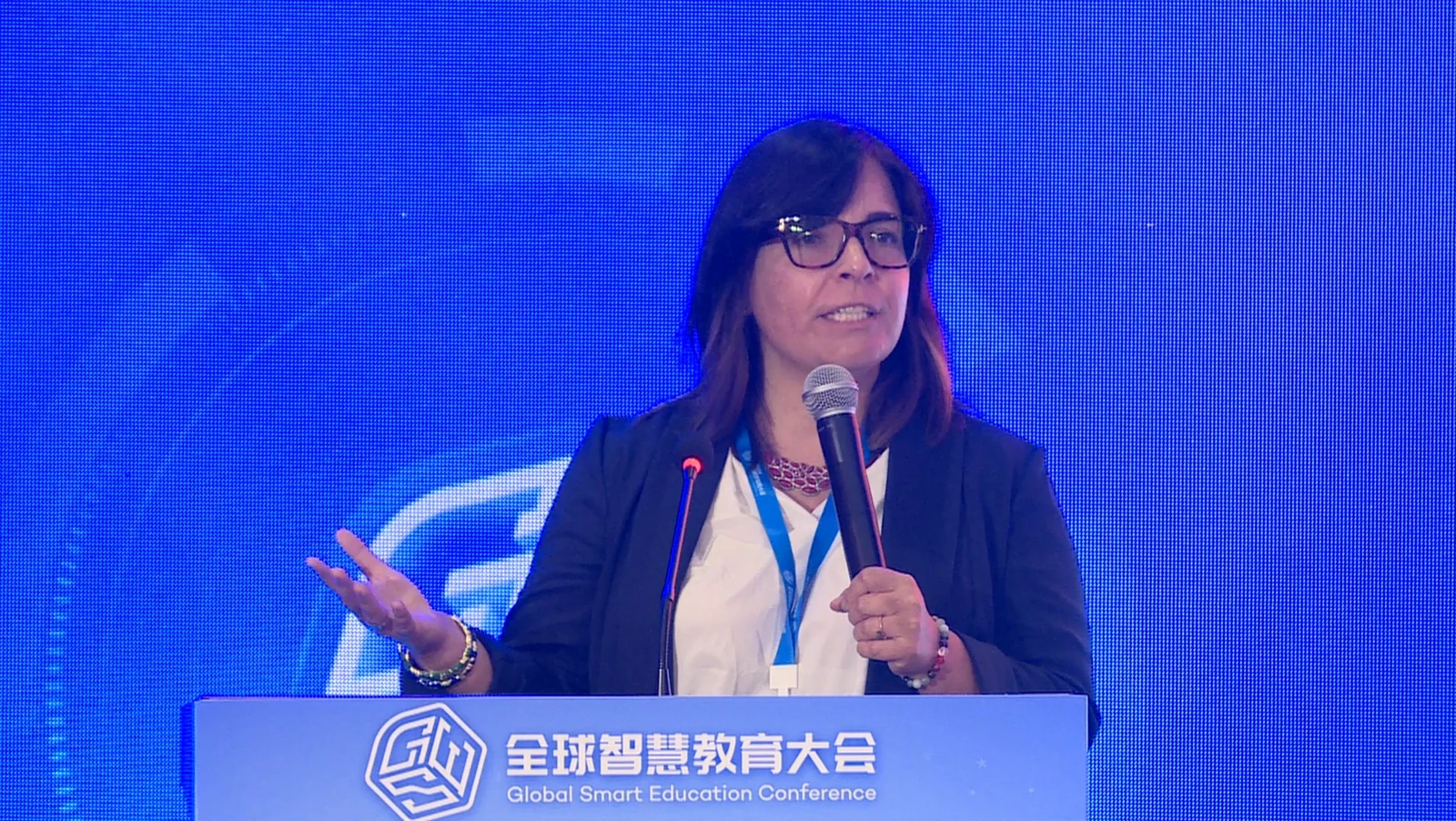
Margarida Romero of Université Côte d’Azur, France, discussed supporting teachers to design AI-enhanced learning activities. International cooperation and interdisciplinary projects could develop technological literacy among students and teachers. Technology was both a teaching tool and a means of supporting innovative, personalized learning, with enhanced teacher capabilities and human–AI complementarity as the goal.
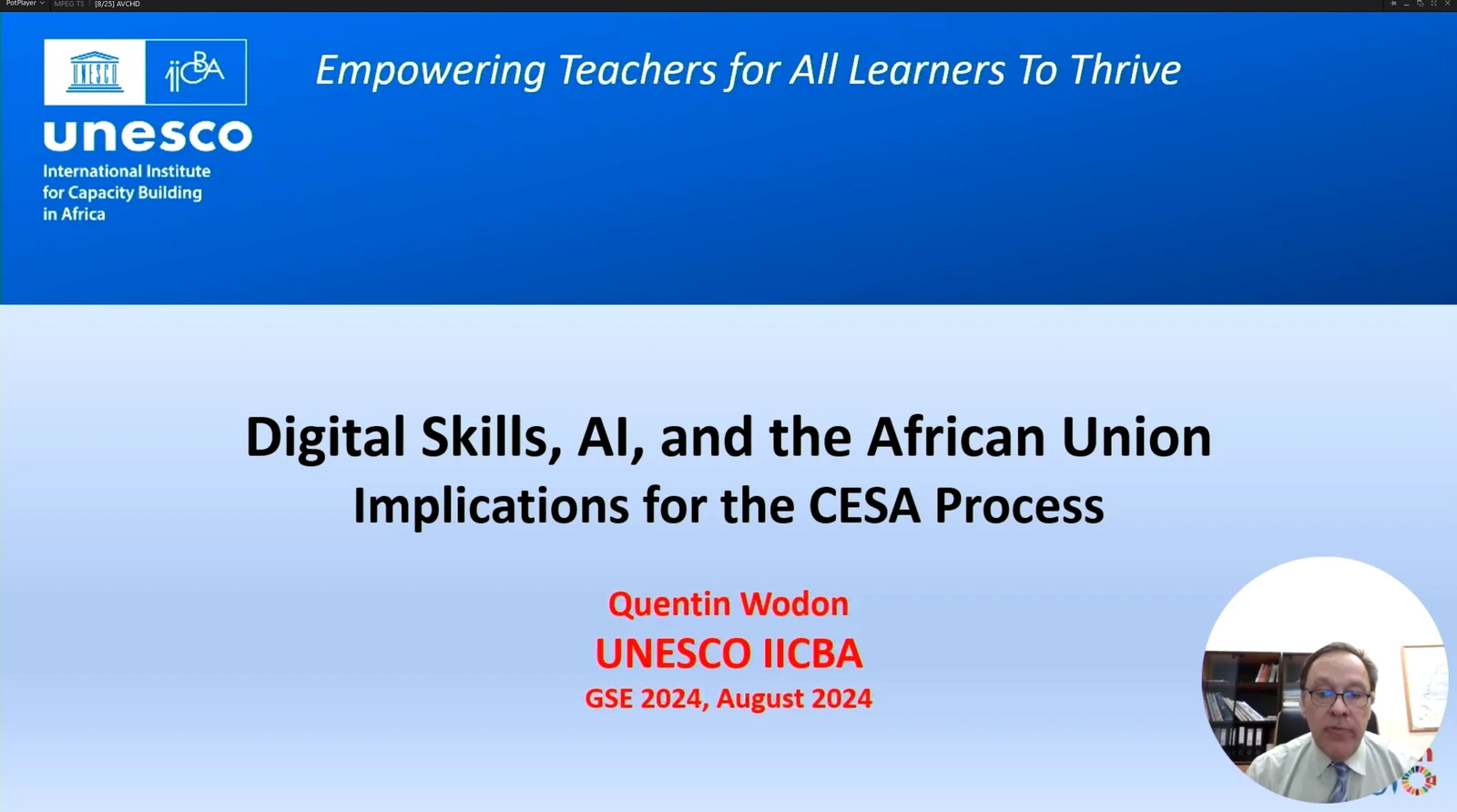
Quentin Wodon, Director of UNESCO’s International Institute for Capacity Building in Africa (IICBA), spoke online on digital skills, AI and the African Union’s CESA process. Discussing implementation of the Continental Education Strategy for Africa, he emphasized ICT’s contribution to quality and teacher capacity, and policy dialogue and training to strengthen teachers’ and students’ digital skills.
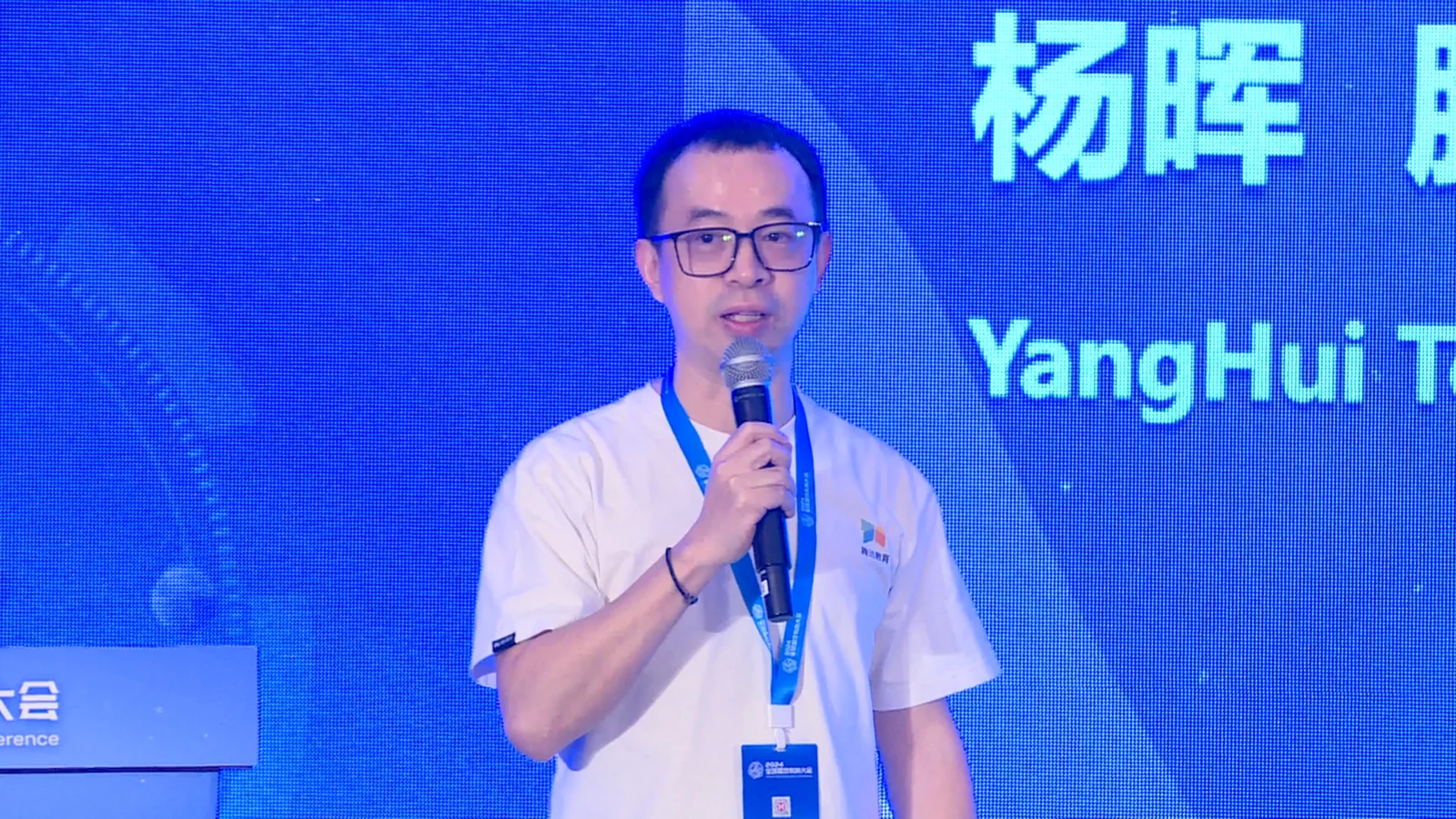
Yang Hui, General Manager of Education Industry Business at Tencent Cloud, presented AIGC applications in teaching. Examples included project-based learning design, writing support, teacher planning and student creativity. He described AI and agents as potential support for reducing routine workload while encouraging creative thinking and personalized learning.
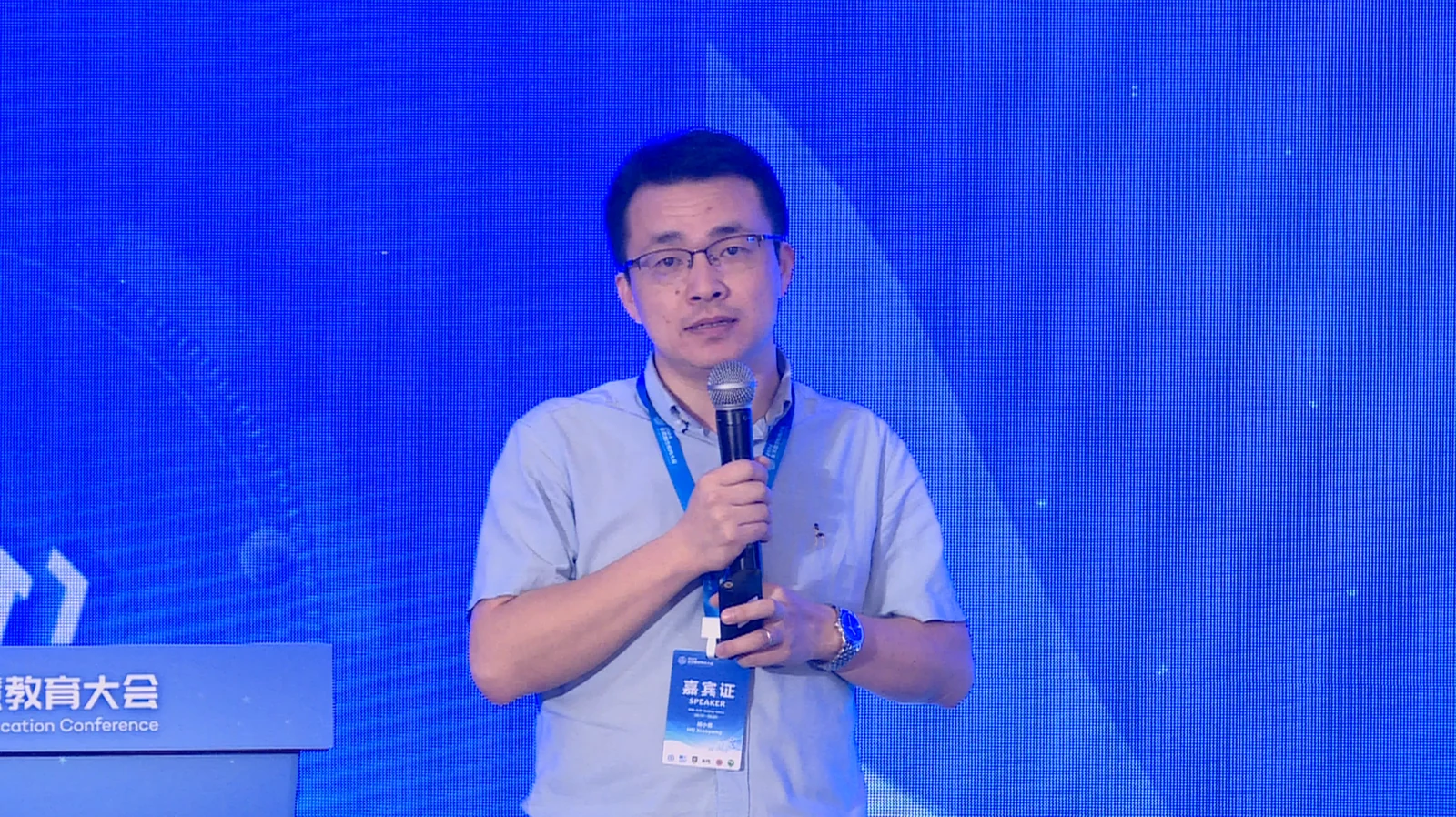
Hu Xiaoyong, Director of South China Normal University’s Teacher Development Center, discussed AI-enabled preparation of prospective teachers. He addressed provision, effectiveness and continuing-development challenges in basic teaching-skills training, described collaborative intelligent-training work involving the institute, undergraduate school and teacher-development centre, and launched his team’s report on intelligent training of pre-service teachers’ basic teaching skills.
Invited presentations: human–AI complementarity
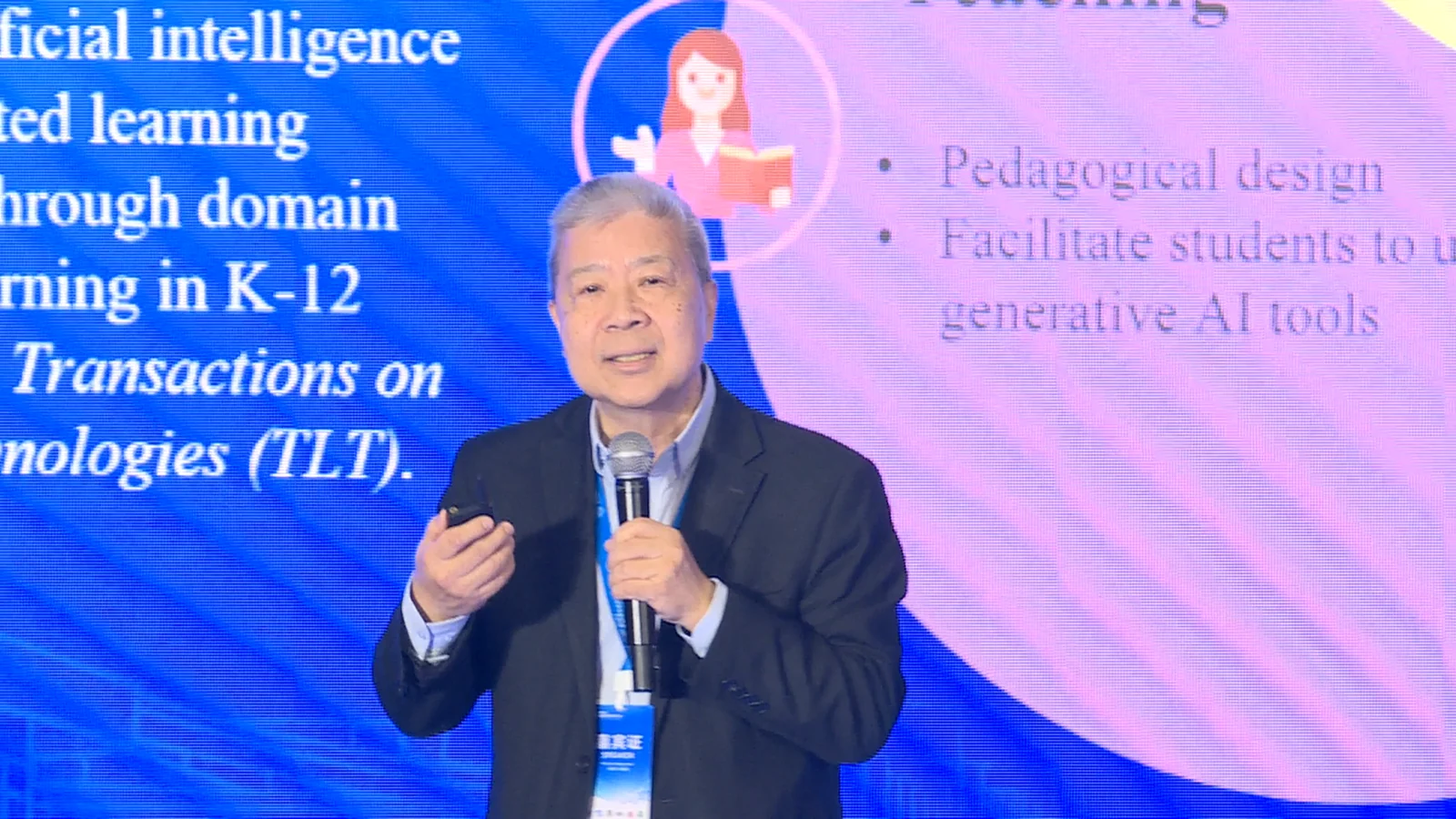
Abtar Darshan Singh, UNESCO Chair on Harnessing Innovations in Technology to Support Teachers and Quality Learning, presented “Generative AI and the Future of Teaching”. She illustrated personalized-learning possibilities and encouraged teachers to use generative AI to enrich learning experiences, supported by international cooperation and professional training for sustainable education.
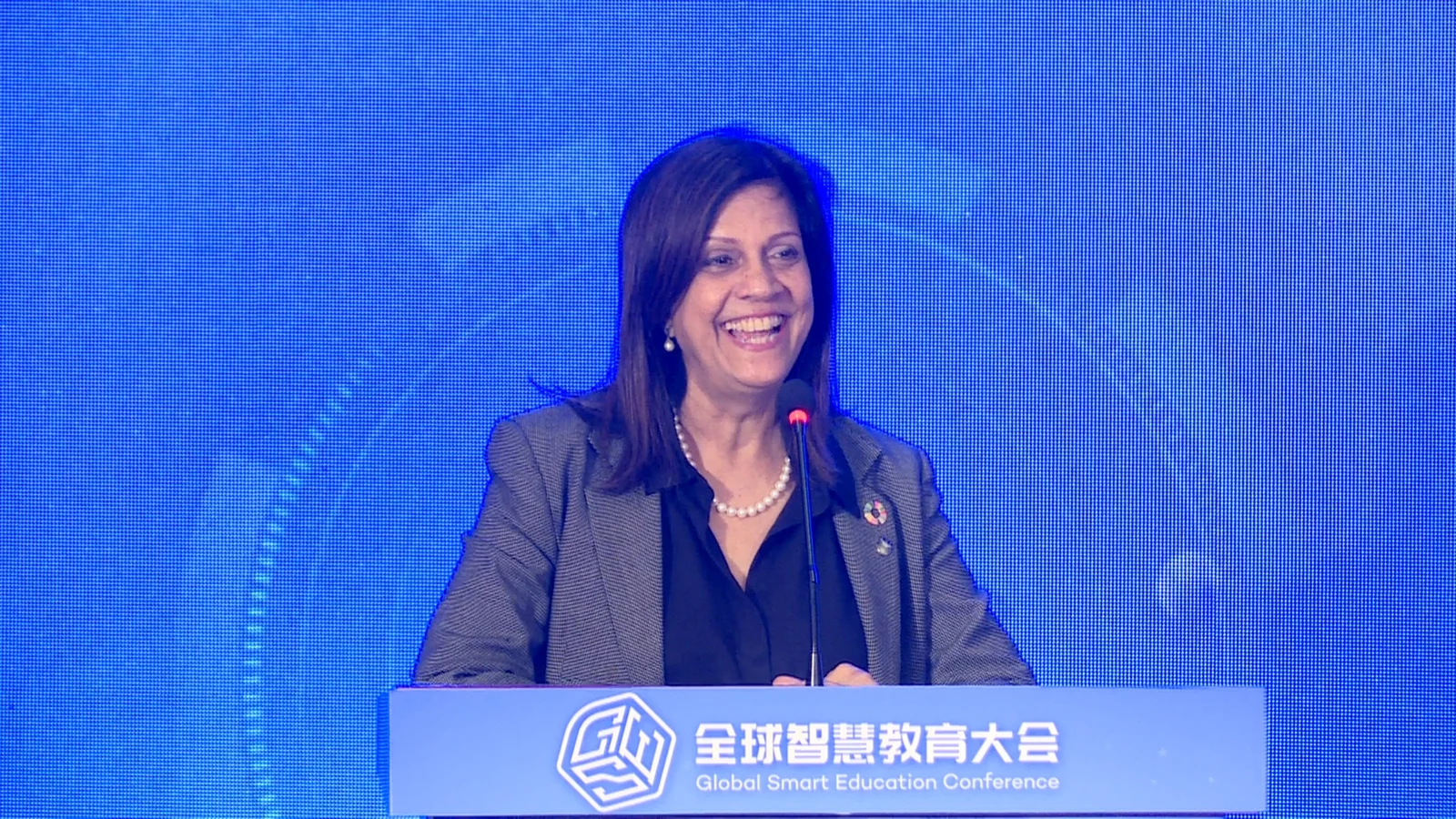
Kong Siu Cheung, Director of the Artificial Intelligence and Digital Competency Education Centre at the Education University of Hong Kong, discussed generative AI and self-regulated learning, from computational thinking to AI literacy. He prioritized problem-solving, independent thought and human wisdom: students should solve problems themselves rather than mechanically follow instructions, without becoming overdependent on AI.
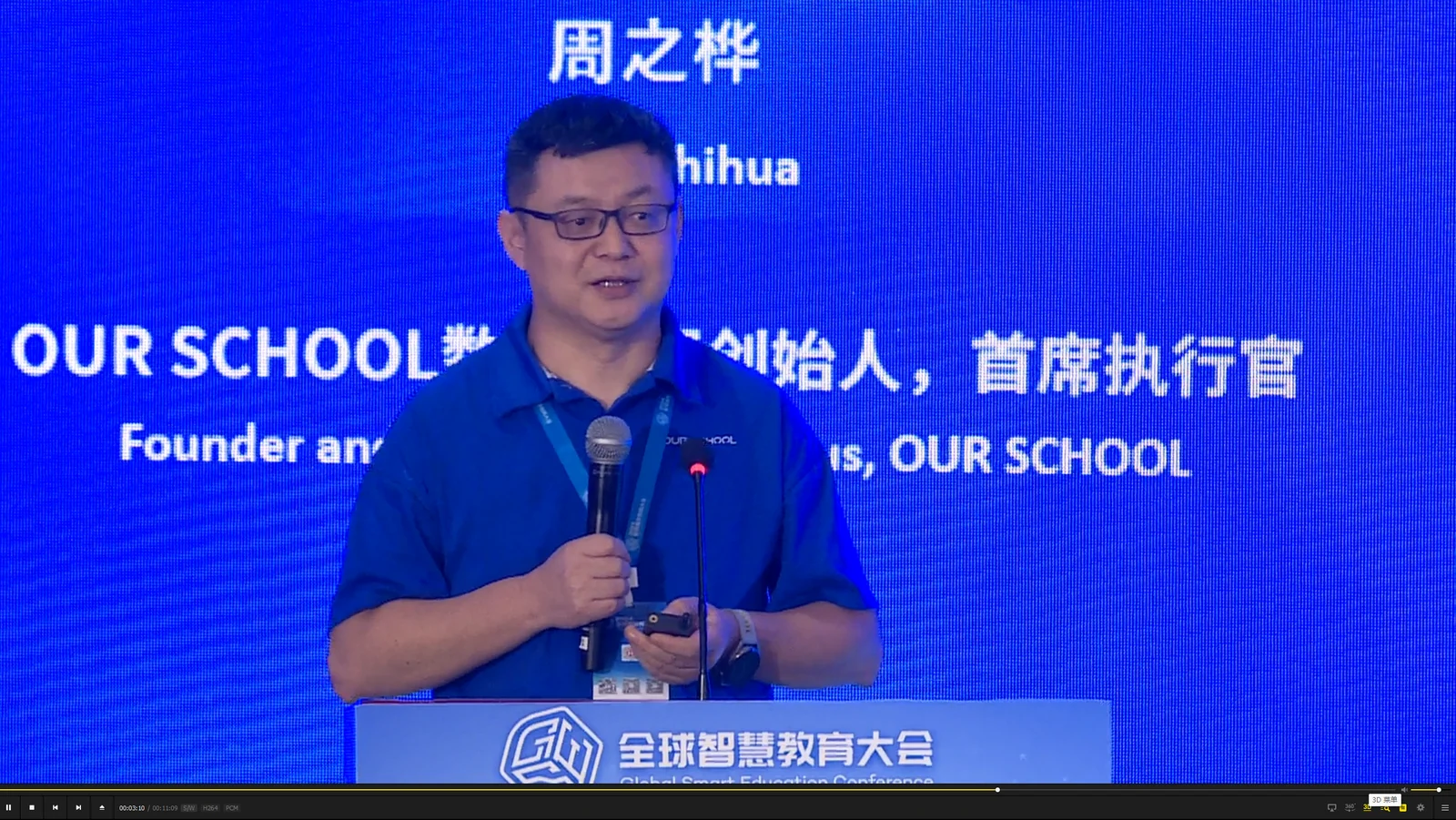
Zhou Zhihua, Founder and CEO of Digital Campus, OUR SCHOOL, discussed AIGC and educational transformation in the digital era. His presentation considered how generative AI could assist teaching and how to develop products teachers find useful and want to use, especially by relieving tedious work and freeing their time.
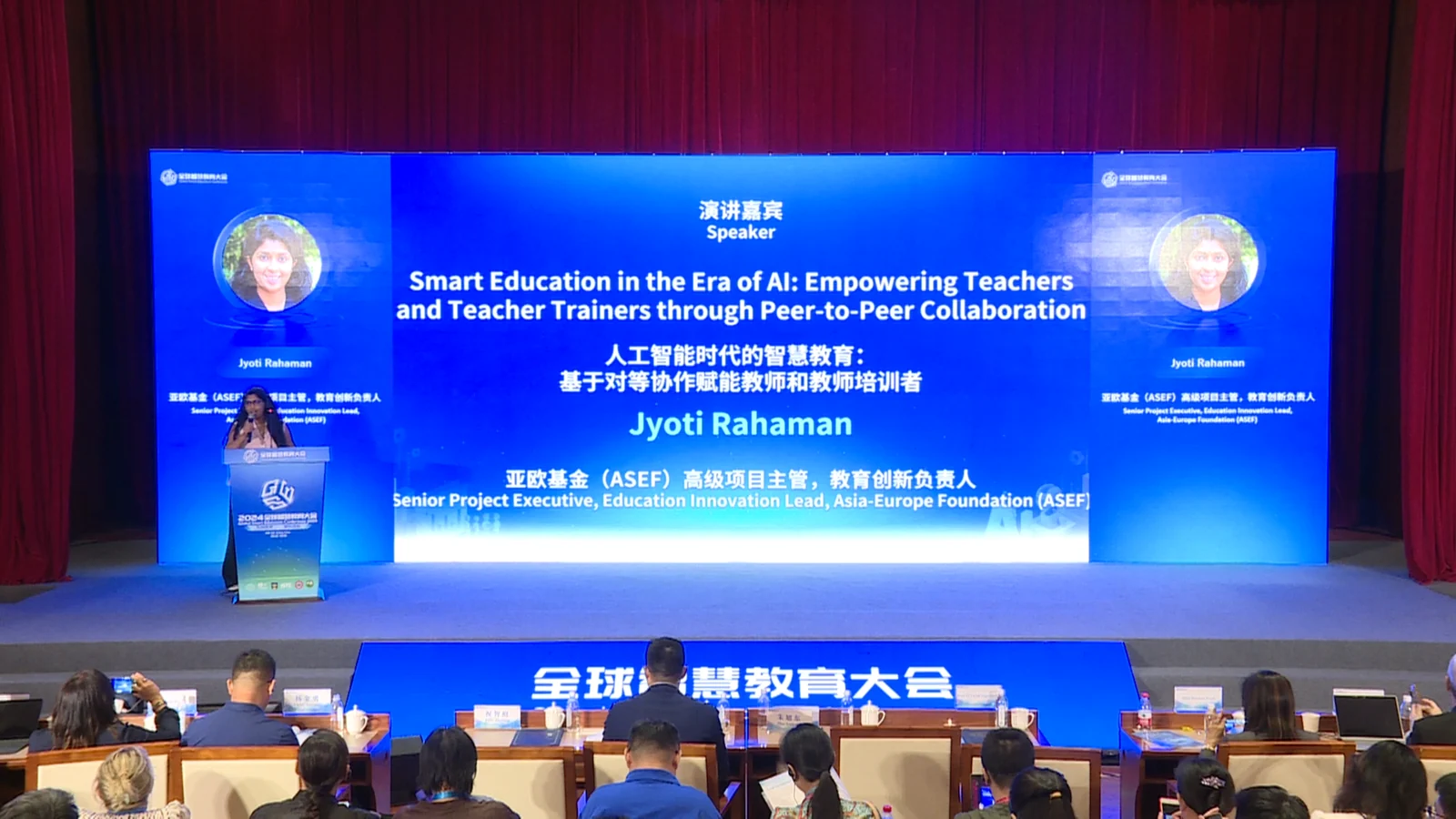
Jyoti Rahaman, Senior Project Executive and Education Innovation Lead at the Asia-Europe Foundation (ASEF), presented “Smart Education in the Era of AI: Empowering Teachers and Teacher Trainers through Peer-to-Peer Collaboration”. She shared project experience of peer collaboration, continuing cooperation and follow-up in teacher development, emphasizing educators’ understanding of smart education.
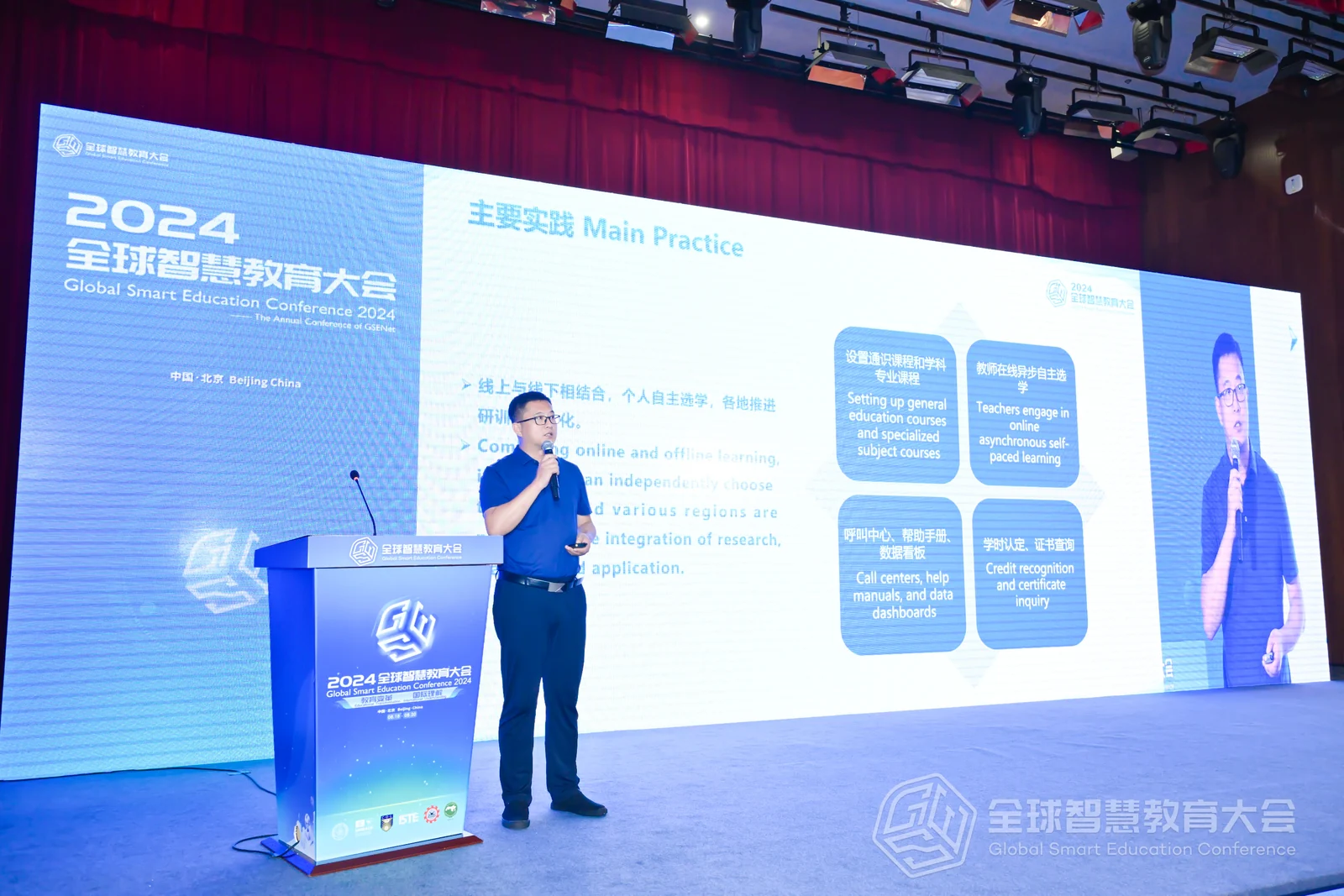
Yang Jinyong, a Director at China’s Center for Educational Technology and Resource Development, discussed how the national smart education platform shapes future teachers. He presented achievements and cases since its launch and advocated continued platform-based support for teacher development and educational quality.
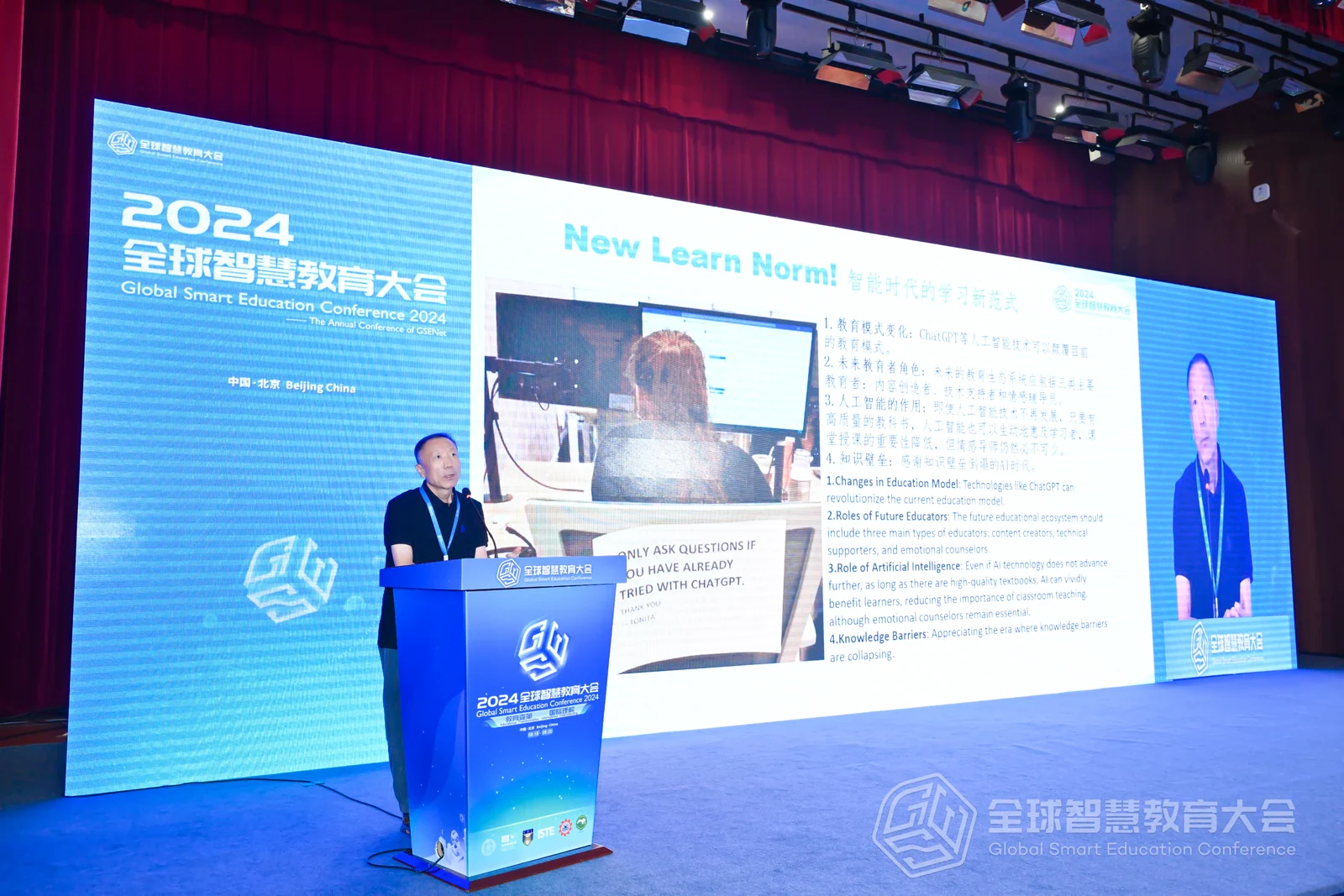
Zhao Cheng, Professor at the SDU–ANU Joint Science College, Shandong University, Weihai, presented “Teaching and Learning with AI Language Models: From Content Summarization to Interactive Learning”. He discussed AI-led changes and their implications for education and teacher training, highlighting the design of contextual dialogues in practical teaching.
School and regional practice
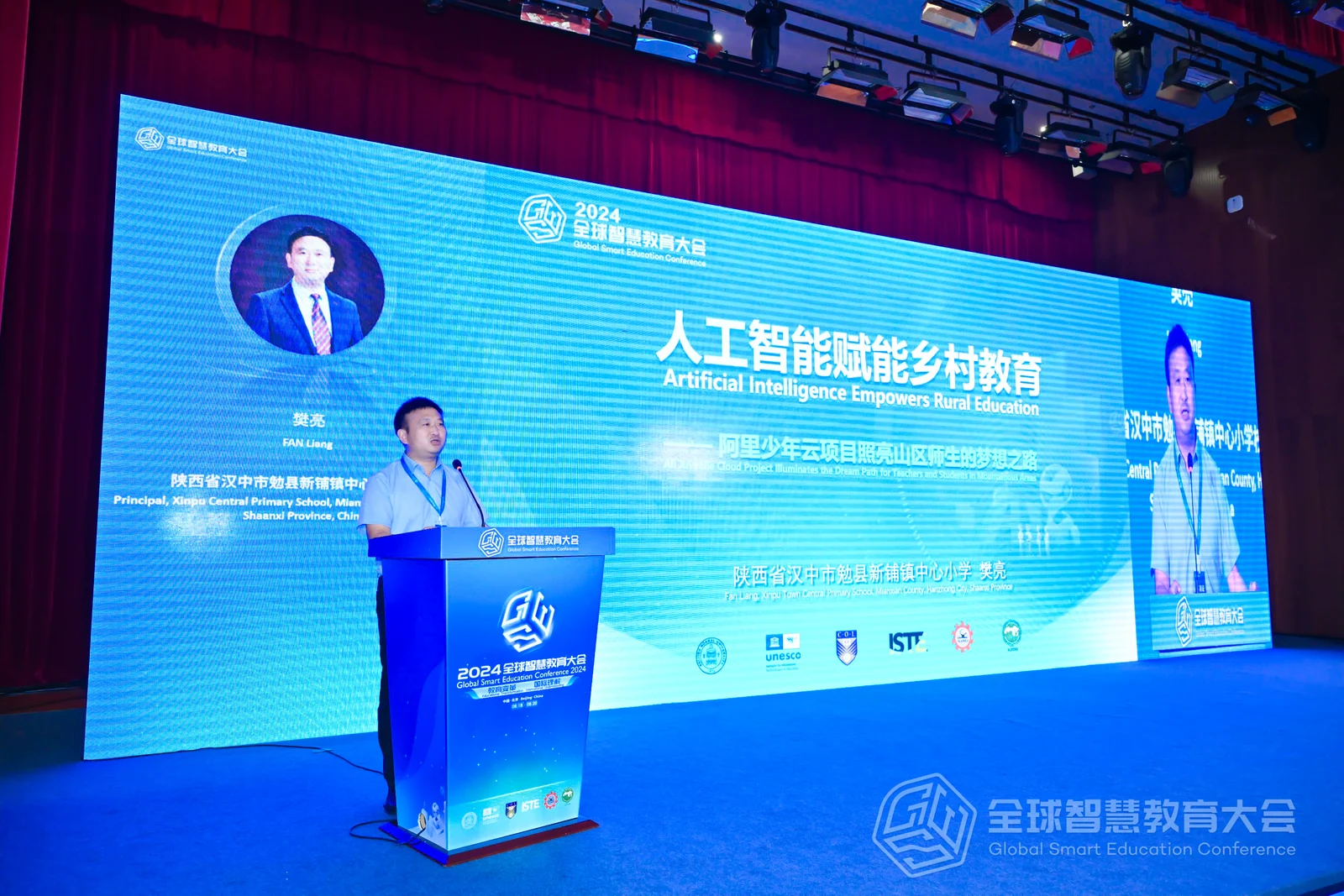
Fan Liang, Principal of Xinpu Central Primary School in Mian County, Hanzhong, Shaanxi, presented the Ali Youth Cloud project. Through the story of a classroom, an educational idea and a dream, he described AI-supported teaching in mountain communities. Human–machine collaboration, he argued, should provide more precise, personalized support, teach according to individual needs and advance learner-centred education.
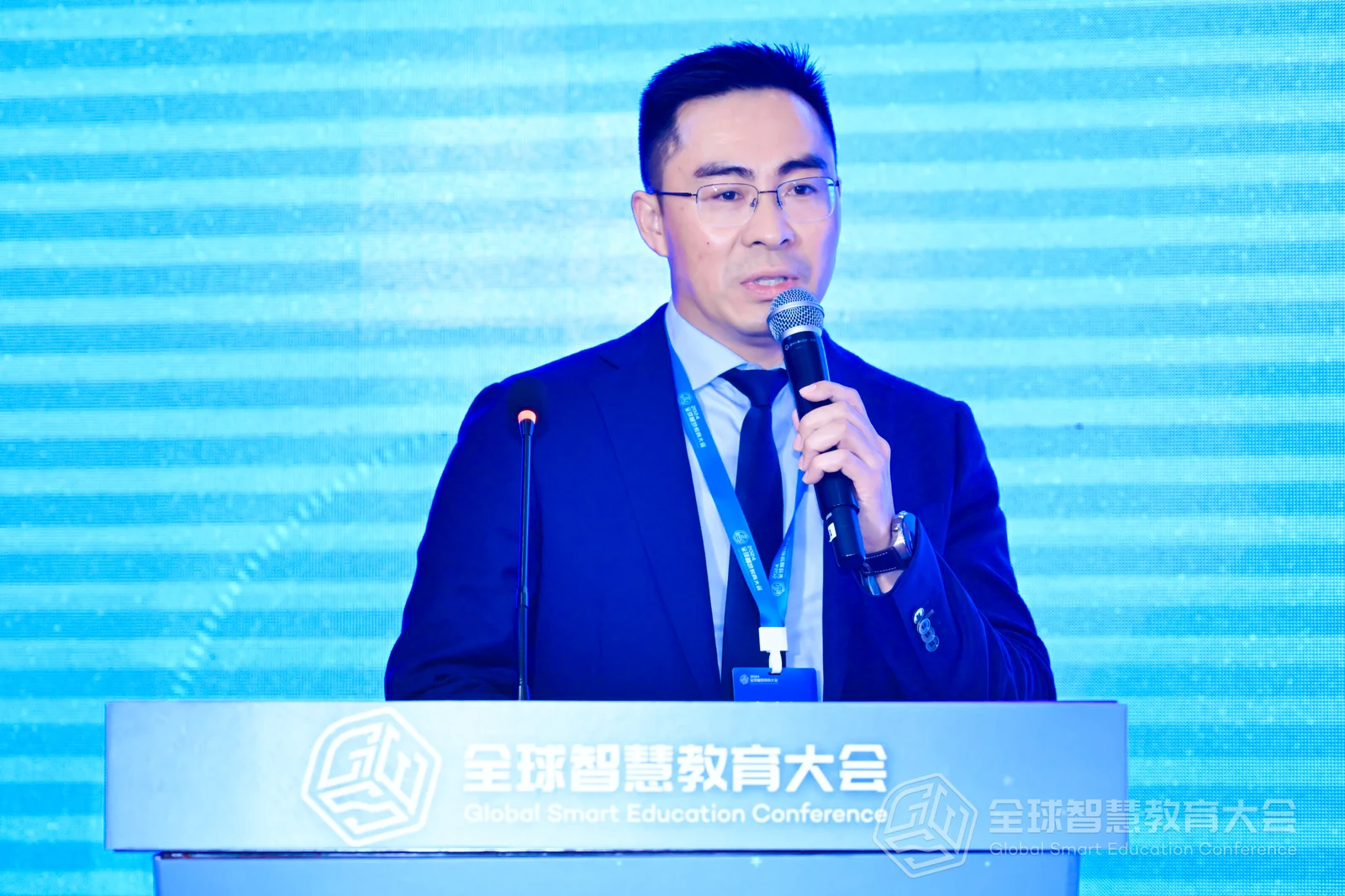
Jiang Junbin, Principal of Lijia Experimental Primary School in Chongqing’s Liangjiang New Area, described an AI-enabled environment for teachers’ digital development. He addressed management, training and research, emphasizing people’s role in school transformation and progression from regular use to competent and effective use.
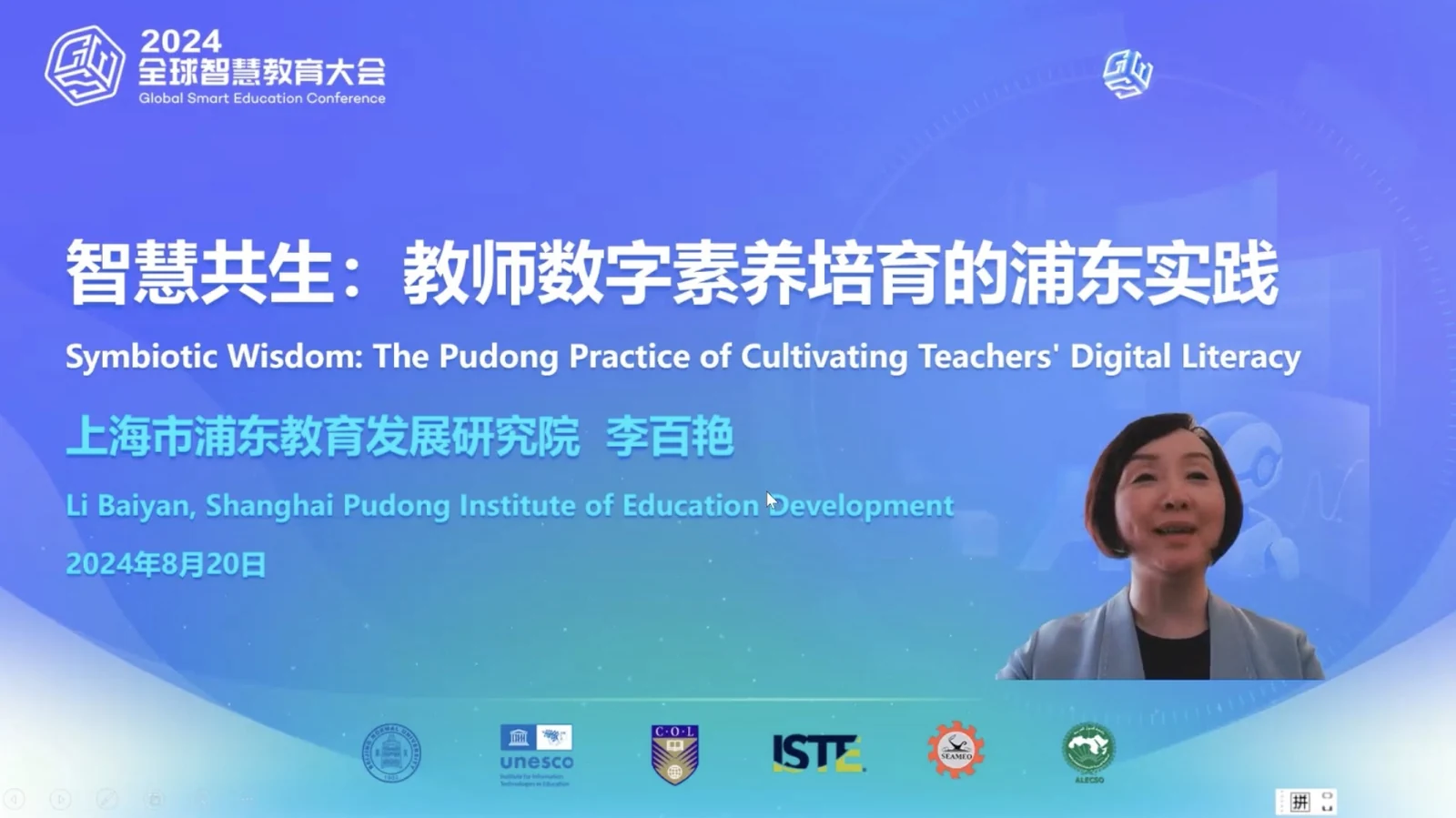
Li Baiyan, Dean of the Shanghai Pudong Institute of Education Development, spoke online about Pudong’s approach to teachers’ digital literacy. She advocated a symbiotic relationship between human intelligence and AI, cautioning against relying on AI for every task.
Moderators
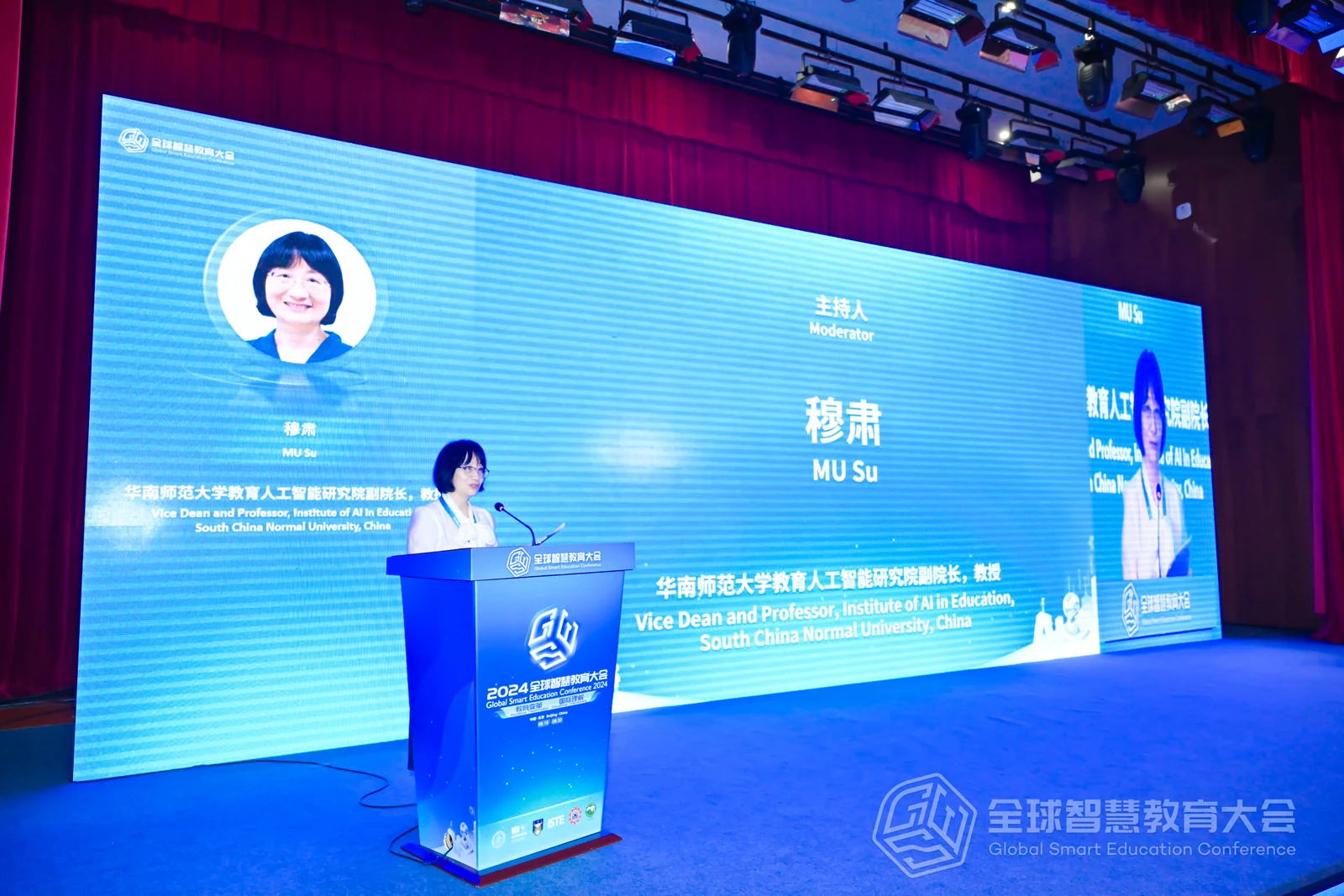
The forum was moderated by Mu Su, Vice Dean of South China Normal University’s Institute of Artificial Intelligence Education, and Natalia Amelina, Senior National Project Officer in Education and head of UNESCO IITE’s Teacher Professional Development and Networking Unit. Roles are stated as recorded in the 2024 conference materials.
Sources, related preview and archive notes
This post-event report is retained separately from the historical forum preview. It follows the SLI report, with titles, names and affiliations checked against the official conference synthesis. ASEF’s 2024 event report confirms Rahaman’s role and peer-collaboration theme. Nineteen original photographs follow the presentations; one source photograph whose personal attribution could not be confirmed from the image is captioned simply “Forum proceedings”.
The original site date of 21 August 2024, title and URL are preserved. The event took place on the morning of 20 August; SLI’s current research-news listing archives its report on 19 September. The 2025 image-directory date is not the event year. Long paragraphs were divided and captions and attribution standardized. Statements on teacher development remain attributed to the speakers.
Original link: https://aiedchair.bnu.edu.cn/news-8012-en/