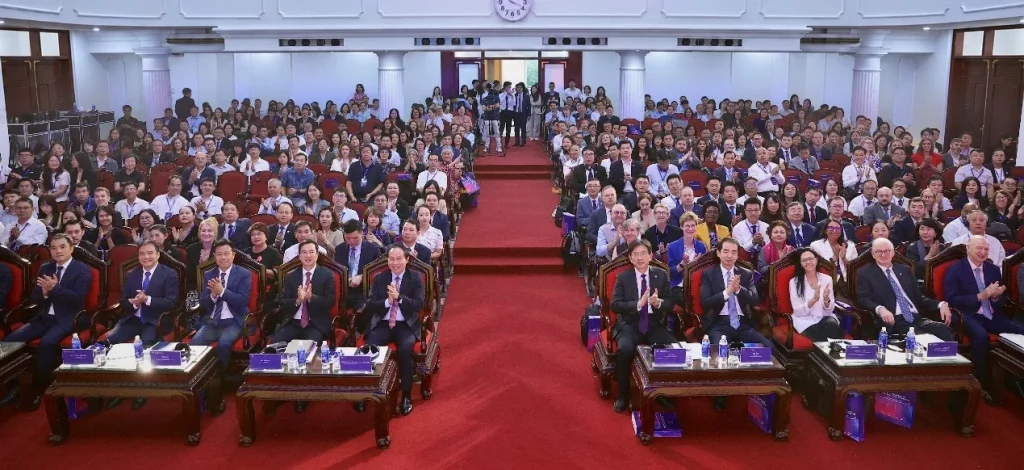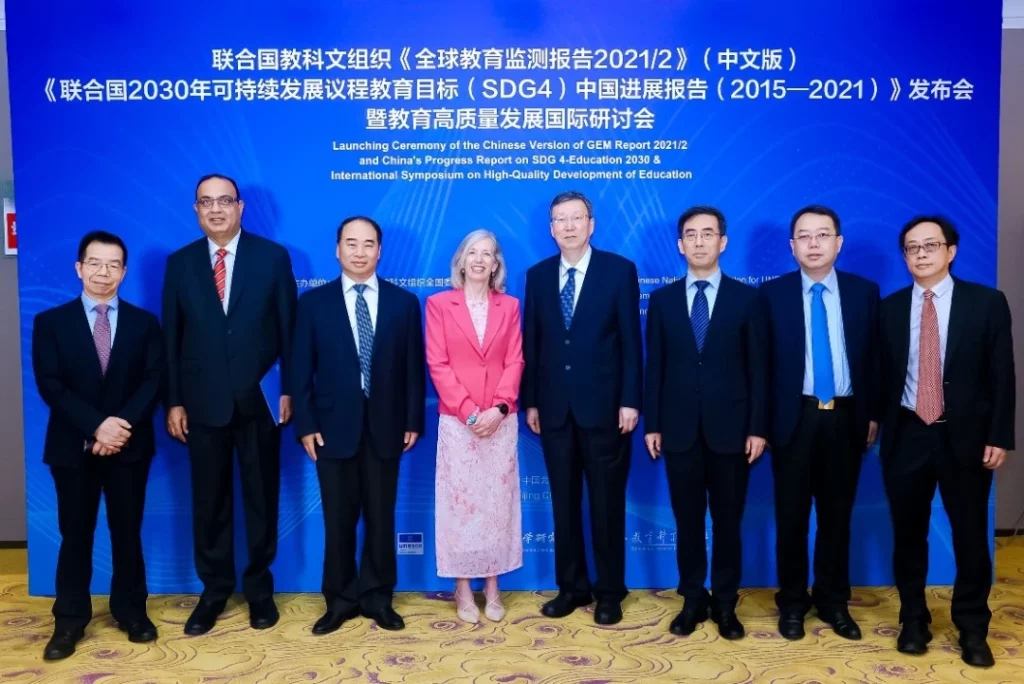
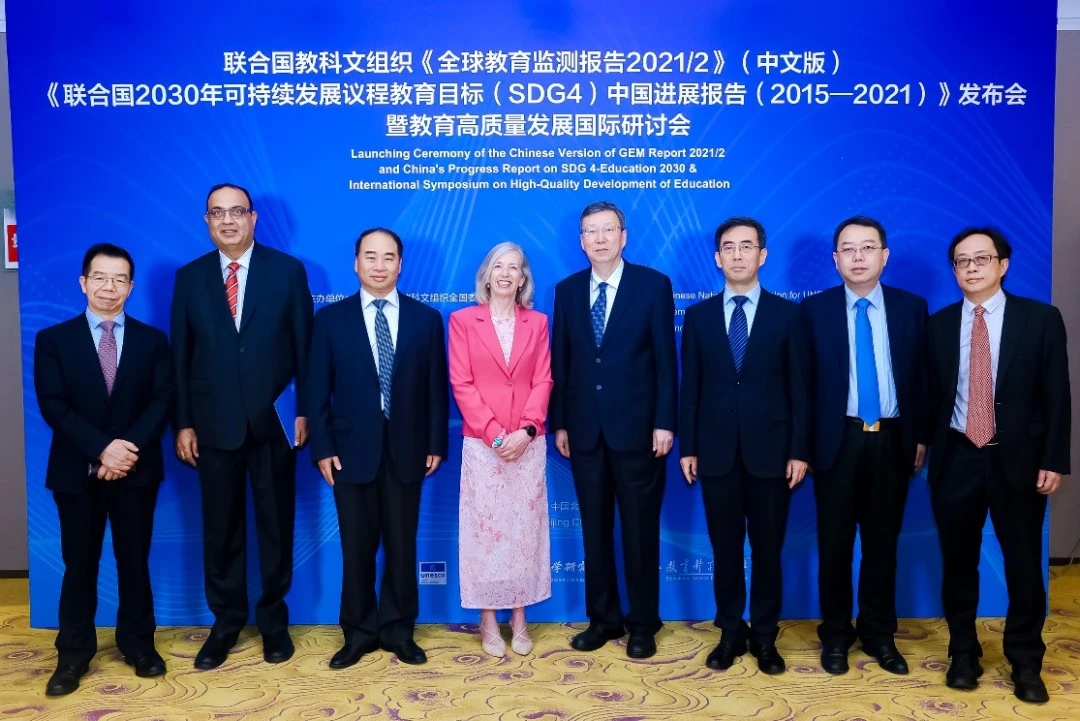
On 4 July 2023, Beijing hosted the launch of the Chinese edition of UNESCO’s 2021/2 Global Education Monitoring Report and China’s Progress Report on SDG 4–Education 2030 (2015–2021), alongside an international symposium on high-quality education. China’s Vice Minister of Education Wang Jiayi and UNESCO Assistant Director-General for Education Stefania Giannini attended and delivered remarks. Professor Huang Ronghuai, holder of the UNESCO Chair on AI in Education and Director of UNESCO INRULED, was invited to participate.
Opening remarks: equity and transformation
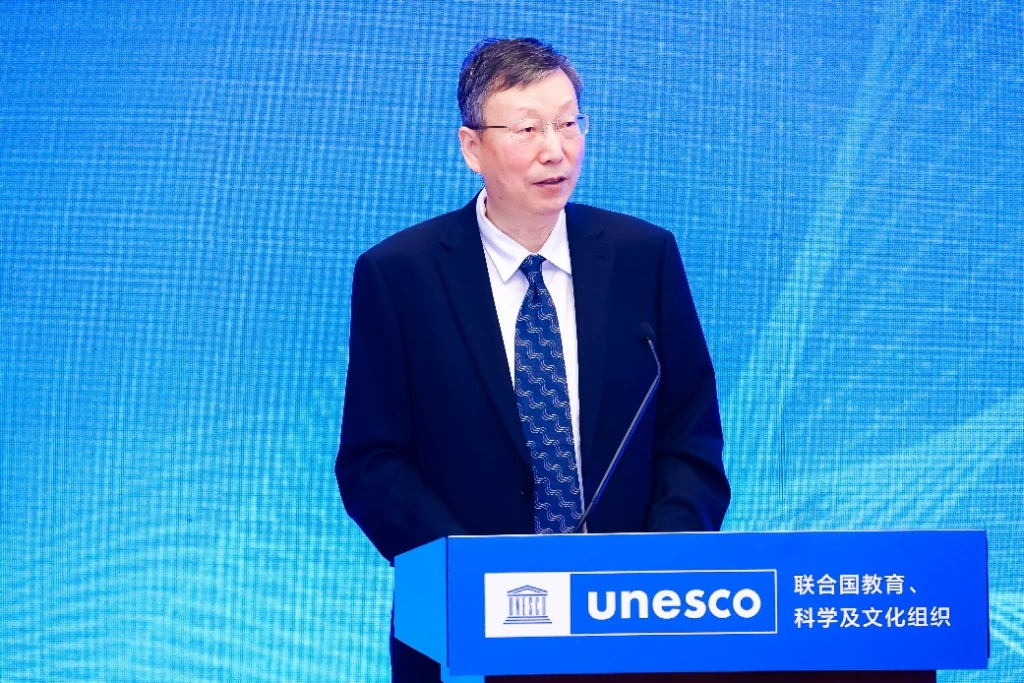
Wang Jiayi highlighted UNESCO’s leadership in protecting the right to education and advancing educational transformation. He described China’s participation in the Education 2030 agenda and its sharing of reform ideas, experience and practice to support global change. The launch represented an important outcome of cooperation on that agenda.
He encouraged researchers and policymakers to meet their responsibilities, draw on international experience, connect it with China’s circumstances and advance innovation. He called on stakeholders to pursue people-centred development guided by equity, quality, sustainability and responsibility, supporting governments in achieving the Sustainable Development Goals and building quality education systems.
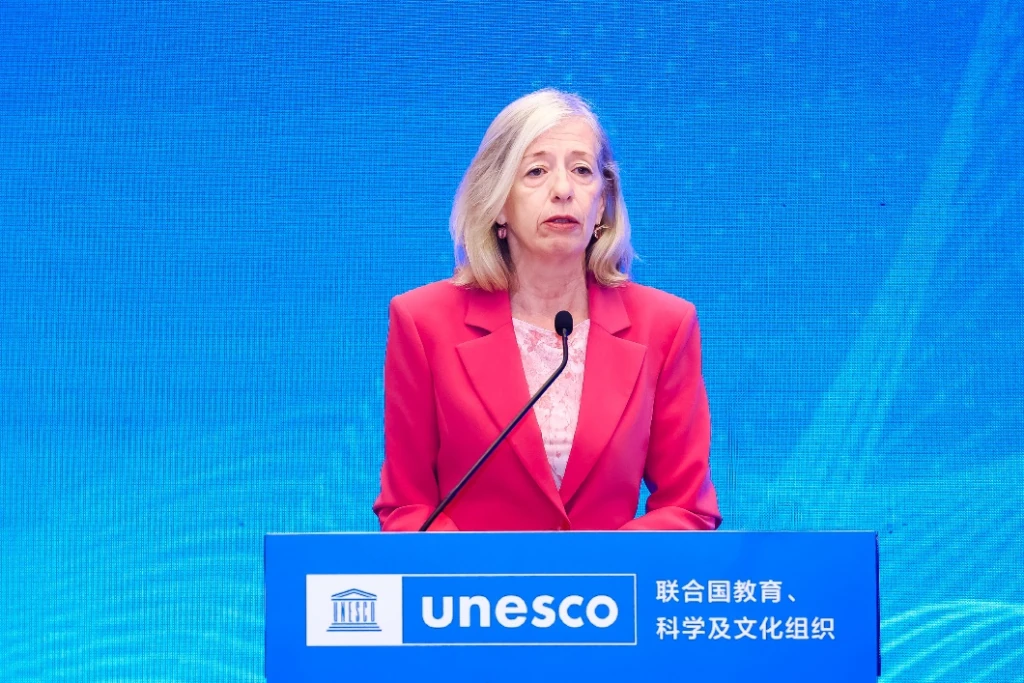
Giannini thanked China for its efforts and contributions towards the education goals. She commended its example in using information technology to advance education as a common good and hoped the meeting would help strengthen inclusion, equity and quality.
Two reports: global perspectives and China’s progress
GEM Report Director Manos Antoninis and Ma Xiaoqiang, Director of the Institute of Educational Statistics and Analysis at the China National Academy of Educational Sciences, presented the main findings and perspectives of the two reports respectively.
Wang Jiayi, Giannini, Li Yongzhi and Shahbaz Khan jointly unveiled the two reports.
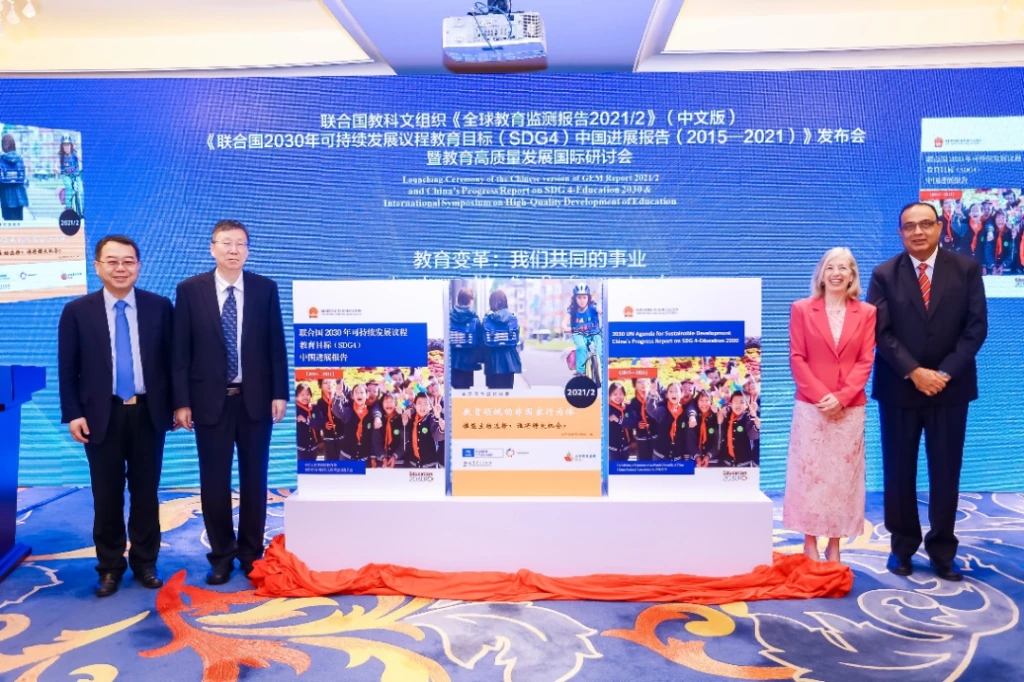
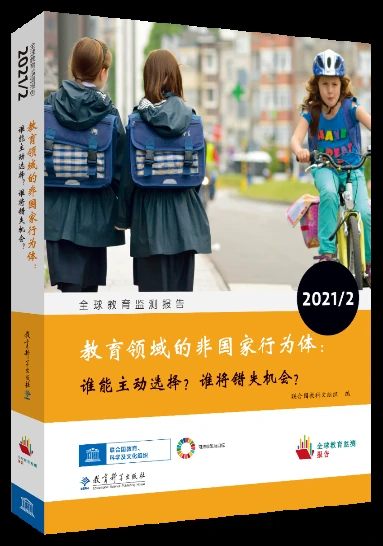
The 2021/2 GEM Report is part of UNESCO’s series monitoring progress towards the education goals. The Educational Science Publishing House translated and published its Chinese edition. It examines non-state actors and their relationship with public education, encouraging stronger governance and cooperation across education. It also considers the effects of COVID-19 and prospects for education after the pandemic.
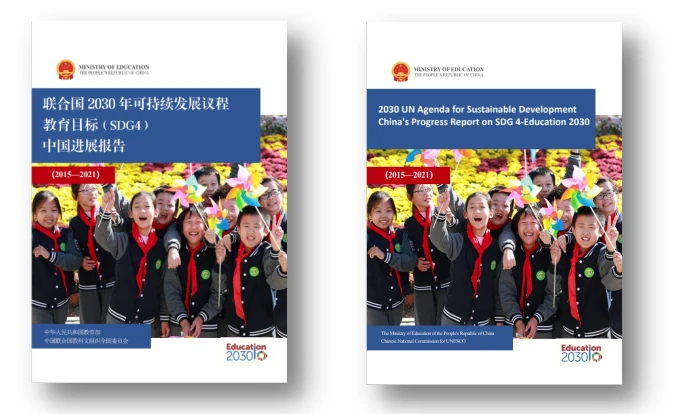
China’s progress report was prepared by the China National Academy of Educational Sciences at the request of the Ministry of Education and the Chinese National Commission for UNESCO. It reviews measures and progress towards SDG 4 in 2015–2021, practices addressing individual targets, remaining challenges and future plans. It aims to support international cooperation and contribute to the global implementation of the 2030 Agenda.
Keynotes: transformation and shared responsibility
The keynote session explored educational transformation as a shared undertaking. The roles below reflect those given in the original 2023 report.
Shahbaz Khan, Director of UNESCO’s Multisectoral Regional Office for East Asia and its Representative to China, described China’s reforms as a source of experience for developing countries and a contribution to a community with a shared future for humanity. He expressed the office’s willingness to connect partners and strengthen dialogue in the common interest.
Wang Dinghua, Party Secretary and Professor at Beijing Foreign Studies University, argued that Chinese universities should contribute to global education governance and policymaking, support basic education reform and share quality educational resources.
Sobhi Tawil, Director of UNESCO’s Future of Learning and Innovation team, described educational transformation as a longer-term perspective on change. Education should respond to social, economic and technological transitions and help shape the future.
Li Yi, Director of the Beijing Municipal Education Commission, discussed building a quality education system and broadening the resources, environments and approaches to effectiveness used to nurture innovative talent. He advocated systematic collaboration, pooling quality resources across society and structural reform of education provision to improve educational outcomes.
Andreas Schleicher, OECD Director for Education and Skills, emphasised independent thinking, communication, collaboration and creativity as AI and other technologies advance rapidly. Integrating knowledge across disciplines and cooperation between people and machines should support value creation and well-being.
Huang Ronghuai, Professor at Beijing Normal University and Director of UNESCO INRULED, called for reflection on how educational transformation can support sustainable rural education. He stressed addressing recent global setbacks, learning disruptions and digital divides. China was willing to share experience and cases of quality rural education through international exchange mechanisms.
Jordan Naidoo, former Acting Director of UNESCO’s International Institute for Educational Planning, stressed the interdependence of social, economic and ecological sustainability. Education provides a foundation, and teachers are central to education for sustainable development.
Li Xigui, Principal of Beijing No. 1 Experimental School and Vice-Chair of the Ministry of Education’s basic education teaching guidance committee, advocated changes to how school resources are organised, public participation in governance and removal of institutional barriers. These changes should help more children fulfil their potential and strengthen China’s talent development.
Organisation and further reading
The Secretariat of the Chinese National Commission for UNESCO and the China National Academy of Educational Sciences organised the event, with the Educational Science Publishing House hosting its implementation. Commission Secretary-General Qin Changwei chaired the book launch; Academy Vice-President Wang Ming chaired the keynote session.
Further reading: UNESCO’s publication record for the Chinese 2021/2 GEM Report; the Academy’s event report of 6 July 2023; the Ministry of Education’s event report of 5 July 2023.
Original link: https://aiedchair.bnu.edu.cn/the-chair-participates-in-launch-ceremony-of-chinese-version-of-gem-report-2021-2-and-chinas-progress-report-on-sdg-4-education-2030/