International seminar on AI in education in Arab countries
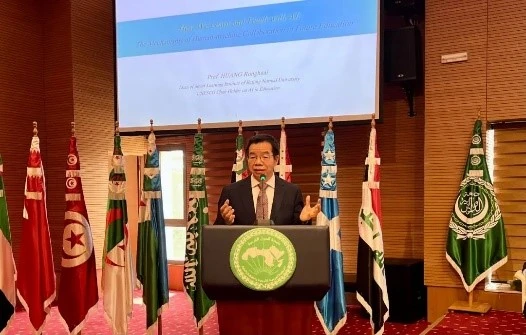
On 23–24 May 2023, Professor Huang Ronghuai of Beijing Normal University, holder of the UNESCO Chair on AI in Education, attended the International Seminar on AI in Education in Arab Countries by invitation. The meeting addressed different aspects of AI applications in education and encouraged constructive dialogue among experts, decision-makers, educators and industry representatives.
At the session on human–machine collaborative teaching, Professor Huang delivered a keynote entitled “How We Learn and Teach with AI: The Mechanisms of Human-machine Collaboration in Future Education”. Drawing on the Smart Learning Institute of BNU’s research on ChatGPT and its handbook on educational robots, he discussed opportunities and risks in educational AI, stressed the importance of understanding collaborative teaching mechanisms, and introduced the iSTAR research framework. He called on scholars, teachers, enterprises and policymakers across countries to investigate how people and machines can teach and learn together.
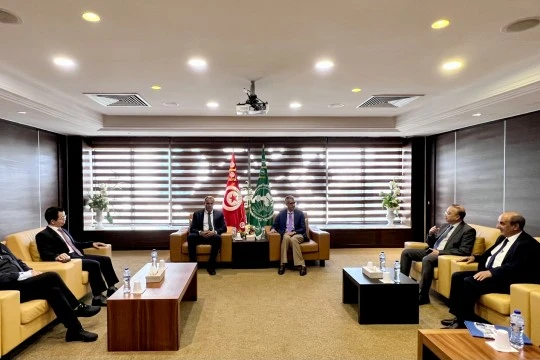
During the seminar, Professor Huang met Mohamed Ould Amar, Director-General of the Arab League Educational, Cultural and Scientific Organization (ALECSO); Mohamed Ali Boughdiri, Tunisia’s Minister of Education and Chair of its National Commission for UNESCO; and Mohamed Jemni, Director of ALECSO’s ICT Department. They exchanged views on future cooperation in AI in education.
Tang Yu, NetDragon’s virtual executive and rotating CEO, interacted with more than 50 Tunisian primary and secondary school students at the event. Through questions and answers, the digital character introduced the company’s work in digital education and encouraged students to follow developments in AI, prompting an enthusiastic response. Darem Tabaa, Syria’s Minister of Education, paid particular attention to the activity.
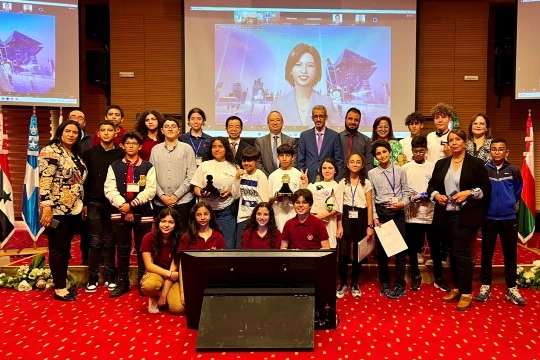
Visit to the Ministry of Higher Education and Scientific Research
On the morning of 25 May, the delegation met Mahmoud Al-Zawawi, Secretary-General of Tunisia’s Ministry of Higher Education and Scientific Research, and heads of relevant departments. Professor Huang presented the Chair’s vision and objectives, invited Tunisian higher education institutions to participate in its activities, and discussed joint China–Tunisia research on digital transformation of education in Arab countries and related cooperation. Both sides agreed to hold a China–Tunisia seminar on digital transformation in education with ALECSO’s support, deepening cooperation and advancing the Chair’s work in Tunisia. Local media reported on the visit.
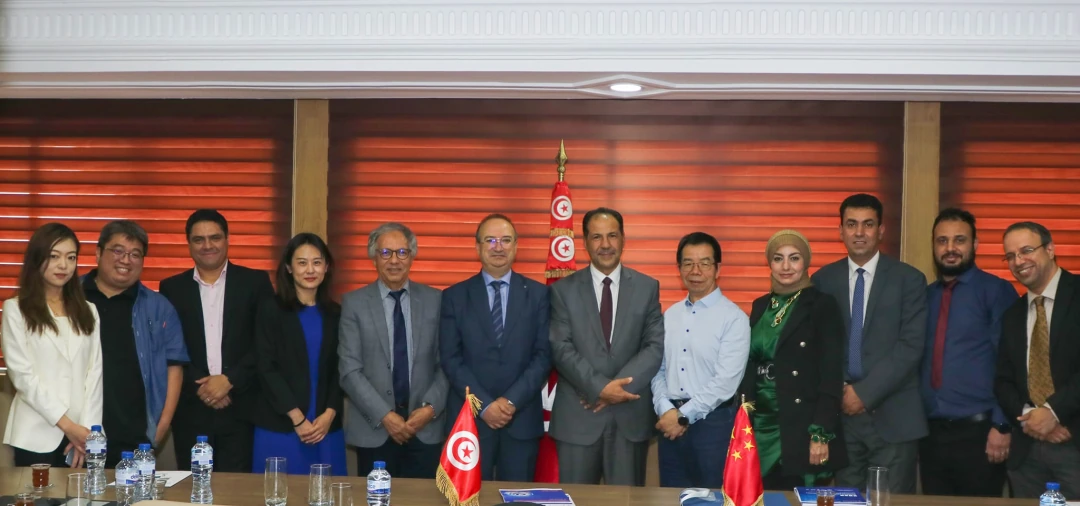
Visit to the National Institute of Applied Sciences and Technology (INSAT)
On 22 May, the delegation visited Tunisia’s National Institute of Applied Sciences and Technology (INSAT). Professor Huang presented the Chair’s work on educational applications of AI and its international cooperation network. INSAT Director Samir Hamza described progress in digital education, AI curriculum development and educational robotics. The two sides explored future cooperation in educational robots and AI in education.
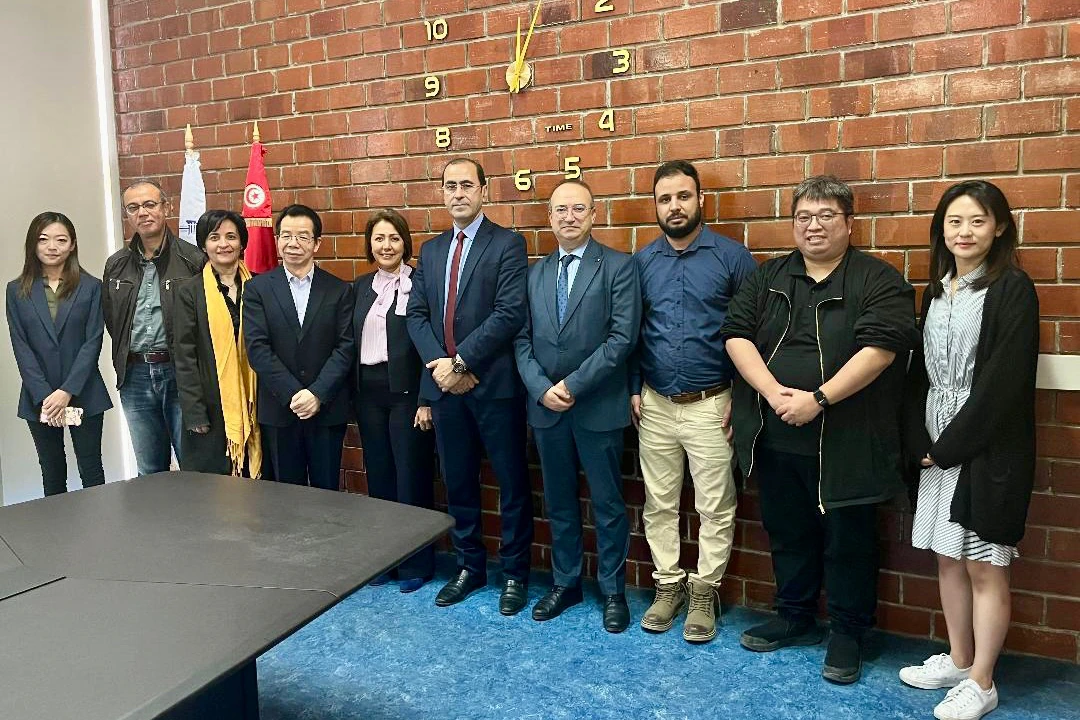
Founded in 1992 and supervised by Tunisia’s Ministry of Higher Education and Scientific Research, INSAT provides science and technology education. It emphasises research, innovation and partnerships with industry, offering engineering and technology programmes.
Visit to the Virtual University of Tunis (UVT)
Also on 22 May, the delegation visited the Virtual University of Tunis (Université Virtuelle de Tunis, UVT) and met its management team. They learned about UVT’s digital education, AI curricula and research on educational robots, and discussed shared interests. UVT’s representatives expressed support for the Chair’s work and willingness to develop AI educational resources jointly and provide AI literacy training.
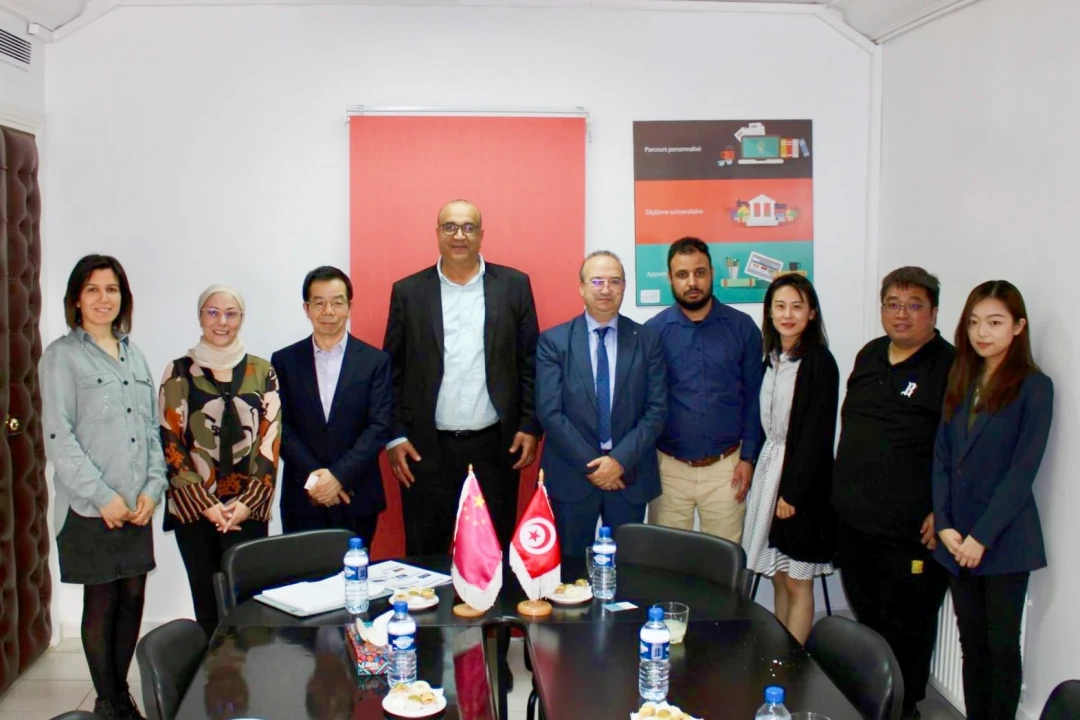
UVT focuses on virtual learning and seeks to transform education through technology and innovative approaches. Its online platforms provide courses and professional development opportunities, improving accessibility and flexibility for learners from different backgrounds. UVT emphasises quality education in the digital age and helping students respond to a rapidly changing world.
Original link: https://aiedchair.bnu.edu.cn/news-4558-en/