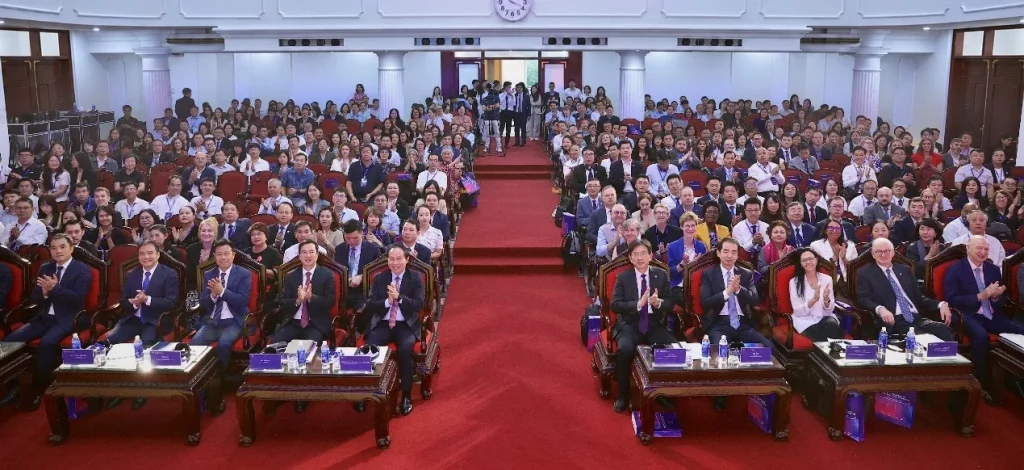
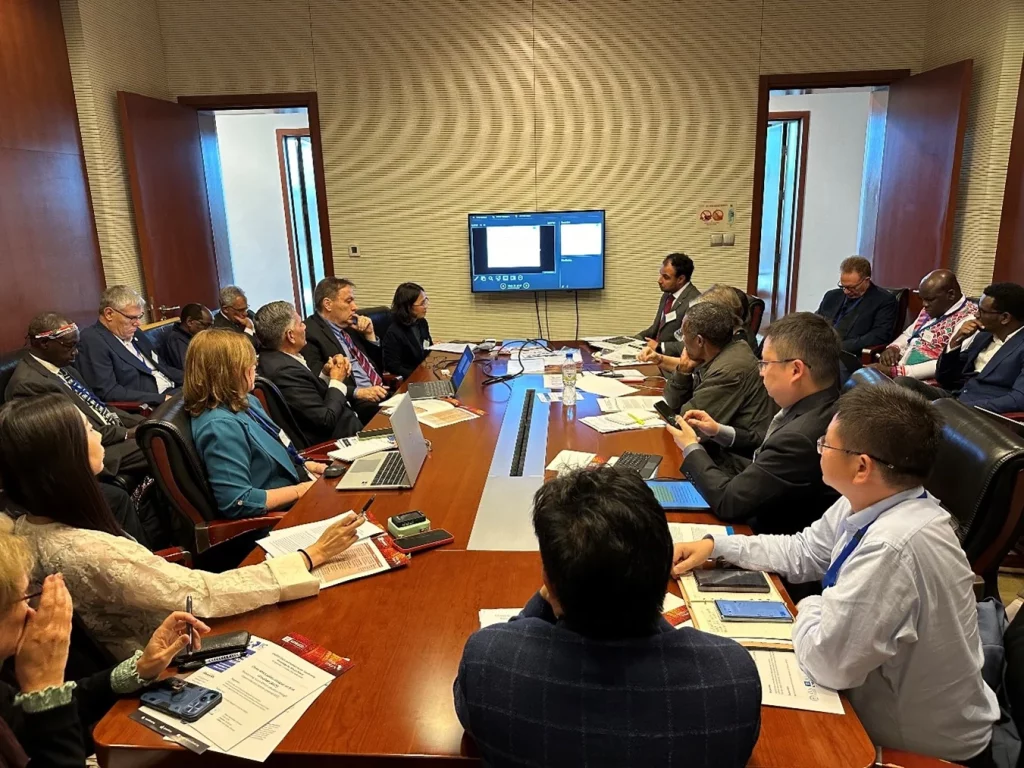
The African Union Commission and UNESCO convened the International Forum of UNESCO Chairs and Partners in Addis Ababa, Ethiopia, from 30 September to 2 October 2024. Under the theme “Transforming Knowledge for Africa’s Future”, the forum featured parallel sessions and was held under the patronage of H.E. Sahle-Work Zewde, then President of Ethiopia.
A parallel session on transforming future African education through responsible and human-centred AI in education was co-organized by the UNESCO Chair on AI in Education at Beijing Normal University, UNESCO’s International Institute for Capacity Building in Africa (IICBA), the International Research and Training Centre for Rural Education (INRULED), and the Arab League Educational, Cultural and Scientific Organization (ALECSO). The Secretariat of the Chinese National Commission for UNESCO supported the session.
Opening remarks: research, policy and China–Africa cooperation
Quentin Wodon, Director of IICBA, opened the session by outlining the institute’s research and policy-dialogue work.
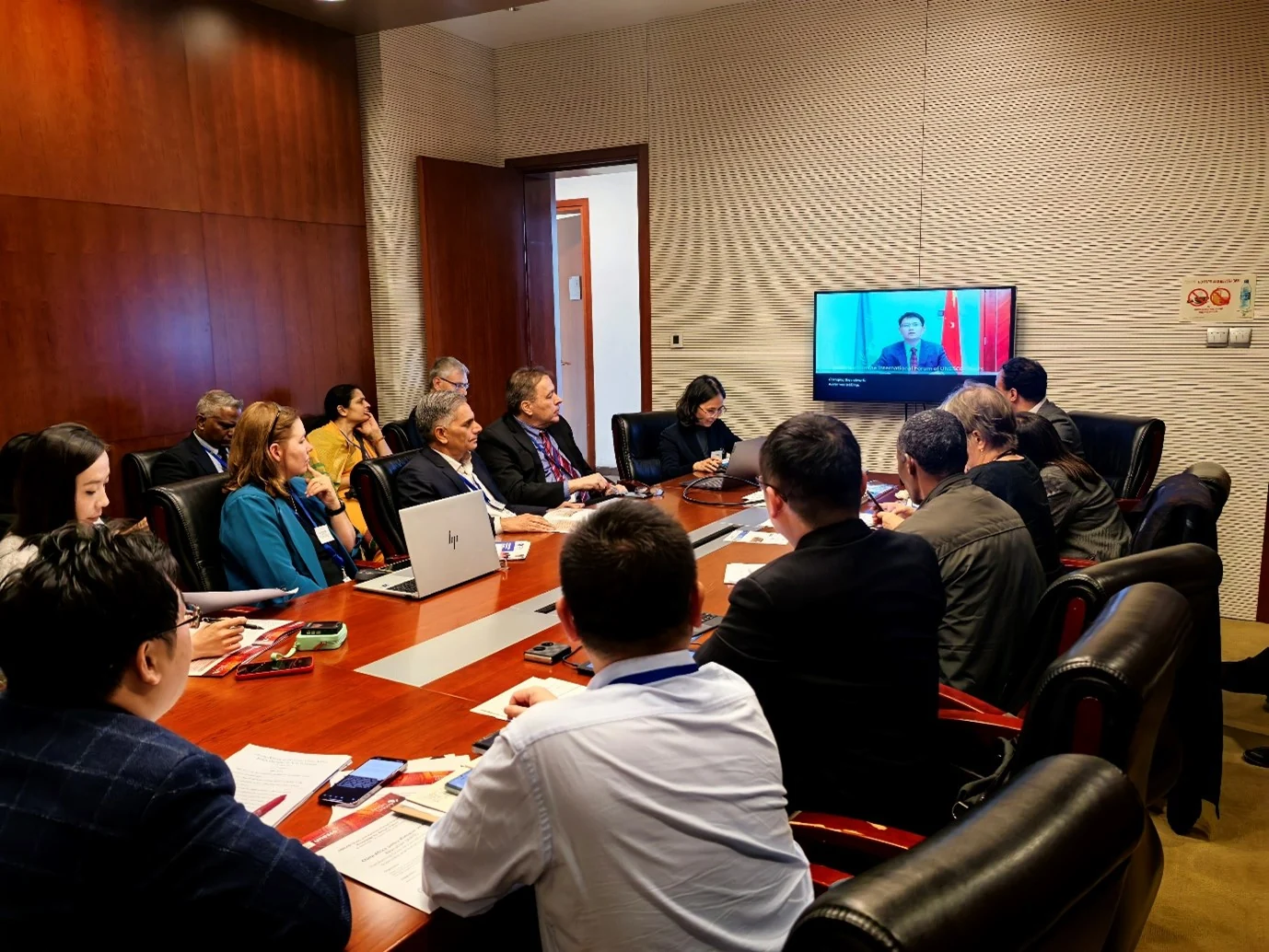
Songyun Zhang, Director of the Education Division in the Secretariat of the Chinese National Commission for UNESCO, delivered opening remarks online. He emphasized China–Africa cooperation and opportunities for AI to support Africa’s educational future.
Keynotes: secure computing and supercomputing
Keynote speakers from China and Africa discussed AI applications in their countries. Dharm Singh, UNESCO Chairholder on Secure High-performance Computing for Higher Education and Research in Namibia, examined secure computing’s importance for educational AI in Namibia and across Africa.
Gong Wang, Director of the Analytical Testing and Supercomputing Center at Shanghai Normal University, discussed supercomputing’s role in enhancing educational AI applications in China.
Roundtable: accessibility, youth and practice
Ahmed Tlili, Associate Professor at BNU, moderated a roundtable bringing together expertise from different countries and sectors to examine challenges in educational AI adoption.
Dorothy Joy Laubscher, UNESCO Chairholder on Multimodal Learning and Open Educational Resources at North-West University, South Africa, discussed combining multimodal learning and AI to improve educational accessibility.
Marleen Temmerman, UNESCO Chairholder on Youth Leadership in Science, Health, Gender and Education at Aga Khan University, Kenya, considered AI’s potential to strengthen youth leadership and gender equality in African education.
Temtim Assefa, Associate Professor at Addis Ababa University, Ethiopia, analyzed difficulties teachers and students encounter when adopting AI and described institutional policies developed to encourage its use.
From industry, Qian Zhang of DFRobot presented AI-driven educational tools and their relationship with student engagement.
Jipeng Ruan, Founder and Chairman of Beijing Jinsha River Technology Co., Ltd., discussed innovative AI technologies and practical applications in African education systems. These points are reported as the speakers’ contributions.
International cooperation and a community of practice
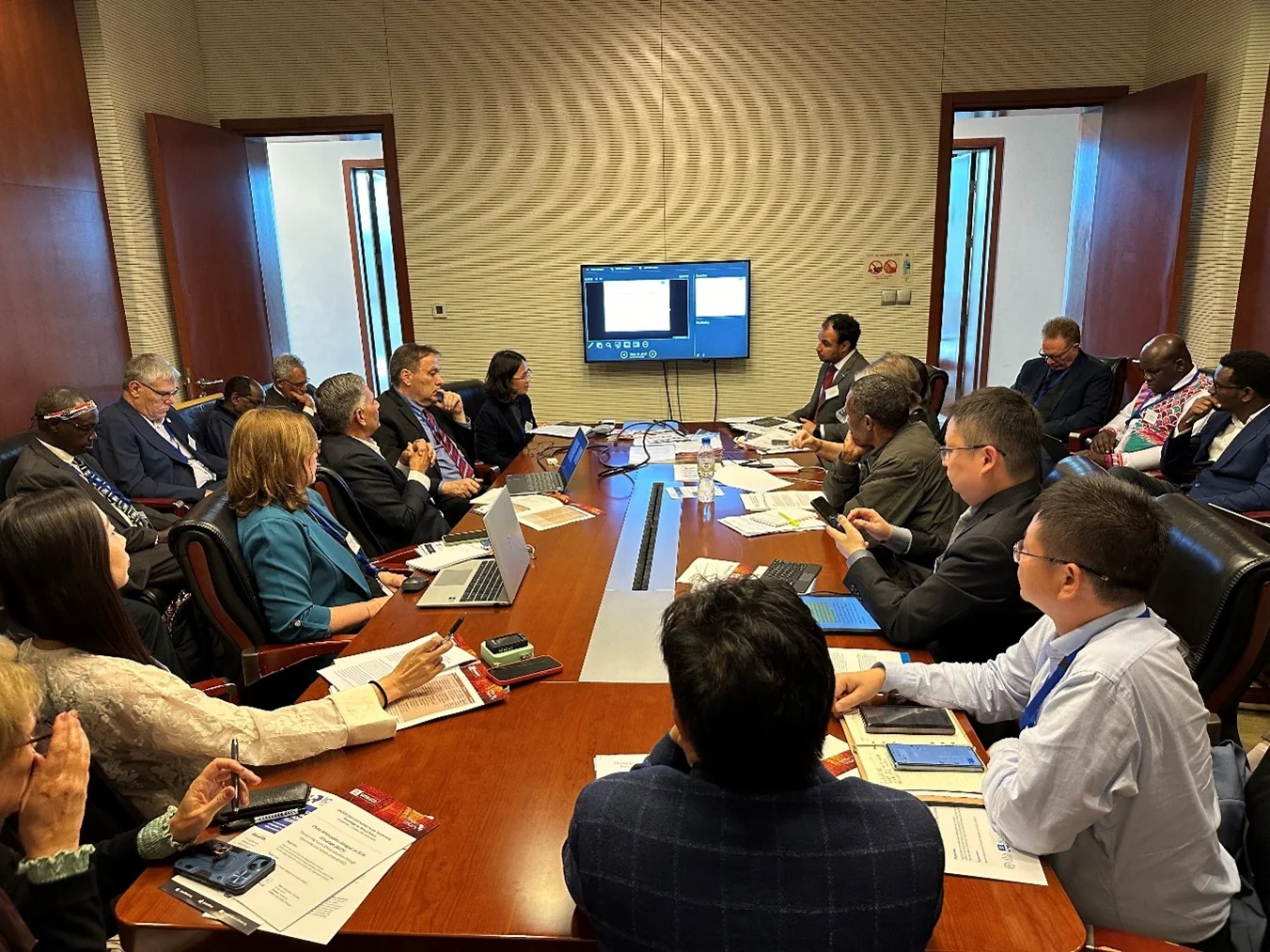
Haijun Zeng, Vice Dean of BNU’s Smart Learning Institute, and Ahmed Tlili concluded by emphasizing international cooperation, particularly between China and African countries, for responsible AI integration in education. The session also announced the launch of the China–Africa Community of Practice (CoP) on AI in Education.
Key takeaways
Key takeaways from the session included:
- AI integration: use AI responsibly to improve educational outcomes while respecting cultural contexts.
- Ethical considerations: consider ethical implications when developing AI tools and support human-centred education.
- Cooperation: share resources, knowledge and practices through international partnerships.
- Youth and gender: strengthen youth leadership and promote gender equality in education.
Related reading and sources
For background, read the 2023 China–Africa AI in Education community cooperation initiative. The earlier initiative and this meeting’s launch announcement are presented in their respective historical contexts.
Sources: SLI’s Chinese report, SLI’s English report, the African Union event page and the official concept notes and agenda. The agenda scheduled this session for 2 October 2024, 14:30–16:00. It is a pre-event programme; accounts of contributions follow the post-event reports. Roles and affiliations reflect the 2024 records.
Original link: https://aiedchair.bnu.edu.cn/the-unesco-chair-on-ai-in-education-convened-a-parallel-session-in-addis-ababa-ethiopia-to-transform-the-future-of-african-education-through-responsible-and-human-centered-artificial-intelligence-in/