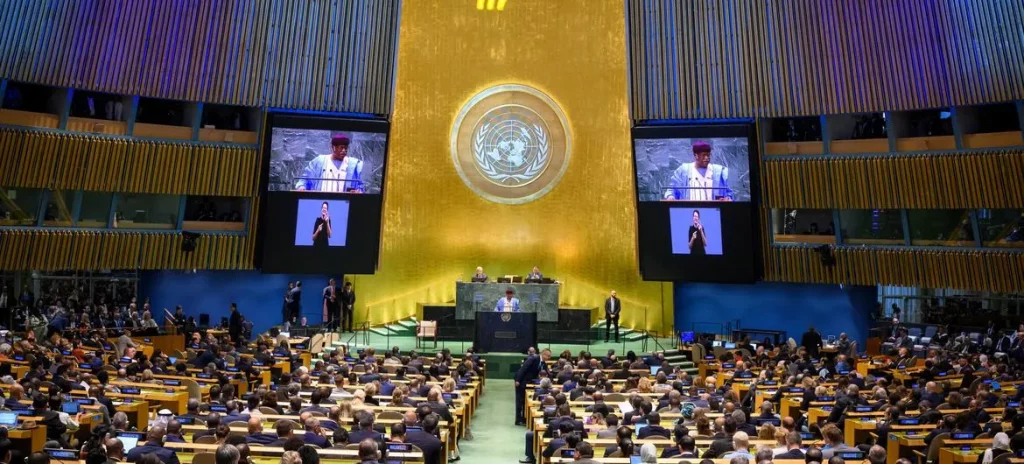
Historical report: the Summit took place on 22–23 September 2024; this Chair article was originally published on 26 September 2024. The six themes below are an editorial overview, rather than the official chapter structure of the Pact.
In this article
The United Nations Summit of the Future was held at UN Headquarters in New York on 22–23 September 2024 and concluded on 23 September.
According to Xinhua's closing report, more than 240 leaders or representatives from countries, regions and international organisations spoke during the Summit. On 22 September, the UN General Assembly adopted the Pact for the Future and its annexes, the Global Digital Compact and the Declaration on Future Generations. The Pact's five chapters address sustainable development and financing for development; international peace and security; science, technology and innovation and digital cooperation; youth and future generations; and transforming global governance.
1. Sustainable development and financing for development
Sustainable development remained central to the global agenda. The Summit reaffirmed commitments to the 2030 Agenda and the Sustainable Development Goals, particularly poverty eradication, ending hunger and gender equality, and called for stronger financial and technological support for developing countries. Action 1 commits to bold, ambitious, accelerated, just and transformative action to implement the 2030 Agenda, achieve the Goals and leave no one behind.
2. International peace and security
Global security challenges extend from land to cyberspace and outer space. The Summit emphasised international law, multilateral cooperation and diplomacy as means to maintain peace and security and prevent new conflicts. It called for effective collective measures to prevent and remove threats to international peace and security, rebuild trust and deepen international cooperation.
3. Science, technology and innovation and digital cooperation
Science, technology, innovation and digital cooperation were presented as important drivers of future development, particularly for bridging divides between developing and developed countries. The Pact calls for responsible management of technological risks, including the ways innovation can perpetuate or deepen inequalities. International cooperation should help technology act as a catalyst for inclusive and sustainable development, addressing social inequalities and environmental challenges rather than reinforcing them.
4. Youth and future generations
Young people's participation in national and international decision-making is important to a peaceful and secure future. The Summit pledged greater investment in the social and economic development of children and young people so they can realise their potential. It also called for stronger opportunities for meaningful youth participation and a greater voice in global affairs, including climate change and social justice.
5. Transforming global governance
The Summit called for transforming global governance and reinvigorating the multilateral system to address present and future challenges and opportunities. Reform of the UN and key institutions, including the Security Council, was highlighted as necessary for greater effectiveness, fairness and transparency. The aim is a more inclusive and responsive multilateral system in which countries can participate more equitably in global decision-making.
6. Climate action
Climate change remained an urgent global challenge, with particularly severe effects on developing countries. The Summit called for faster implementation of the Paris Agreement, lower greenhouse-gas emissions and stronger support for developing countries' climate resilience. Paragraph 28(c) calls on parties to contribute, in a nationally determined manner and taking account of their different circumstances, to global efforts including tripling renewable-energy capacity and doubling the global average annual rate of energy-efficiency improvements by 2030. Paragraph 28(e) also emphasises conserving, protecting and restoring nature and ecosystems, including forests and other land and marine carbon sinks.
The 2024 Summit of the Future set out a framework for global cooperation on complex challenges through the Pact for the Future. Across sustainable development, international security, technology, youth participation and climate action, its outcomes express a shared direction: building a more inclusive, just and sustainable future through multilateral cooperation and adherence to international law. Giving effect to those commitments requires follow-up action.
Sources and image credit
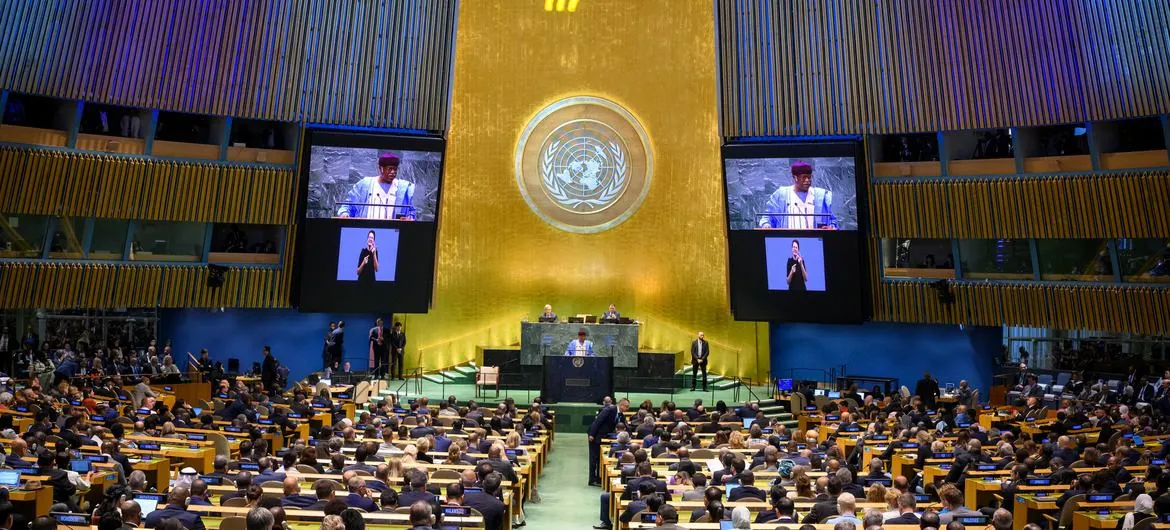
This edition brings together the complete information in the Chair's original Chinese and English versions, including their complementary climate-action details. Document names and key points have been checked against UN General Assembly resolution 79/1 and its annexes. The count of more than 240 speakers comes from Xinhua's 24 September 2024 report and includes leaders or representatives from countries, regions and international organisations; it is distinct from the approximately 130 heads of state and government reported as attending. The photograph shows the Summit's opening on 22 September, not its closing on 23 September.
- UN General Assembly resolution 79/1: Pact for the Future and annexes — English PDF,56 pages
- UN General Assembly resolution 79/1 — official Chinese PDF
- Xinhua: Summit of the Future concludes —24 September 2024
- UN News: sustain momentum from the Summit —23 September 2024; photograph and credit
- UN General Assembly official recordA/79/PV.6 —23 September 2024, including closing remarks; Chinese PDF
Original link: https://aiedchair.bnu.edu.cn/news-8236-en/