Historical report: the press conference took place on 26 September 2024, and this Chair article was originally published on 28 September 2024. The positions, statistics and planned measures below refer to that reporting period.
In this article
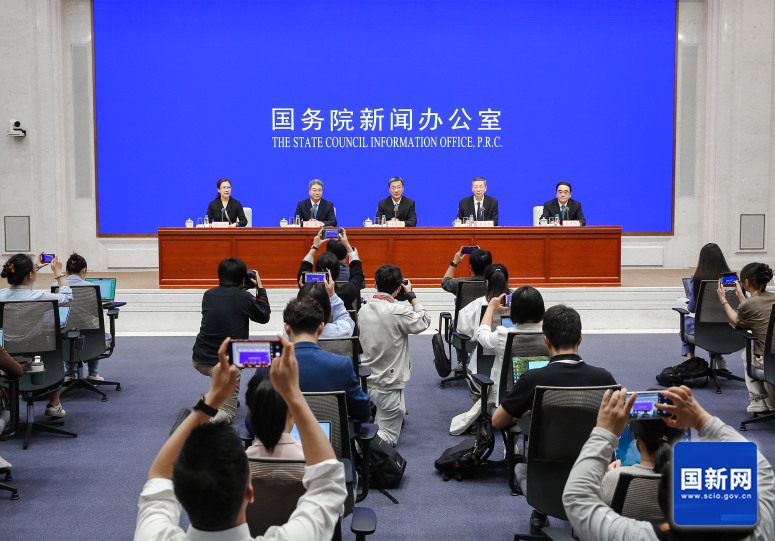
Education is the foundation of building a strong country and achieving national rejuvenation. On 26 September 2024, the State Council Information Office held a press conference in its series on promoting high-quality development, at which officials from the Ministry of Education outlined relevant developments.
1. Optimising the structure of higher education
Minister of Education Huai Jinpeng said that the ministry regarded the preparation and implementation of the outline for building China into a leading country in education as a strategic measure for promoting high-quality development. It would fully implement the major tasks for comprehensive education reform set out at the third plenary session of the 20th Central Committee of the Communist Party of China, making steady progress towards that strategic goal.
The ministry was optimising the structure of higher education and improving the mechanism for adjusting university disciplines. According to the briefing, China then had 1,308 institutions offering undergraduate education. Undergraduate majors comprised 12 disciplinary categories,93 groups and 816 types, with 62,000 programme offerings across institutions. In 2024,1,673 programme offerings urgently needed for national strategies were added, while 1,670 offerings that no longer met economic and social development needs were discontinued.
Vice Minister Wu Yan said that the next step was to strengthen alignment between undergraduate programmes and urgent national strategic needs; between university programmes, especially those at local institutions, and regional development; and between undergraduate programmes and students' all-round development. The structure of programmes would be adjusted and optimised more rapidly.
The ministry was also reforming the training of outstanding engineers. Under the overall guidance of the Organization Department of the CPC Central Committee, the Ministry of Education and the State-owned Assets Supervision and Administration Commission of the State Council had jointly supported Double First-Class universities and centrally administered state-owned enterprises in establishing 32 national colleges for outstanding engineers in two batches. In response to national strategic needs, they were also supporting four national institutes for innovation in outstanding-engineer training across Beijing, Shanghai and the Guangdong–Hong Kong–Macao Greater Bay Area.
Huai said that university reforms would proceed according to institutional type, and the regional distribution of higher education would be optimised. In particular, a programme for breakthroughs in basic and interdisciplinary fields would establish an effective mechanism through which scientific and technological innovation and talent development reinforce each other and support high-quality disciplinary development. Priority would also be given to training people urgently needed for major national strategies and strengthening the cultivation of outstanding innovative talent.
2. Supporting students' healthy development
Basic education had reached the average level of high-income countries worldwide; student assistance covered every educational stage, with a cumulative 1.4 billion beneficiary instances; and the nutrition improvement programme had provided 420 million beneficiary instances. These figures indicated that the public was benefiting more fully from education.
How could children's healthy, all-round development be supported? At the start of the new school year, some localities extended breaks in primary and secondary schools from 10 to 15 minutes. Vice Minister Wang Jiayi said that the system for all-round moral, intellectual, physical, aesthetic and labour education should be further improved, with coordinated reform and innovation in ideological and political courses across primary, secondary and higher education. Student fitness programmes and mental-health initiatives would be implemented, ensuring at least two hours of combined physical activity each day for primary and secondary pupils. Cooperation among schools, families and communities in education would also be strengthened.
To make education more responsive to economic and social development, the provision of basic public education services should be coordinated with demographic changes. Vice Minister Wang Guangyan said that this required an integrated approach using a range of measures. In preschool education, as the relevant age cohort continued to shrink, the distribution of affordable, broadly accessible provision should be optimised and public provision increased steadily. In compulsory education, primary-school enrolment had peaked in 2023, while the lower-secondary age cohort was still growing; the distribution of urban and rural schools should therefore be further optimised, and school places expanded in areas receiving a net inflow of school-age children. In upper-secondary education, public spending should be increased appropriately and more diverse types of schools developed. In higher education, opportunities should be expanded by enlarging and upgrading existing institutions, making better use of capacity and establishing new institutions.
3. Deepening comprehensive education reform
Comprehensive education reform had deepened in recent years. Over the preceding three years, the education system had steadily advanced the Double Reduction policy, which reduces excessive homework and off-campus subject-tutoring burdens, while strengthening schools' central role. The number of subject-tutoring providers serving compulsory-education pupils had fallen substantially, as had homework and off-campus tutoring burdens. More than 90% of students voluntarily participated in school after-class services, and teaching quality in compulsory education had improved markedly.
Wang Jiayi said that the next step was to consolidate the results of Double Reduction and create a sound educational environment. Resources would be expanded to sustain classroom teaching quality in primary and secondary schools and improve their regional allocation. Quality would be raised by strengthening schools' own capacity for educational improvement and improving classroom teaching. Practice would be emphasised within a comprehensive educational framework to develop exploratory and innovative thinking. Oversight would be strengthened against disguised or covert subject tutoring and over advance payments collected by tutoring providers.
Digital education is an important means for China to open new paths and create new advantages in educational development. Huai reported that, by September 2024, the National Smart Education Platform had recorded more than 50 billion visits, providing valuable data resources for basic, vocational and higher education.
Wang Guangyan said that, from this new starting point in building a leading country in education, mechanisms should be reformed further and guidelines developed to accelerate digital education. Practical application should guide improvements to resource provision. Digital technologies should support a learning society and lifelong education. The initiative to empower education with AI should be advanced in depth, establishing systems for educational evaluation and evidence-based decision-making supported by big data and artificial intelligence. Greater openness and cooperation should actively promote international exchanges in digital education.
Source: People's Daily. Original headline: Making Steady Progress towards the Strategic Goal of Building a Leading Country in Education.
People's Daily reporter: Ding Yasong.
Sources and image credit
The full text of this site's original Chinese article has been checked against People's Daily,27 September 2024, page 4. The original Chair headline and publication date are retained. The Ministry of Education also republished the report. The photograph has been added from the Baoji Municipal Education Bureau's official account of the same press conference; it is not an image from the newspaper article. Figures for student assistance and nutrition refer to beneficiary instances, rather than distinct individuals.
Original link: https://aiedchair.bnu.edu.cn/news-8233-en/