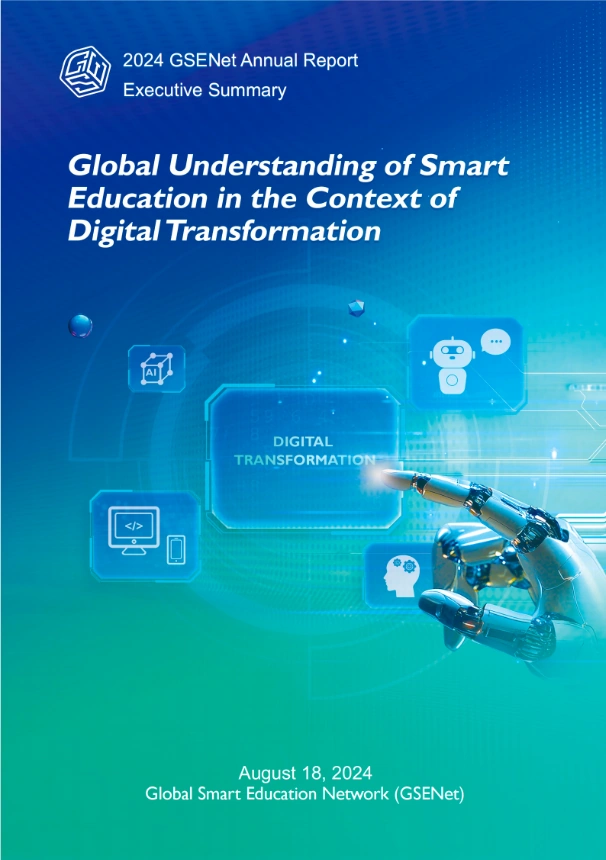
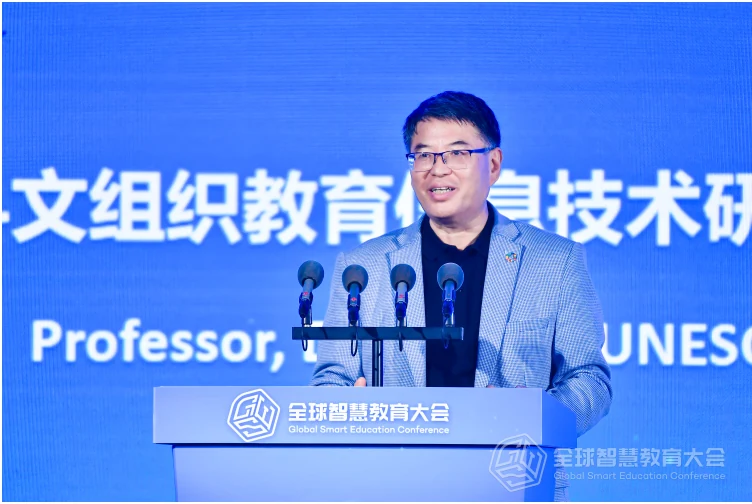
On 18 August 2024, during the Global Smart Education Conference opening and plenary session, Huang Ronghuai, Co-Dean of BNU’s Smart Learning Institute, and Zhan Tao, Director of UNESCO Institute for Information Technologies in Education (IITE), launched “Global Understanding of Smart Education in the Context of Digital Transformation” on behalf of the Global Smart Education Network (GSENet).
Zhan said that GSENet had brought together 15 members during its first two years and would remain open, encouraging joint work towards sustainable development. The figure is reported in the historical context of the 2024 launch.
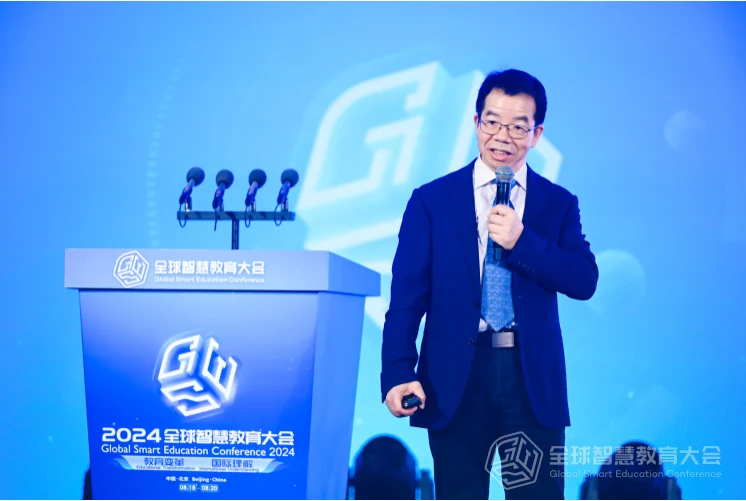
Huang described the report as the latest outcome of GSENet’s Joint Research Program on National Smart Education Strategies. It brought together expert perspectives, digital education policies, public data and cases on inclusion and equity to examine development pathways and strengthen international understanding. He presented four strands of research.
1. Expert perspectives: aspirations and enabling conditions
The first strand examined educators’, policymakers’ and scholars’ understanding of smart education. It identified a shared vision of quality education in the AI era, distinguishing “performative features”, representing educational aspirations, from “constructive features”, supporting sustainable implementation. The former included:
- Student-centred teaching.
- Assessment supporting rounded development.
- Ubiquitous smart learning environments.
- A culture of continual improvement.
- Commitment to inclusion and equity.
Constructive features concerned the systemic conditions needed to realize that vision:
- Engaged student communities.
- Priority support for teacher development.
- Ethical use of technology.
- Sustainable educational reform planning.
- Effective cross-sector and cross-domain coordination.
Expert perspectives and case studies suggested different regional emphases. These are the report’s broad observations and require interpretation in local context:
- Asia-Pacific: policy-supported, technology-rich and interactive environments addressing diverse needs.
- Western Europe and North America: gender and cultural equity, with international practice and intercultural exchange supporting teachers.
- Eastern Europe: alignment of policy and practice, meaningful technology integration and continuing teacher training.
- Africa: funding and resource-distribution constraints affecting technology and infrastructure investment.
- Latin America and the Caribbean: curricula responding to social needs, alongside challenges in costs, infrastructure and digital literacy.
2. Policy perspectives: six concerns and three stages
The second strand used textual analysis of digital education policies from 48 countries or organizations, coding six concerns within the smart education framework:
- National vision and planning
- Infrastructure development
- Human-resource investment
- Inclusion and equity
- A culture of continual improvement
- Multisector partnerships
The report identified three stages in policy planning, with corresponding emphases:
- Digitization: deeper integration of digital technology.
- Cyberization: fuller use of data resources.
- Intelligentization: effective adoption of intelligent technologies.
Coding comparisons across Europe, the Americas, Asia-Pacific and Africa identified common concerns among policies at similar planning stages. Overall priorities included high-quality, inclusive and sustainable digital ecosystems, sustained infrastructure development and priority for human capacity.
3. Data: ten indicators, thirty sub-indicators and 58 observation points
The third strand established an observation framework with ten primary indicators and thirty sub-indicators, and a dataset covering 58 observation points. It examined relationships and relative contributions to educational quality. “Observation points” follows the report’s terminology and is not relabelled as 58 countries.
International public data sources included:
- Education data from the UNESCO Institute for Statistics.
- World Bank open data.
- OECD eighth-cycle PISA (2022) results and Teaching and Learning International Survey (TALIS) results.
- The Network Readiness Index 2023 from the Portulans Institute and Oxford’s Saïd Business School.
- Relevant data from the International Telecommunication Union and other institutions.
The analysis highlighted relationships between sustained reform planning, cross-sector and cross-domain coordination and educational quality. Ubiquitous learning environments, ethical technology use, inclusion and equity also received attention. Many countries recognized equity and quality school connectivity. These are research findings from observational data, rather than proof of causation.
The research identified areas requiring greater attention:
- Access to digital technology beyond school.
- Digital-leadership training in schools.
- Development of adaptive learning resources.
- Forward-looking approaches to educational reform.
4. Inclusion and equity: special needs, connectivity and gender
The fourth strand involved webinars with more than ten countries and continuing case studies. It treated special educational needs, remote connectivity and gender equity as integral to smart education, asking who can genuinely access and use digital learning opportunities.
Chapter 4 of the full report discussed practical directions for inclusion and equity:
- Appropriate assistive technologies and accessible resources for learners with special educational needs.
- Reliable internet access in remote and underserved communities.
- Social mechanisms supporting gender equity, including skills, affordability and online safety.
The Ningxia case examined the Internet Plus Education demonstration area in Yuanzhou District, Guyuan, China. It considered girls’ equal access to digital education alongside boys and female teachers’ digital teaching practices. Removing geographical, social and institutional barriers could support girls’ potential, alongside teacher development and responsiveness to diverse learning needs.
In the South Pacific case, the Pacific Private Sector Development Initiative (PSDI) supported the Alliance for Affordable Internet (A4AI) in assessing the digital gender gap, including scorecards for Papua New Guinea, Samoa and Tonga. The report considered internet access and women’s empowerment, affordability, digital skills and education, relevant content and services, and online safety, highlighting regional cooperation and policy conditions for reducing disparities.
For learners with special educational needs, the report discussed appropriate, accessible technologies and assistive devices, supporting personalized learning and alternative interaction and communication. It also emphasized learners’ social and cultural contexts. Choices should respond to actual learning needs and coordination among schools, families and support networks.
Five central findings
Huang summarized five central findings at the launch:
- Smart education is emerging as a shared strategic vision for AI-era challenges and quality education.
- Performative dimensions of learning, assessment, infrastructure, sustainability and equity, together with constructive dimensions of students, teachers, technology, policies and partnerships, outline quality education.
- Policies should sustain infrastructure, prioritize human capacity and build inclusive, sustainable, high-quality ecosystems.
- The global data analysis links sustained reform planning, cross-sector coordination, ubiquitous learning environments and inclusion with educational quality.
- Education 2030 requires attention to out-of-school access, school digital leadership, adaptive resources and forward-looking reform.
Read the English report
The English report is available through UNESCO IITE’s publication page. Its rights page specifies open access under CC BY-SA 3.0 IGO and publication by GSENet and BNU’s Smart Learning Institute. This page’s six language versions are edited translations of the launch news; the linked full report is in English.
Sources, related reading and archive notes
This article follows SLI’s launch report, checked against IITE’s institutional coverage and the full report for research scope, indicator terminology and case details. The opening-ceremony report remains separate. Readers can also explore the special and inclusive education resource collection. The cover and two event photographs are retained from the SLI source.
The original site date of 19 August 2024 at 21:28, Chinese title and URL are preserved. The event and SLI source date are 18 August. IITE’s publication page, posted that October, is a later reference rather than the event date; the image-directory year is likewise not used to date the launch.
Original link: https://aiedchair.bnu.edu.cn/news-9983-en/