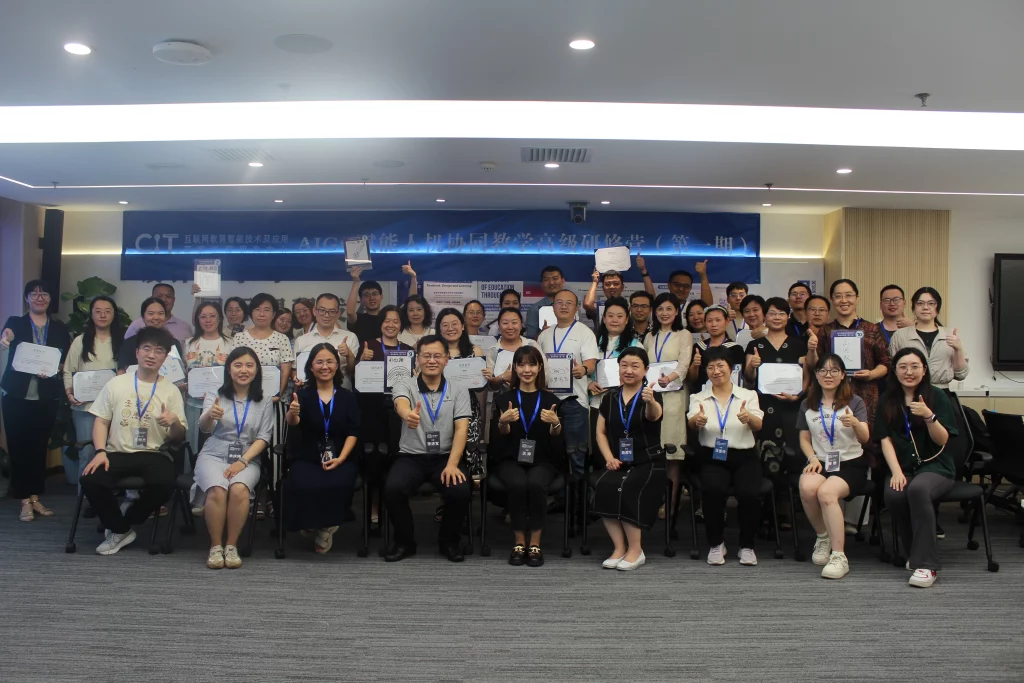
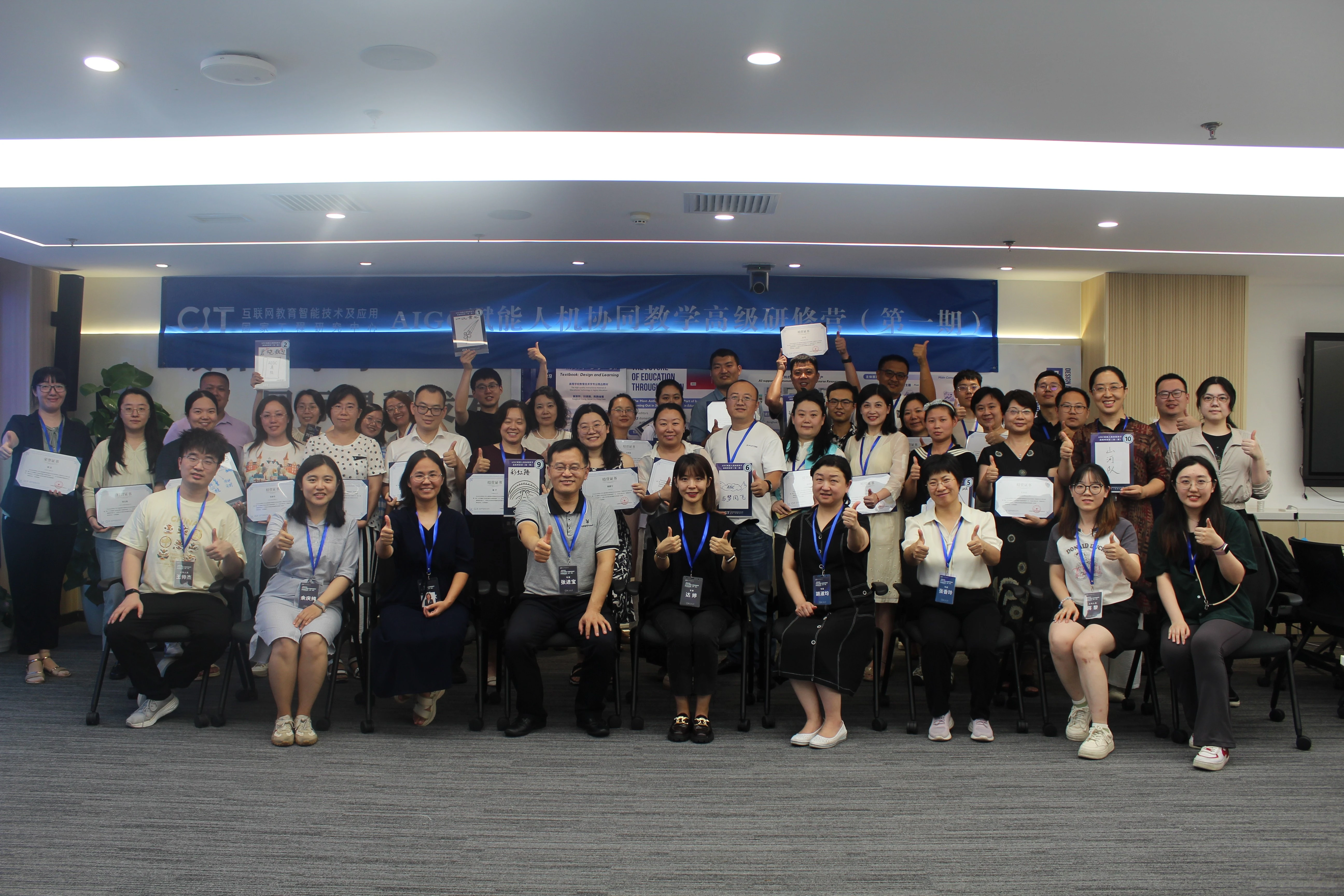
The first Advanced Camp on AIGC-Empowered Human–AI Collaborative Teaching took place on 3–4 August 2024. It was organised by the National Engineering Research Center of Cyberlearning and Intelligent Technology at Beijing Normal University, referred to below as CIT.
The programme included hands-on projects for innovative simulated classrooms using human–AI collaboration, practical work on agents in teaching scenarios, experience with collaborative teaching platforms and large models, and presentations and discussions of classroom teachers’ cases of teaching supported by large models. The expert team comprised Zhang Jinbao, Associate Professor in BNU’s Faculty of Education; Wang Huanhuan, Assistant Researcher at BNU; Zhu Lixin, Senior Engineer at CIT; Da Ting, lead of CIT’s large-model evaluation project; and Chen Hongyu, Engineer at BNU’s Smart Learning Institute. Teaching assistants were Yuan Meng from the University of Wisconsin–Madison, Jiang Li from Capital Normal University, and Wang Shuaijie from Central China Normal University.
More than 40 primary and secondary school teachers from across China, including Beijing, Shanghai and Hong Kong, participated. Alongside exploring emerging theories and ideas, they jointly designed innovative classrooms. The camp also provided a platform for classroom teachers to discuss changing roles in human–AI collaboration in the AIGC era.
Camp highlights
Morning of 3 August
Icebreaking activities
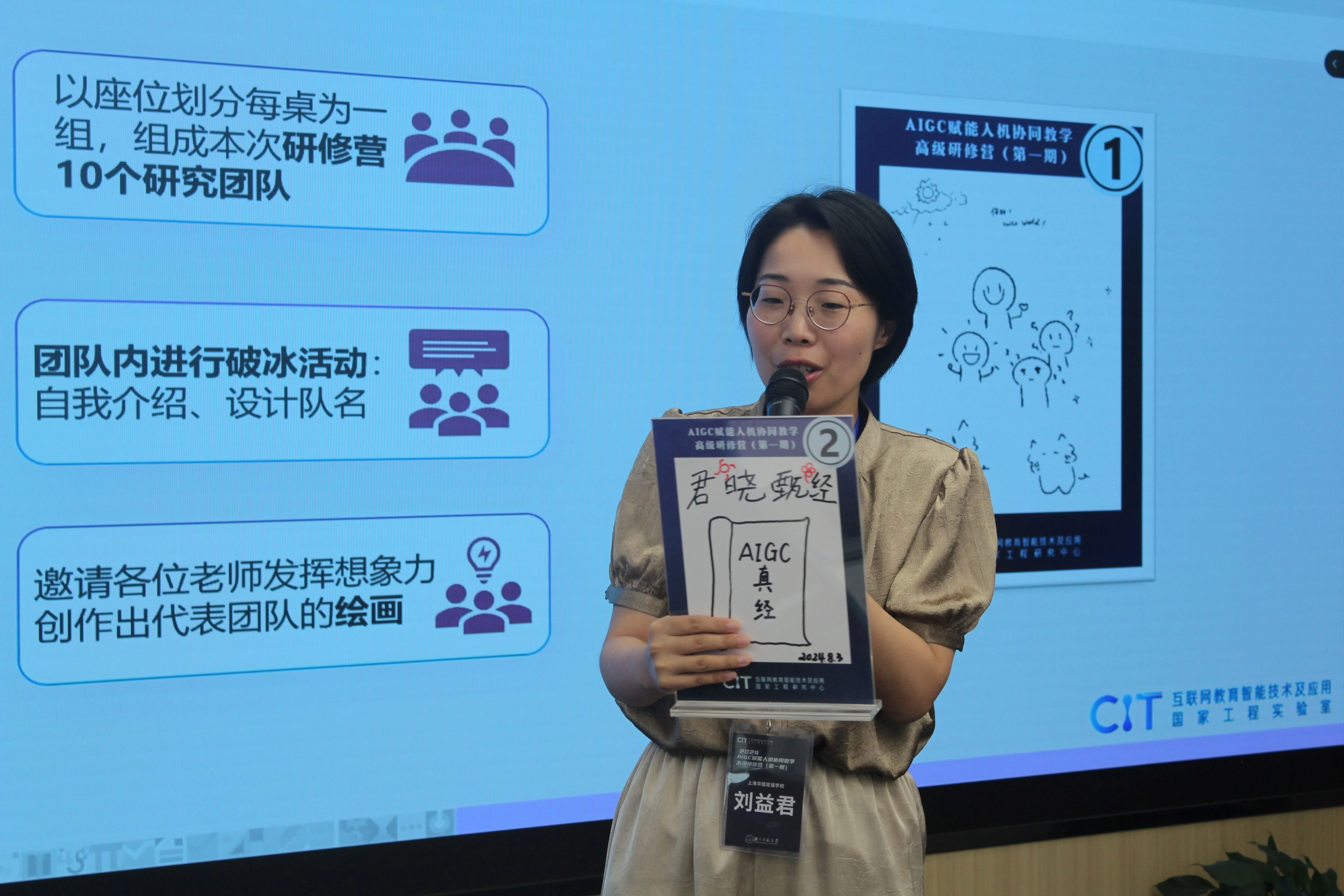
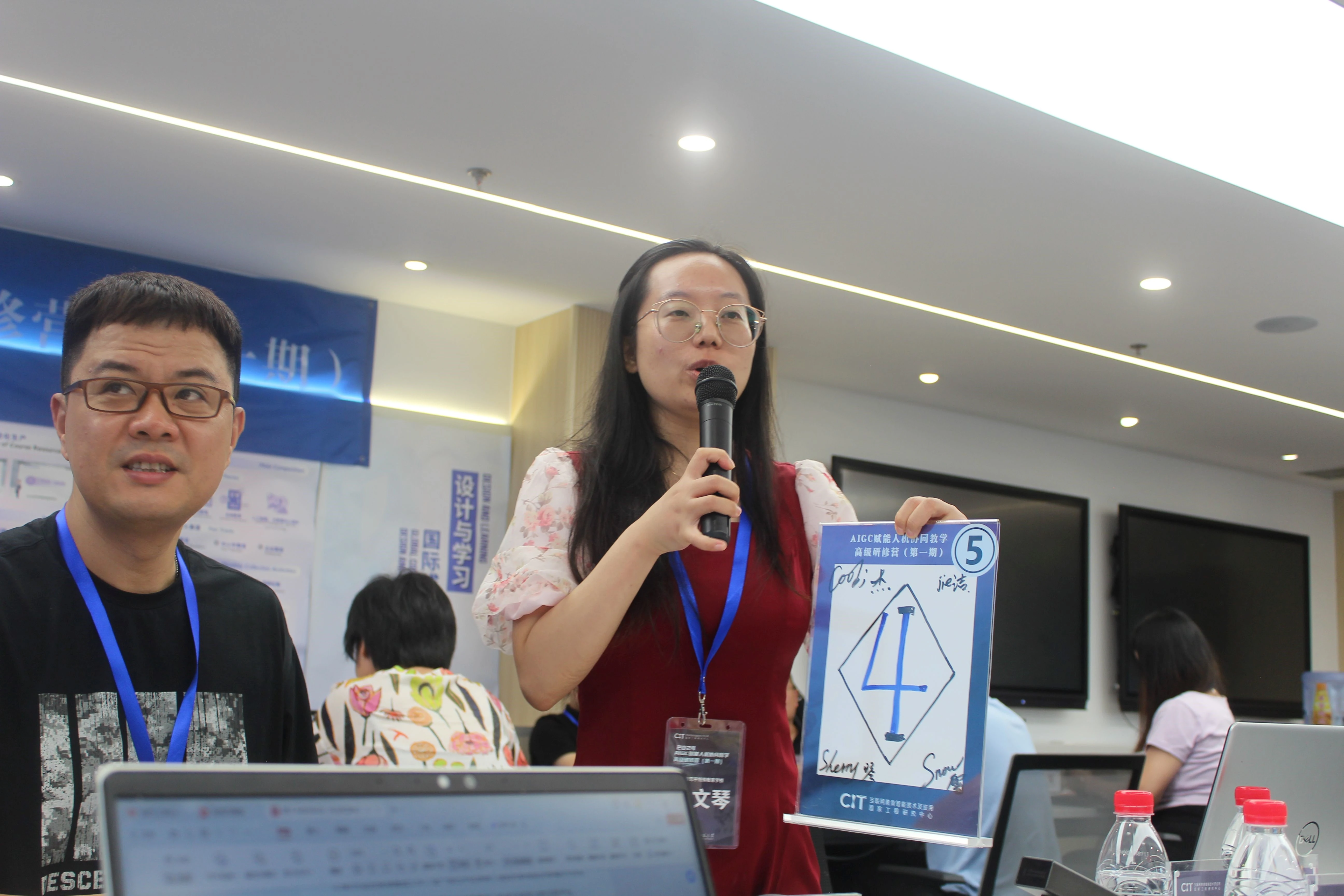
An engaging icebreaker quickly brought the teachers together. At the start, they formed ten research teams. Each team introduced its members, chose a name and created an artwork representing the group. These creative and sharing activities gave teachers an opportunity to express individual ideas and work together.
Team 1 chose “Consistency of Purpose” (一以贯之), expressing its commitment to educating young people while bringing traditional and modern education together. Team 2 combined the names of its four members into “Jun Xiao Zhen Jing” (君晓甄经), a name whose final syllables echo “true knowledge”, conveying the hope of learning together and finding genuine understanding. Team 3’s name, “Wisdom in Action for the Future” (智行未来), highlighted the need to develop educational wisdom and practical experience in the AI era.
The members of Team 4 came from different parts of China. Its name, “Beijing–Shanghai–Guangzhou–Qingdao AI Pioneers” (京沪穗青AI先锋队), brought together their locations and symbolised educational communities from across the country joining forces. Team 5 chose “Four plus i” (四加i对), hoping that a learning community combining people and AI could strengthen education. Team 6’s “Flying Together with Dreams” (与梦同飞) expressed an ambition to transcend geographical boundaries and bring schools and businesses together to improve future teaching efficiency.
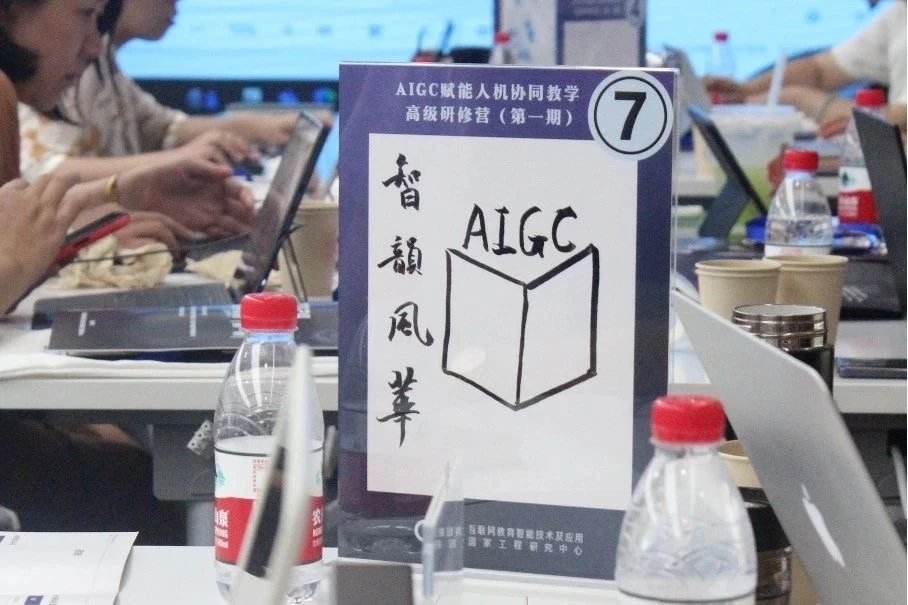
In keeping with the camp’s theme, Team 7 used an AIGC tool to generate its name. Entering its members and the camp theme into a large model produced “The Splendour of Intelligent Creativity” (智韵风华).
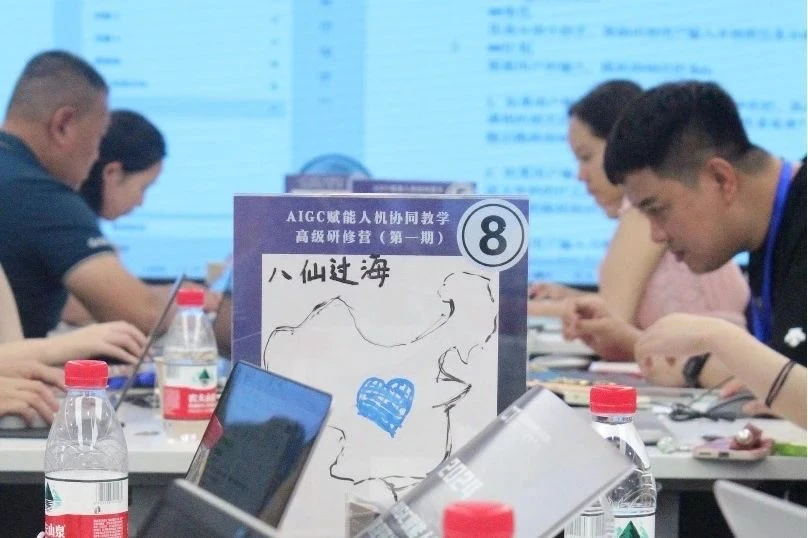
Team 8’s “Eight Immortals Crossing the Sea” (八仙过海) symbolised teachers from different regions crossing mountains and seas to contribute to educational renewal and national development.
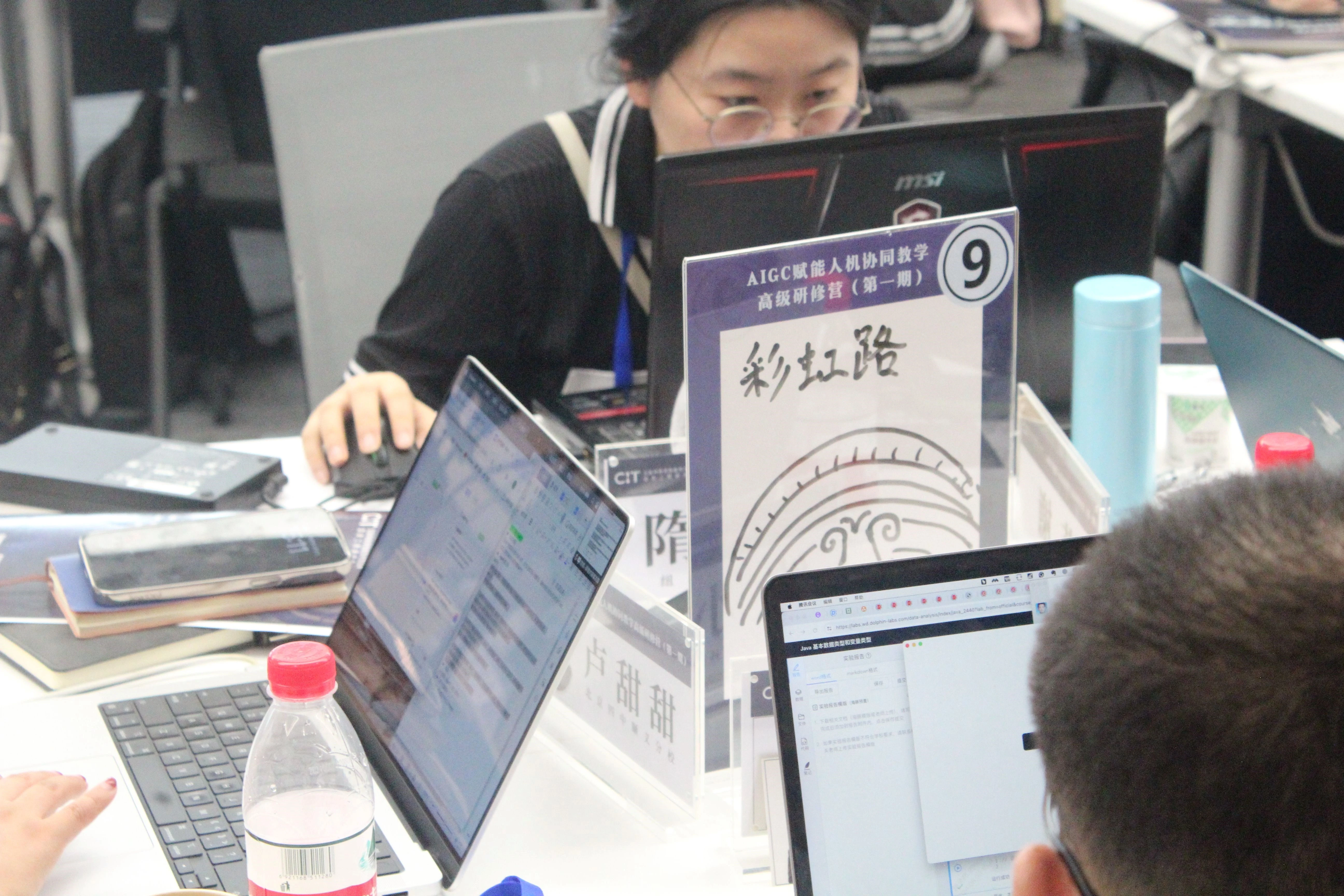
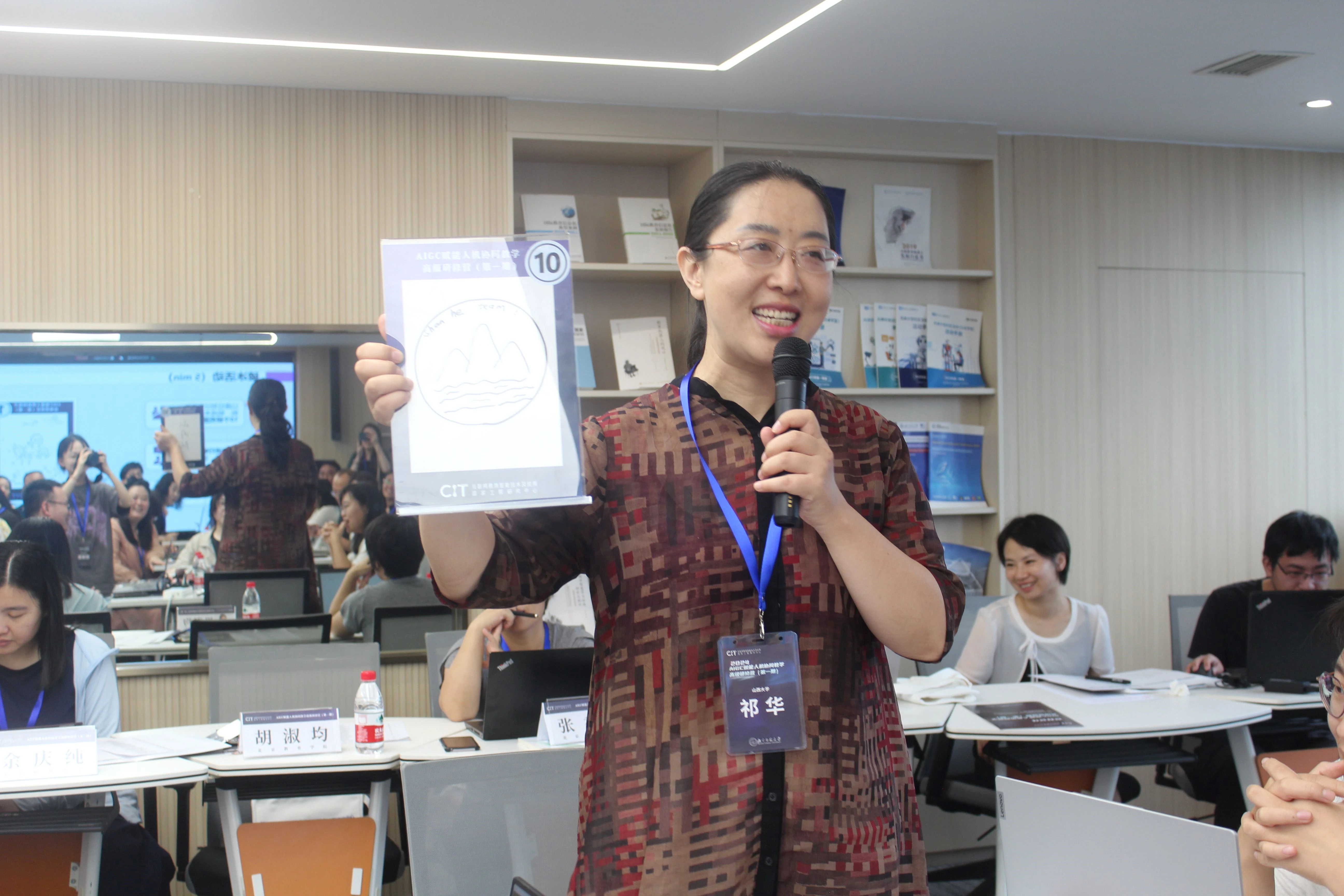
Team 9 chose “Rainbow Road” (彩虹路), symbolising a path of wisdom that breaks through traditional educational barriers. Team 10 combined references to its members’ provinces and cities in “Mountains and Rivers” (山河队), also expressing the poetic vision of “vast mountains and rivers, a galaxy in the human world” (山河远阔,人间星河).
These imaginative names and slogans reflected the teachers’ creativity and teamwork, as well as their hopes and confidence in education empowered by human–AI collaboration.
Expert talks and case presentations
After this brief opportunity to get acquainted, the programme moved on to presentations.
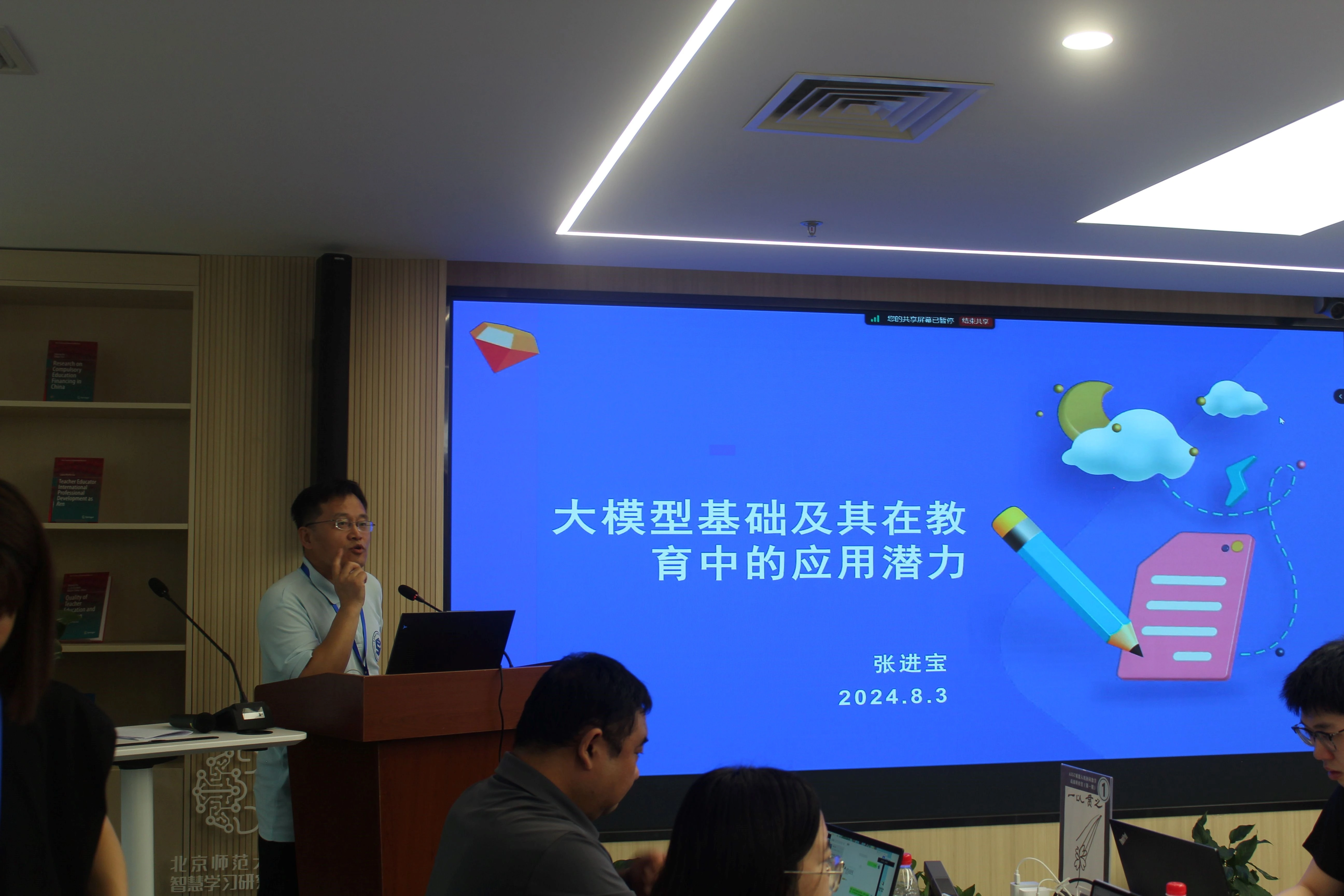
Zhang Jinbao spoke on the fundamentals of large models and their potential applications in education. He examined the possibilities for using them and proposed two approaches: integrating technology into the curriculum to strengthen teachers’ capabilities, and starting from educational objectives to enhance teachers’ wisdom. Finally, using what the original report calls Bruner’s taxonomy of educational objectives, he compared distinctively human skills with AI capabilities, illustrating possibilities for people and AI to achieve educational goals together.
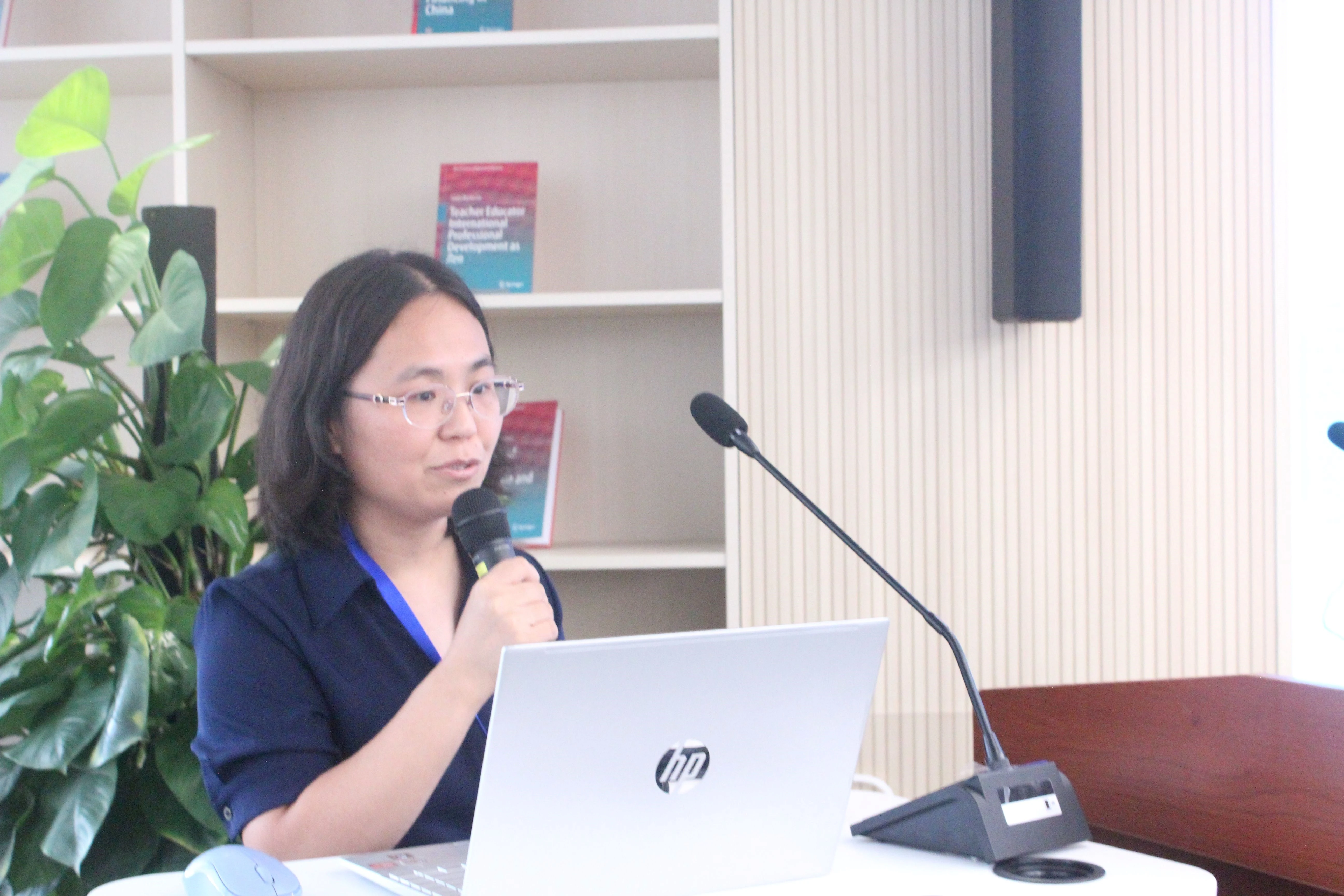
Wang Huanhuan presented prompting techniques for generative AI and their teaching applications. She gave examples of AIGC tools suitable for teachers, offered strategies for writing effective prompts and used practical cases to show how good prompts can improve task efficiency.
Kang Xiaofeng, a high school geography teacher in the international division of Tsinghua University High School, discussed using specific AI tools to improve classroom interaction, support differentiated teaching and provide intelligent feedback. He introduced curi.live, classcompanion.com and diffit.me. In the report’s account, these tools respectively support real-time classroom interaction with students, management of online learning behaviour and personalised teaching, and generation of teaching resources at different levels of difficulty to suit teachers’ needs. He led in-person teachers and online livestream viewers through demonstrations of all three tools.
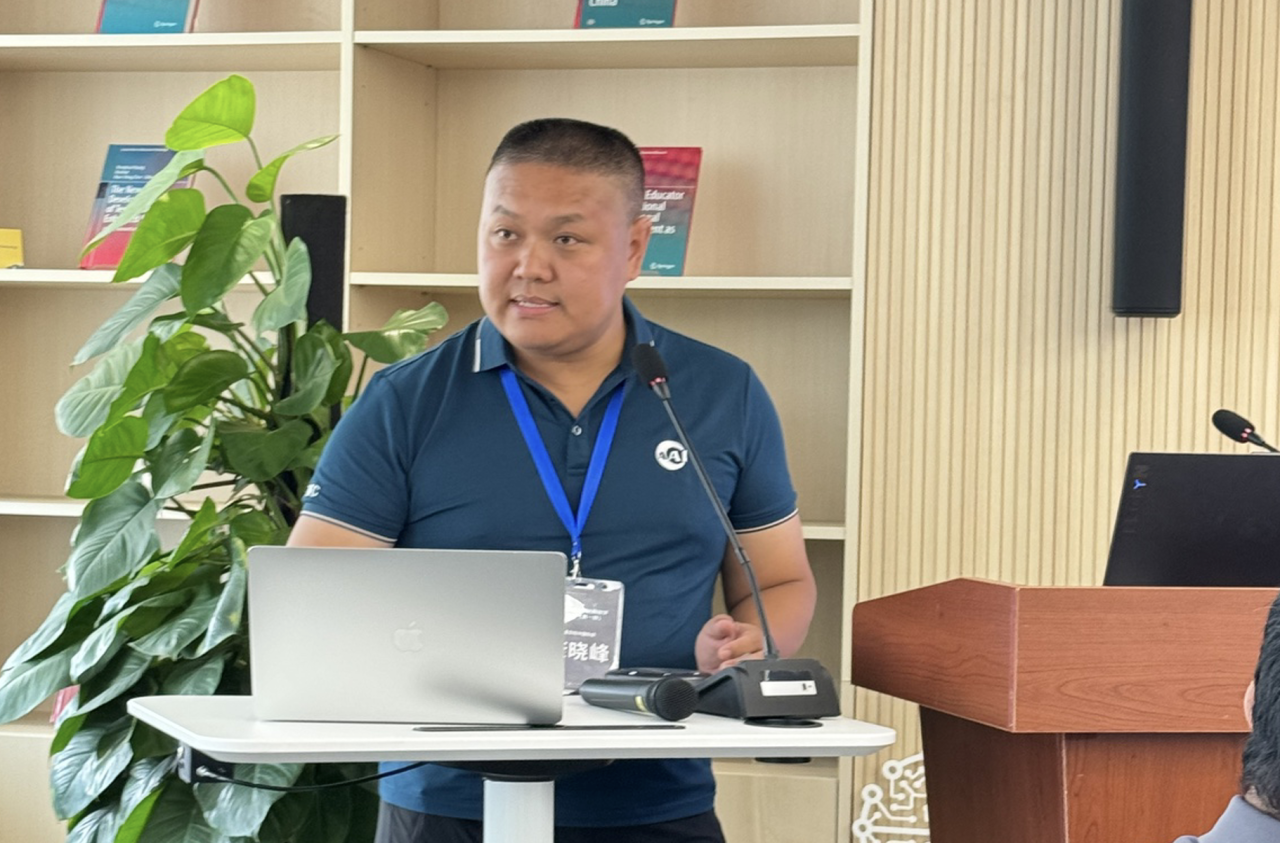
Li Shuyu, a distinguished mathematics teacher at Beijing Middle School, explored mathematical modelling activities in learning quadratic functions from an interdisciplinary perspective. She described guiding students in mathematical modelling with large language models, using AI algorithms to investigate students’ foundational mathematics skills, and recommending personalised learning plans informed by the models’ analysis.
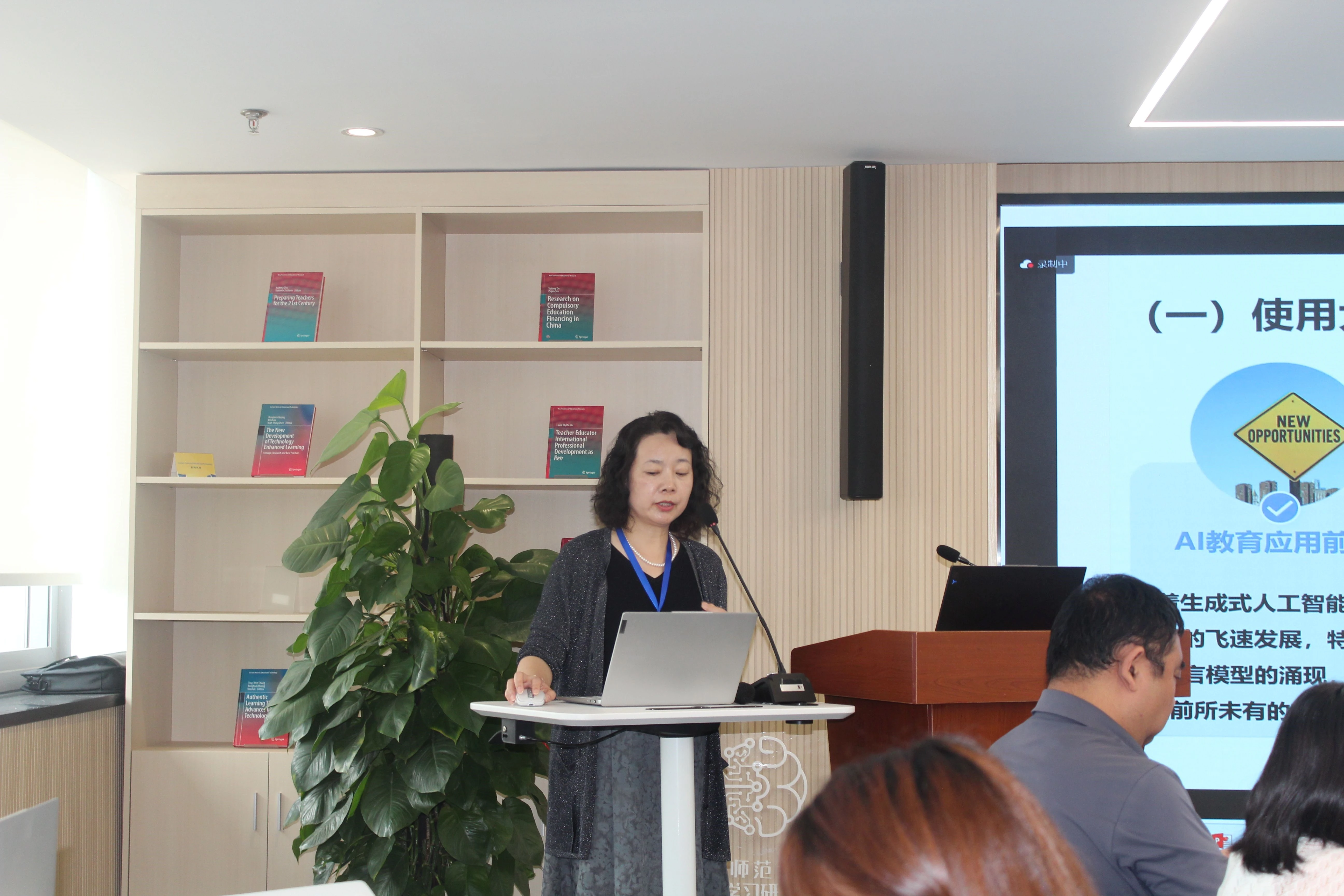
Afternoon of 3 August
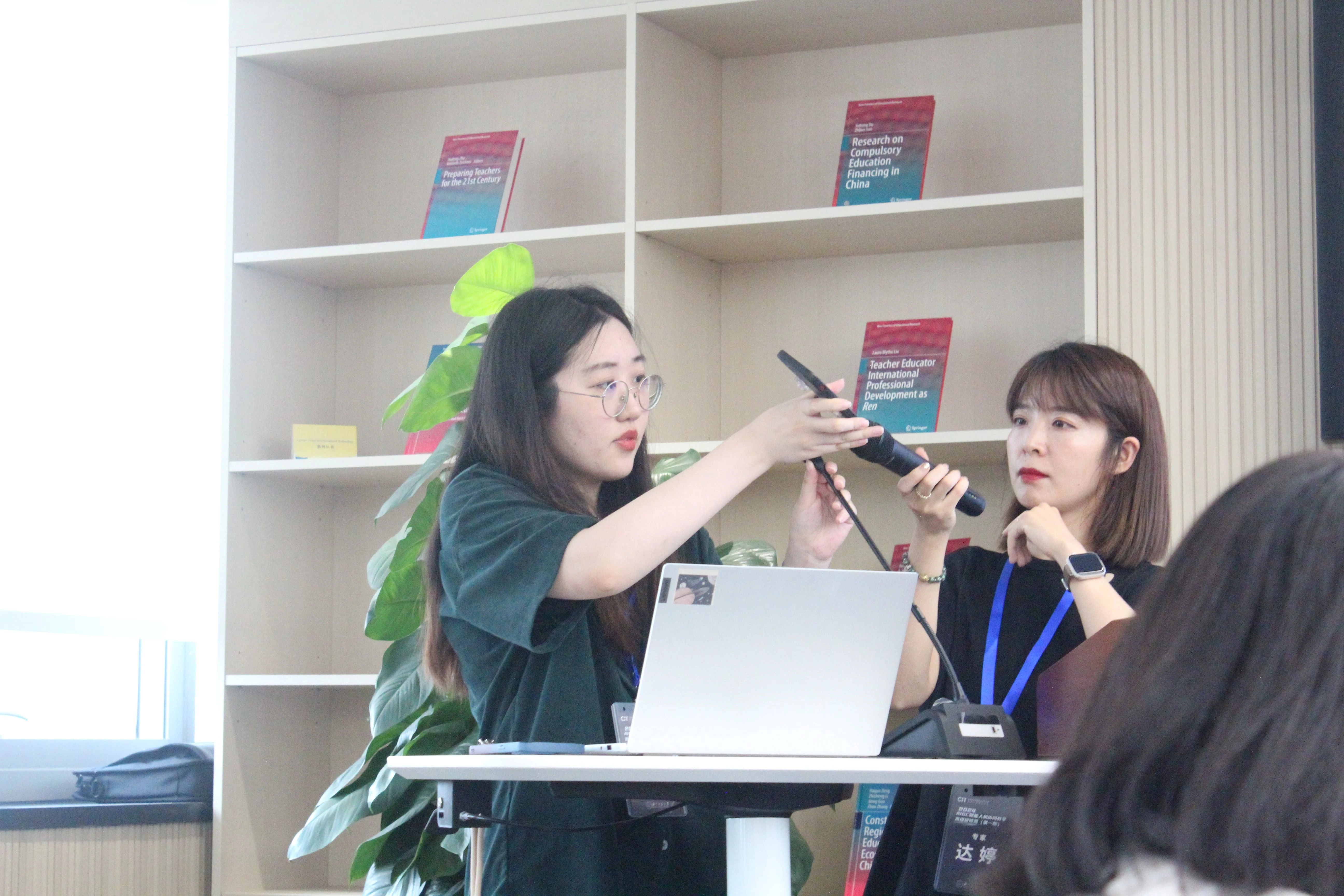
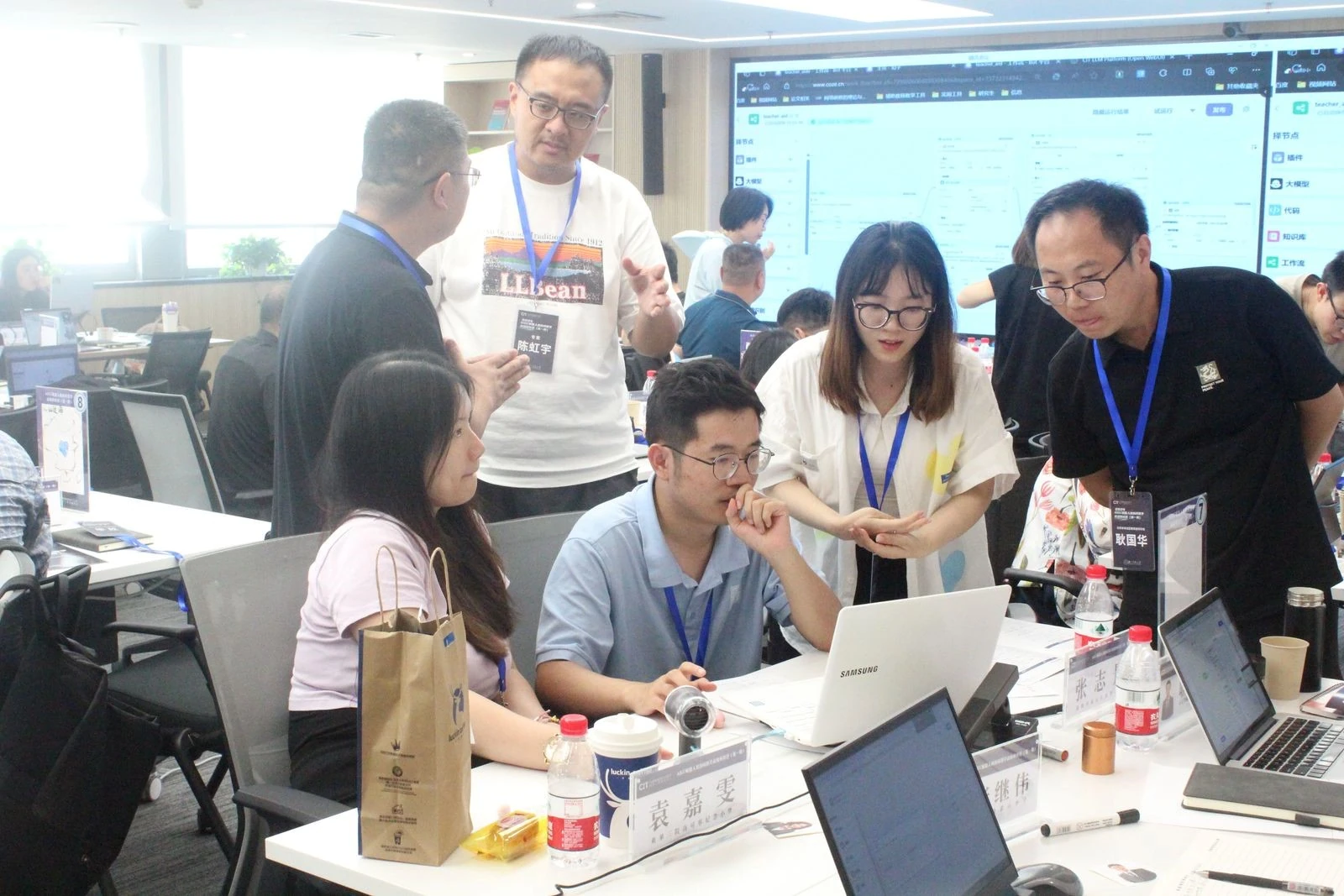
The afternoon focused on practical agent applications in teaching. After learning about agent concepts, mainstream frameworks and design patterns, teachers worked with the teaching assistants to design and build an agent supporting Chinese-language learning. They learned the functions and use of the platform’s components. During independent practice, teams discussed their ideas, transferred what they had learned to new situations and implemented new proposals.
Morning of 4 August
Expert talks and case presentations
The second morning featured two expert talks and two examples of good practice. Zhu Lixin spoke on AI teaching tools for improving teachers’ efficiency. He presented practical cases of AI supporting teaching and personalised student learning, explained techniques and points to consider when using these technologies and tools, and offered suggestions for AI-supported teacher professional development.
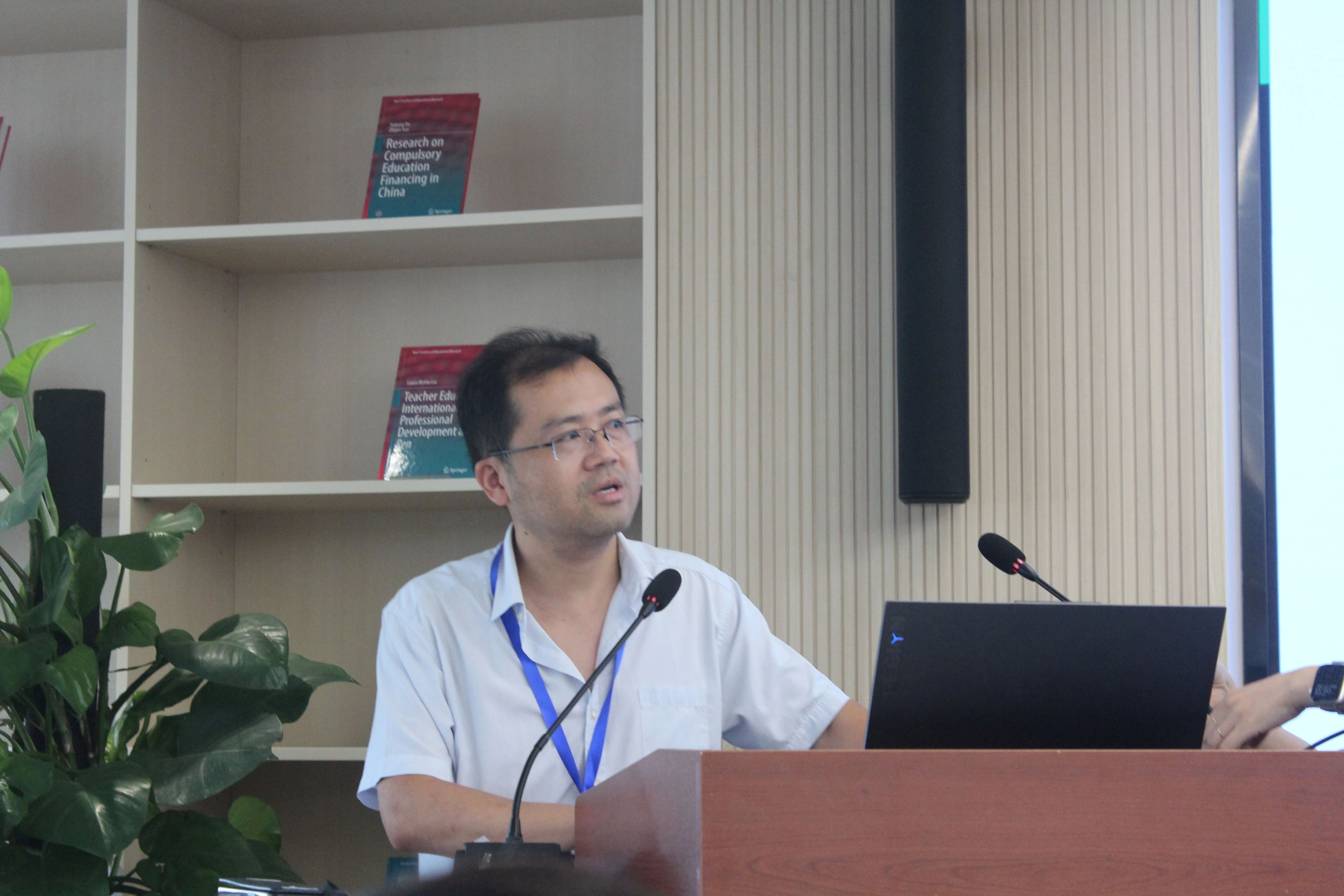
Da Ting discussed evaluating the capabilities and limitations of large models for human–AI collaborative teaching. She noted that educational applications were still at an early stage but had already attracted considerable attention, particularly in prompting new thinking about collaborative teaching practice. Her talk explored the state of research on large-model evaluation in educational settings; how to define relevant capability dimensions; models’ actual educational capabilities; differences from human teachers; how to allocate educational tasks according to the respective strengths of people and machines; and the limitations of such models across subjects.
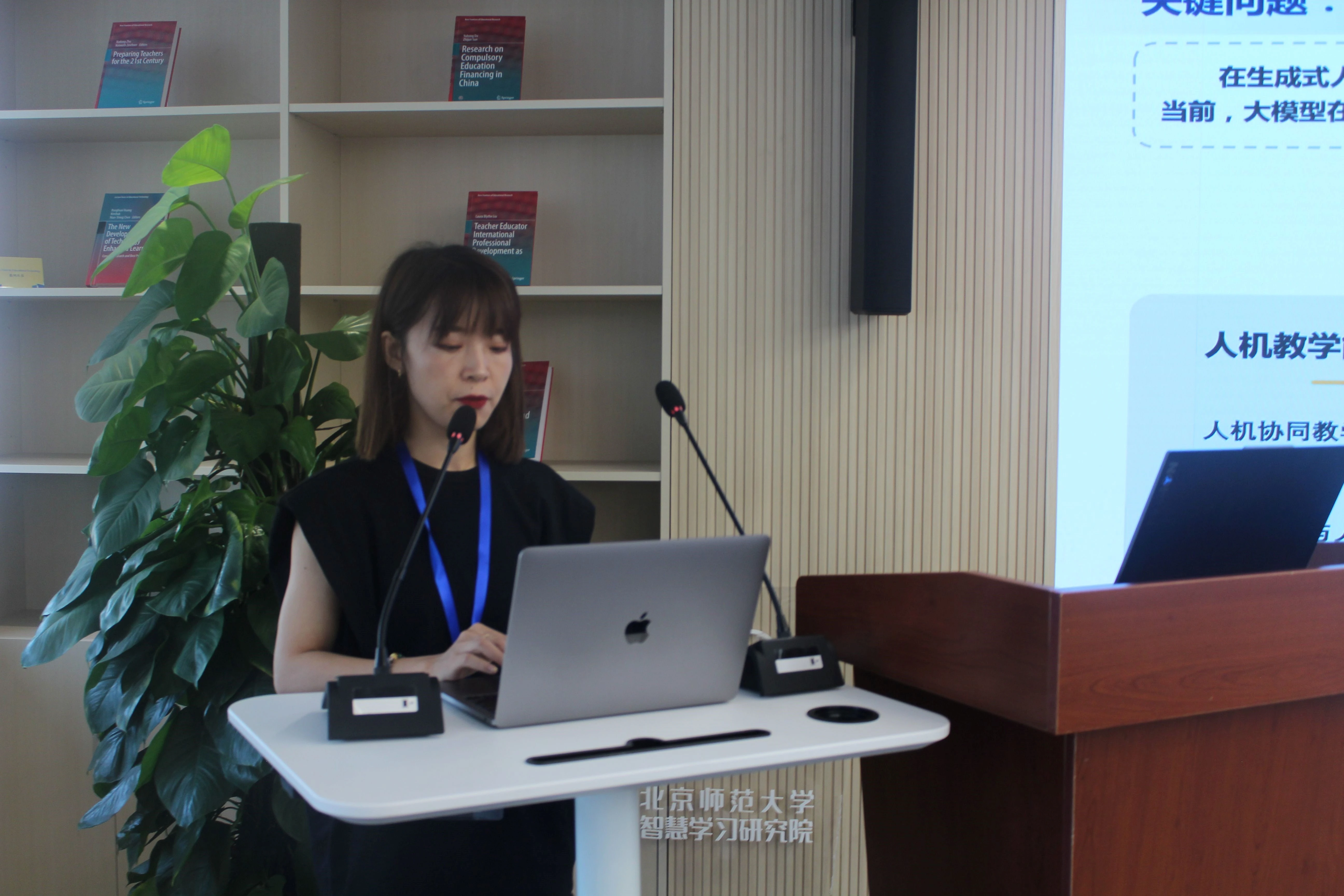
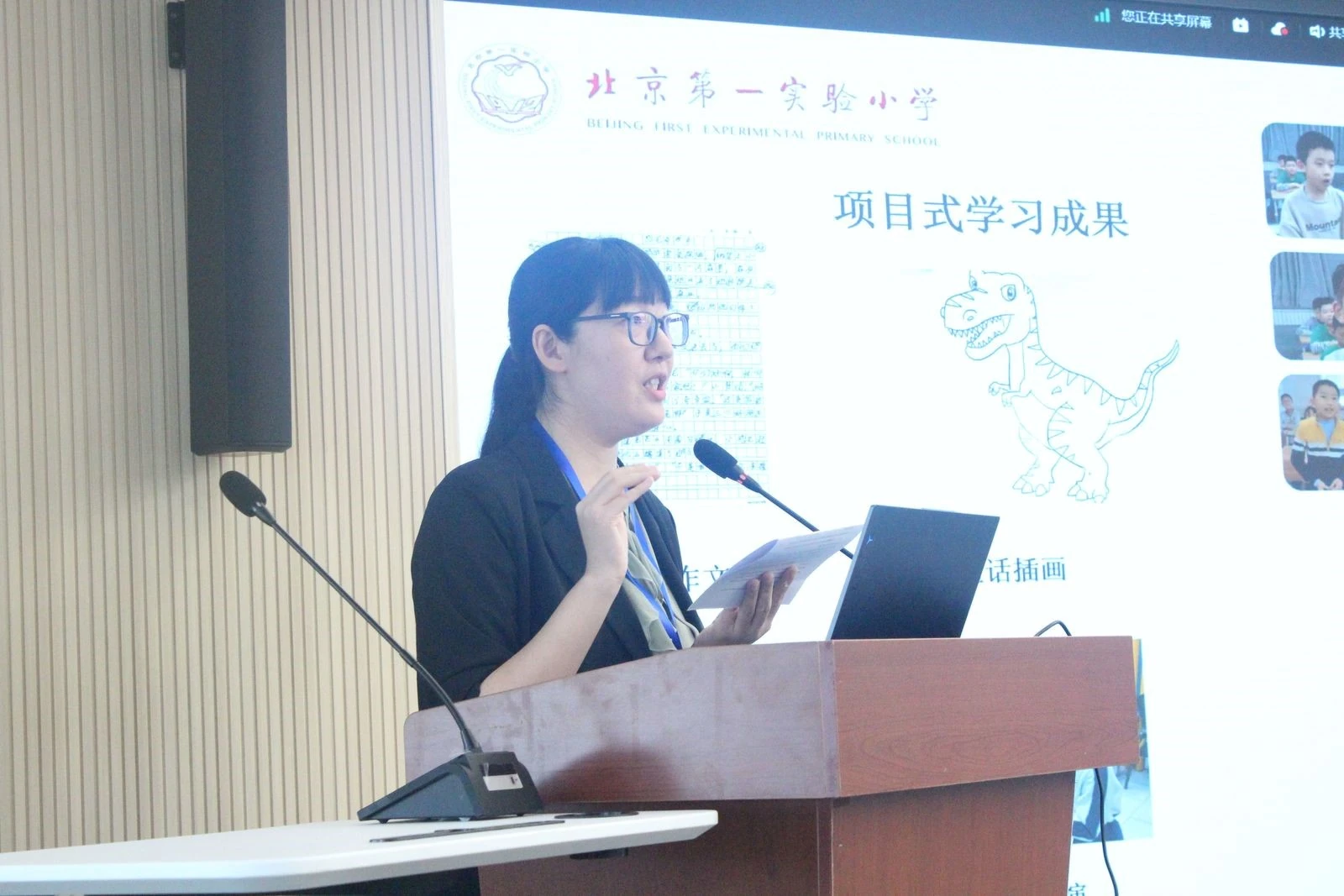
Zhu Jie of Beijing No. 1 Experimental Primary School presented interdisciplinary practice combining primary Chinese-language learning and information technology. Taking a lesson on extinct prehistoric animals from the first volume of the Grade 5 science textbook as an example, the presentation discussed practical classroom applications of human–AI collaborative teaching. The case showed students writing fairy tales through this collaboration, followed by an introduction to a learning assessment system based on digital profiles.
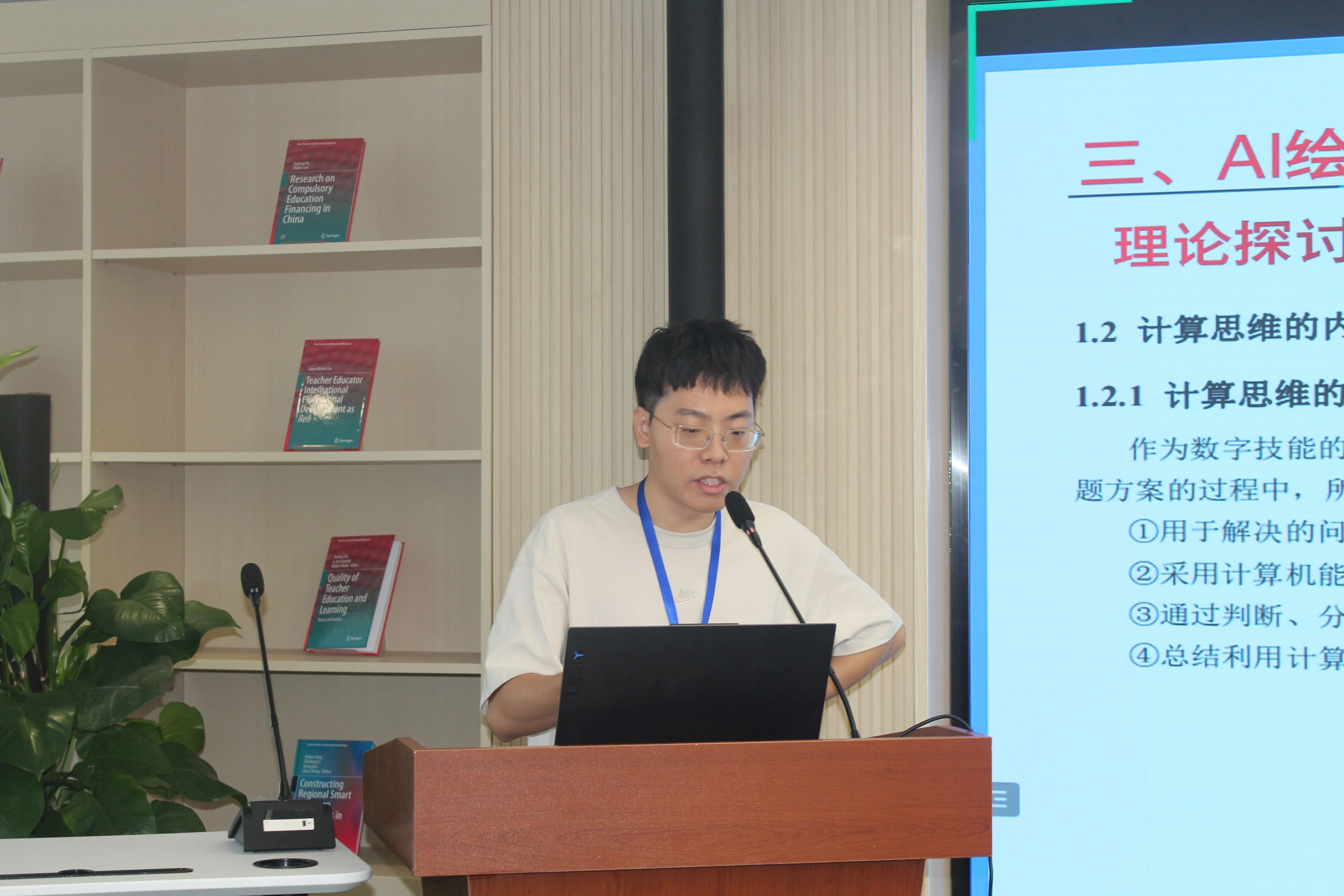
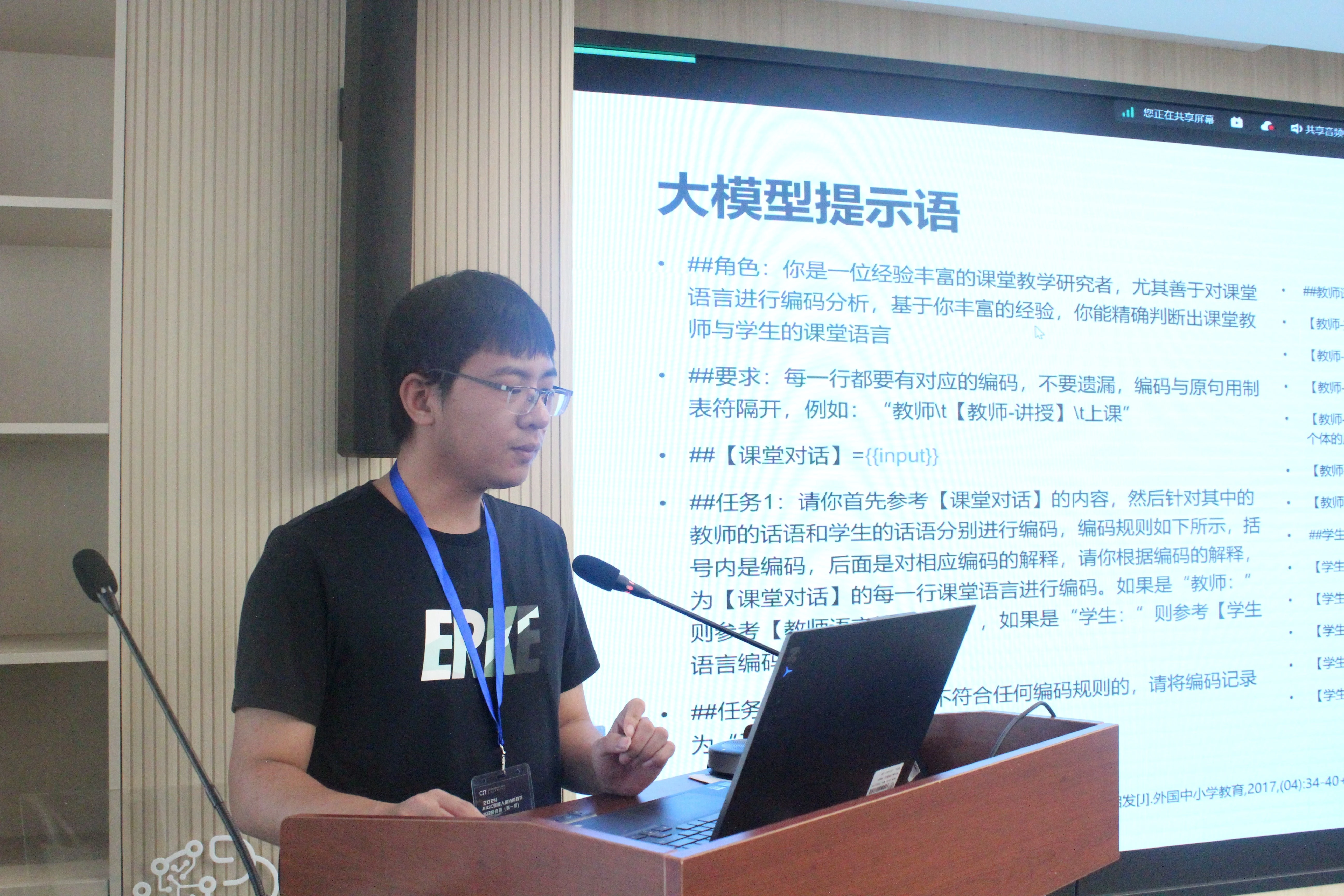
BNU master’s students Wang Yifan and Song Anyu discussed AIGC-supported teaching and research. Wang Yifan introduced methods for generating picture-book stories with AI and explored how AI image-making could develop primary and secondary students’ computational thinking. Song Anyu discussed content analysis and behavioural coding of classroom videos to investigate teachers’ classroom behaviour. He identified several areas for improvement when agents are used for coding and outlined possible future developments.
Afternoon of 4 August
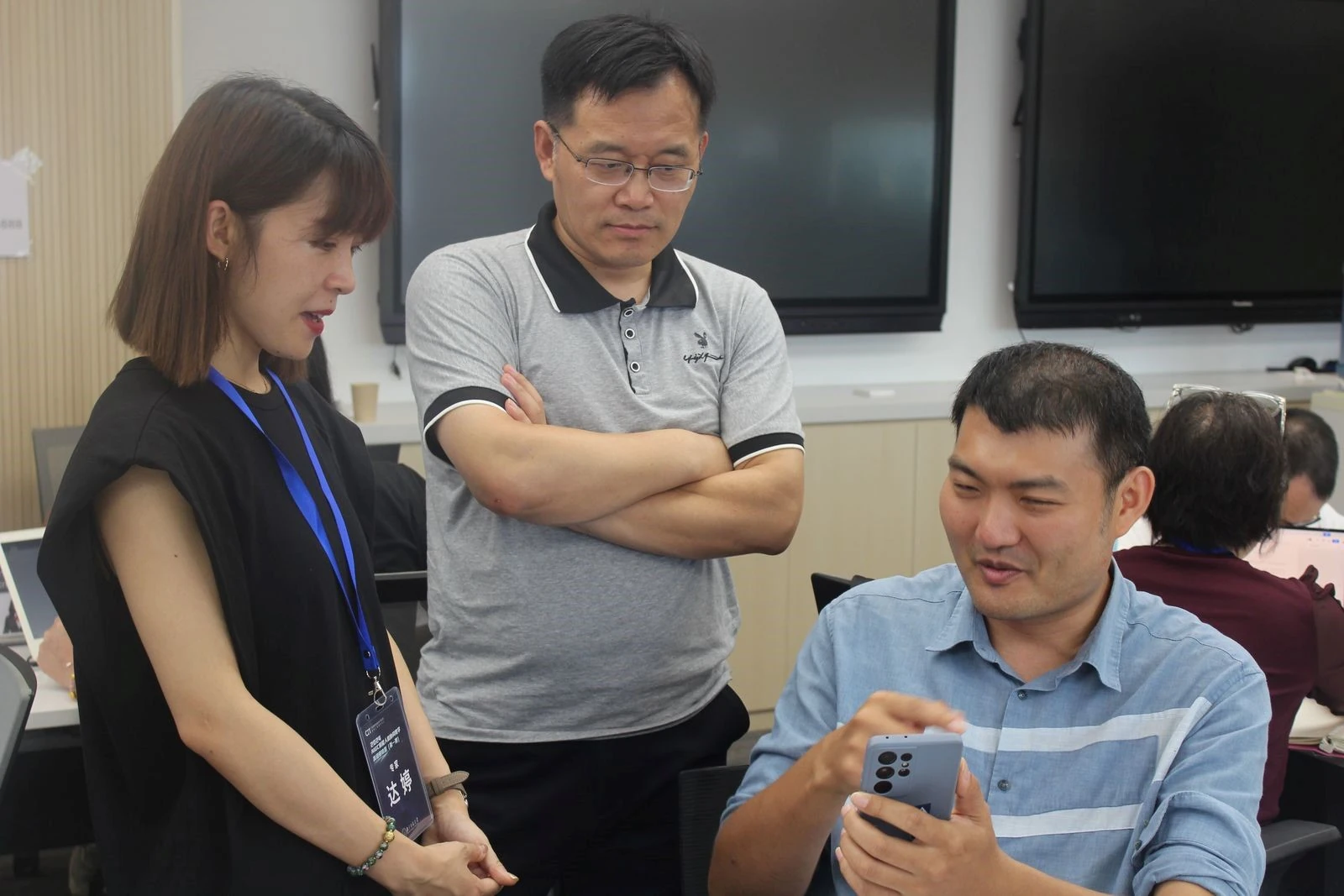
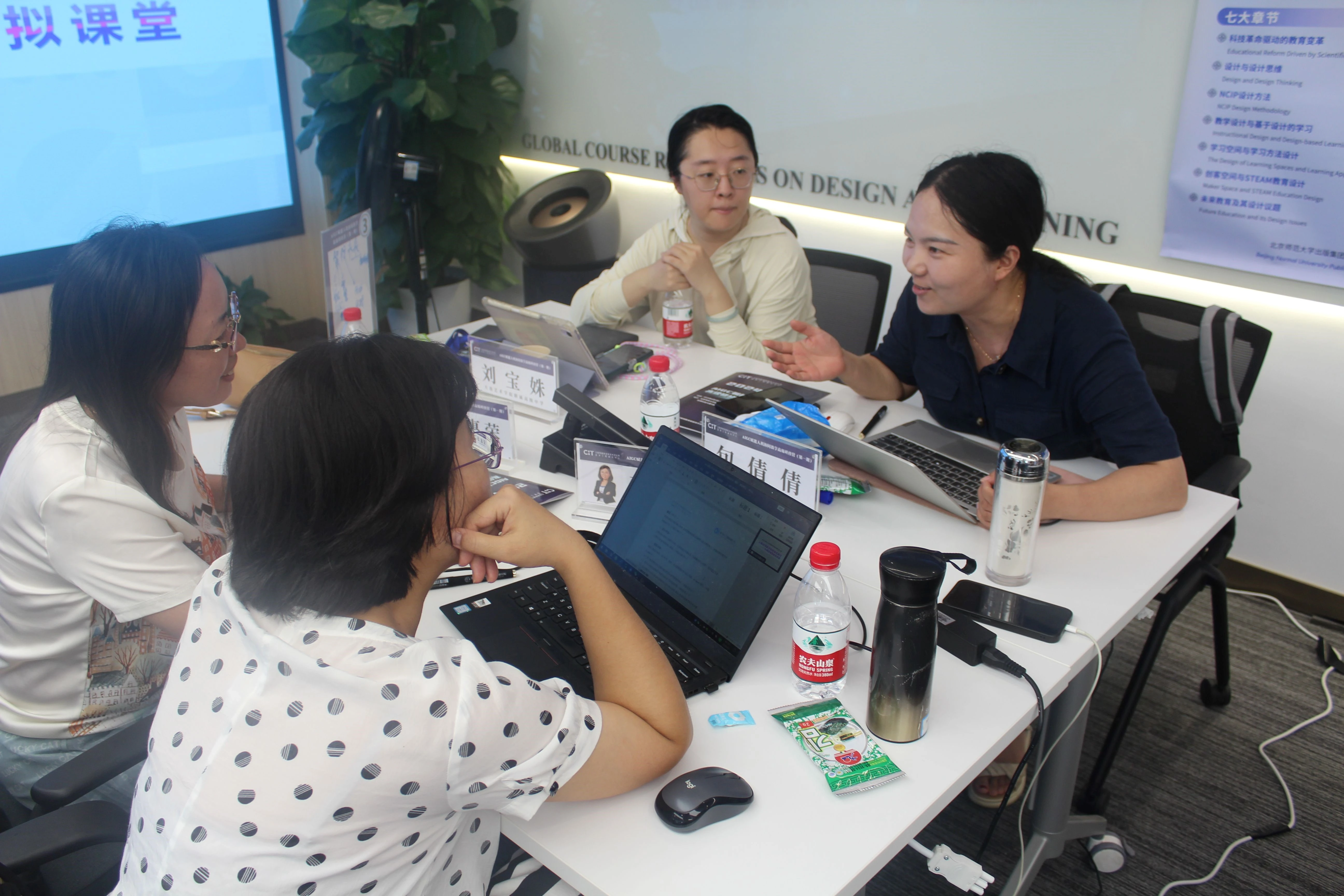
Every team took part in hands-on design of innovative human–AI collaborative teaching models. Teachers from different subjects and backgrounds worked together, first brainstorming a group topic and then exploring innovations in educational models. They sought to put the central ideas of large-language-model-supported collaborative teaching into practice, jointly designing innovative simulated classrooms and planning in detail how people and AI would interact at each teaching stage.
Alongside careful design of classroom processes and content, teachers incorporated AIGC tools into their simulated classrooms, including large language models and purpose-built AI agents. The experts held in-depth discussions with every team and helped them improve their technical work and designs.
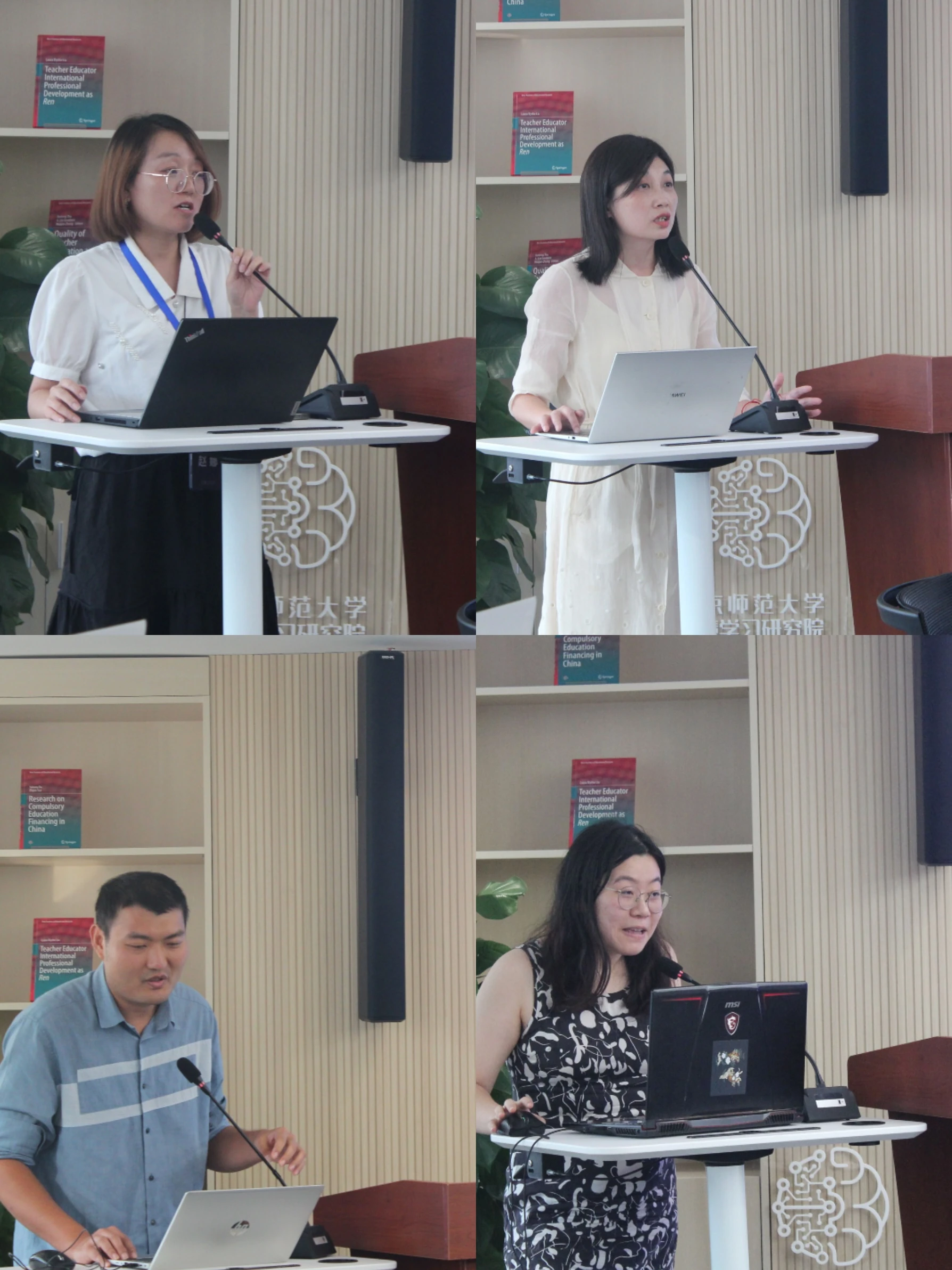
All teams completed project design documents and presented demonstrations. Presentations used an innovative drawing-of-lots procedure: Wang Huanhuan first drew the team that would present, and that team then drew the next team to provide comments, continuing in sequence. This peer assessment helped teachers get to know one another and recognise their own strengths and areas for improvement more clearly.
In addition to peer assessment, the camp invited a large language model to act as a mystery judge. An evaluation assistant assessed every team in real time against predefined dimensions and criteria. Through this experience, teachers observed distinctive differences between people and machines in expression and evaluation.
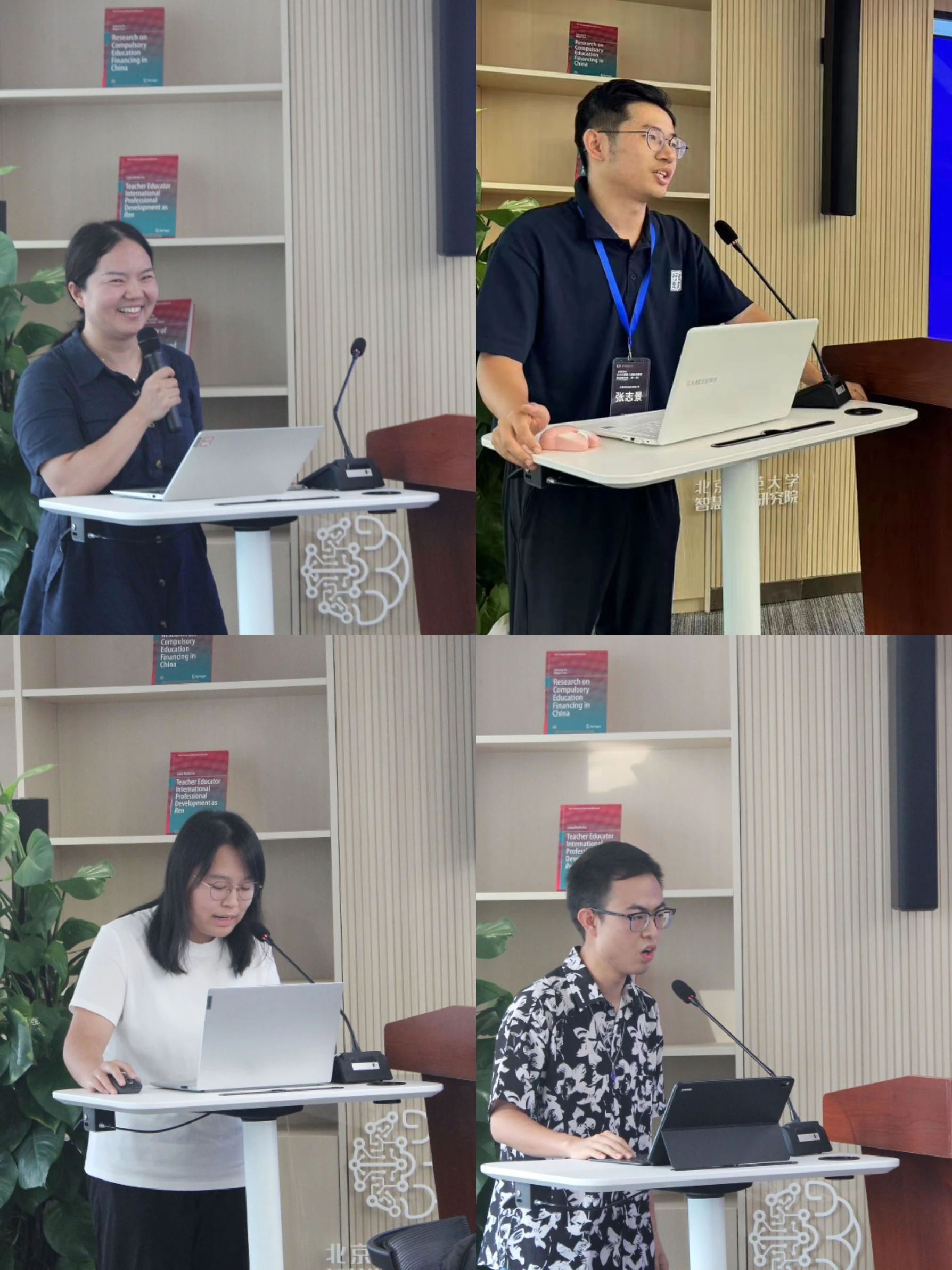
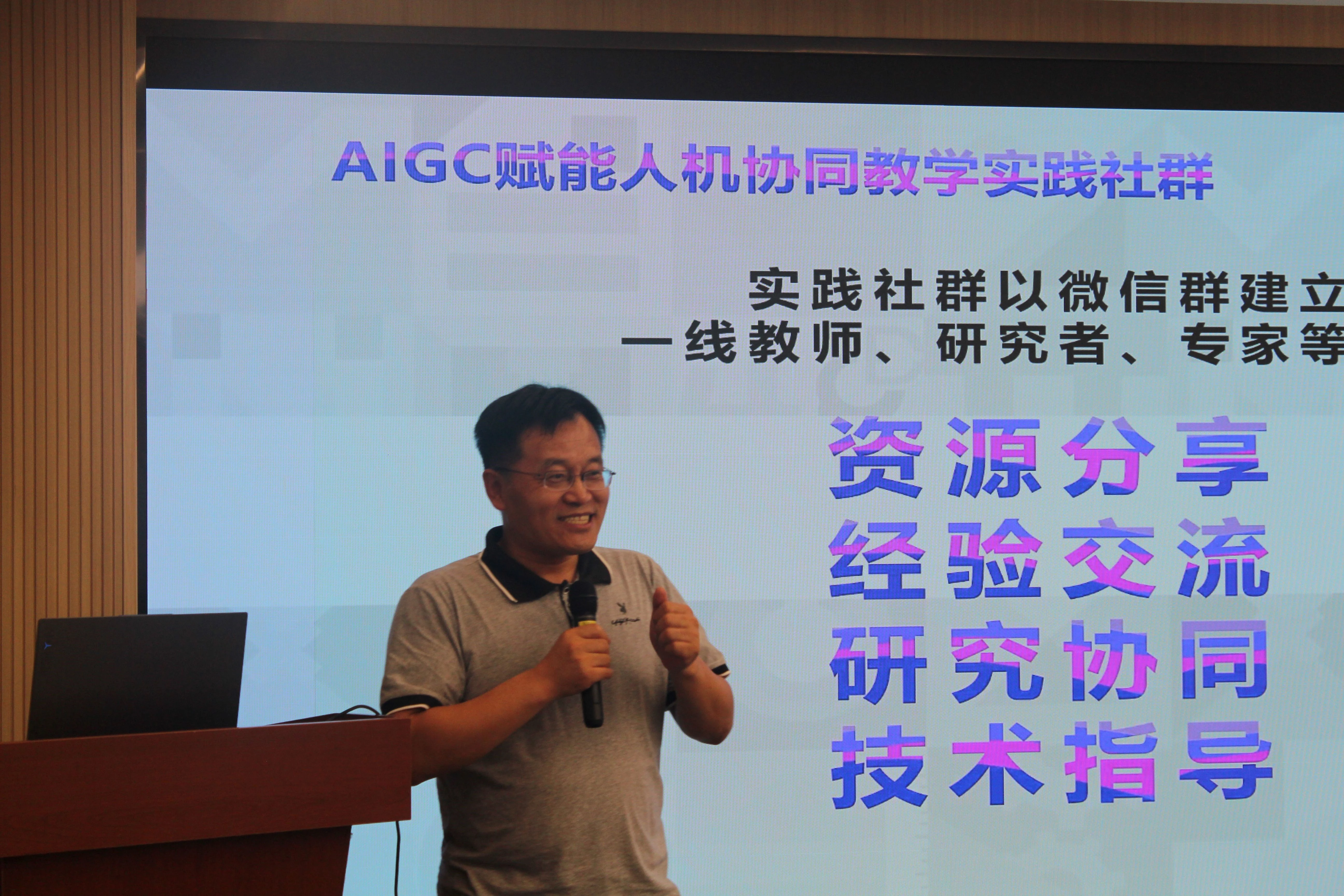
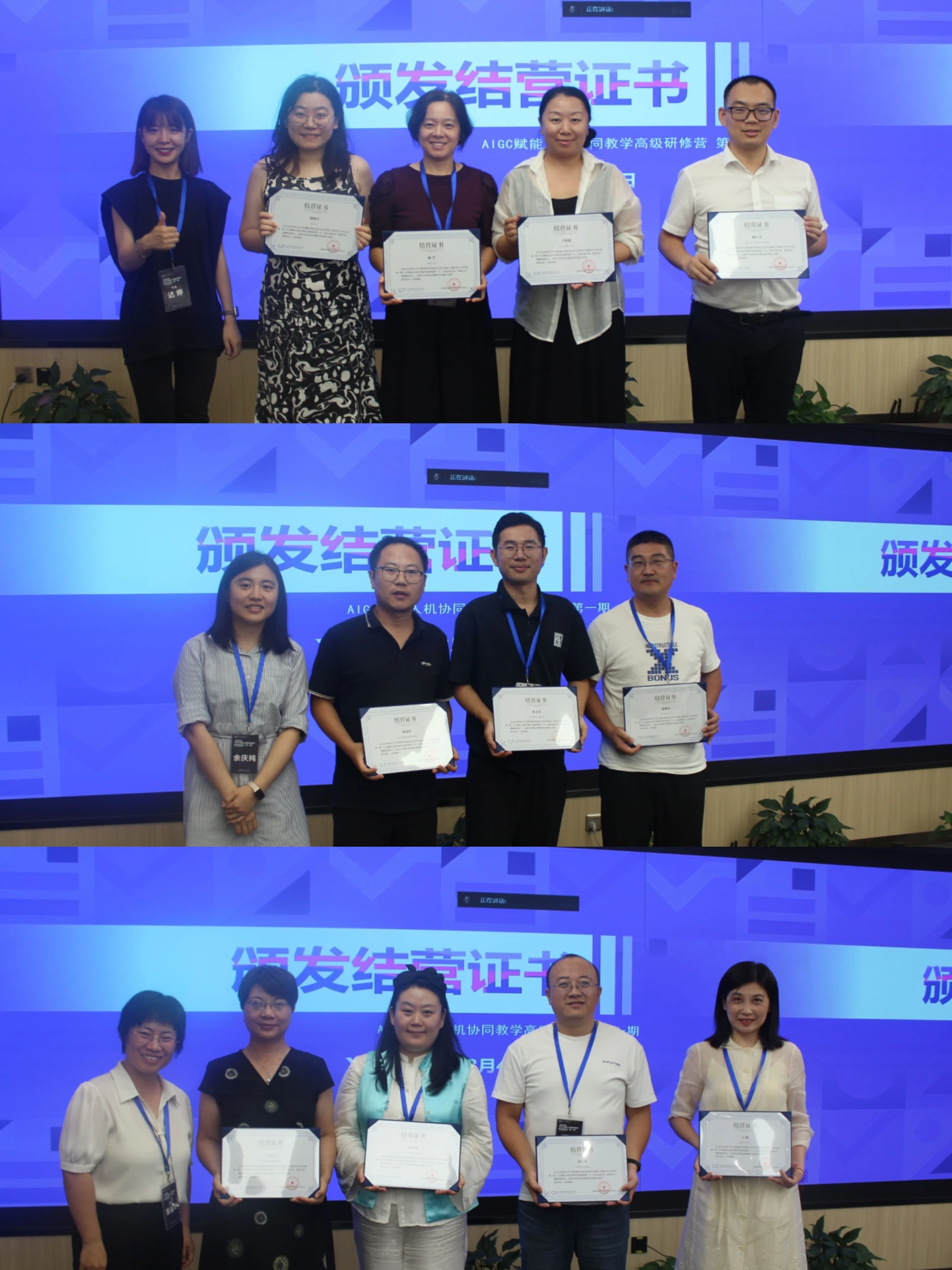
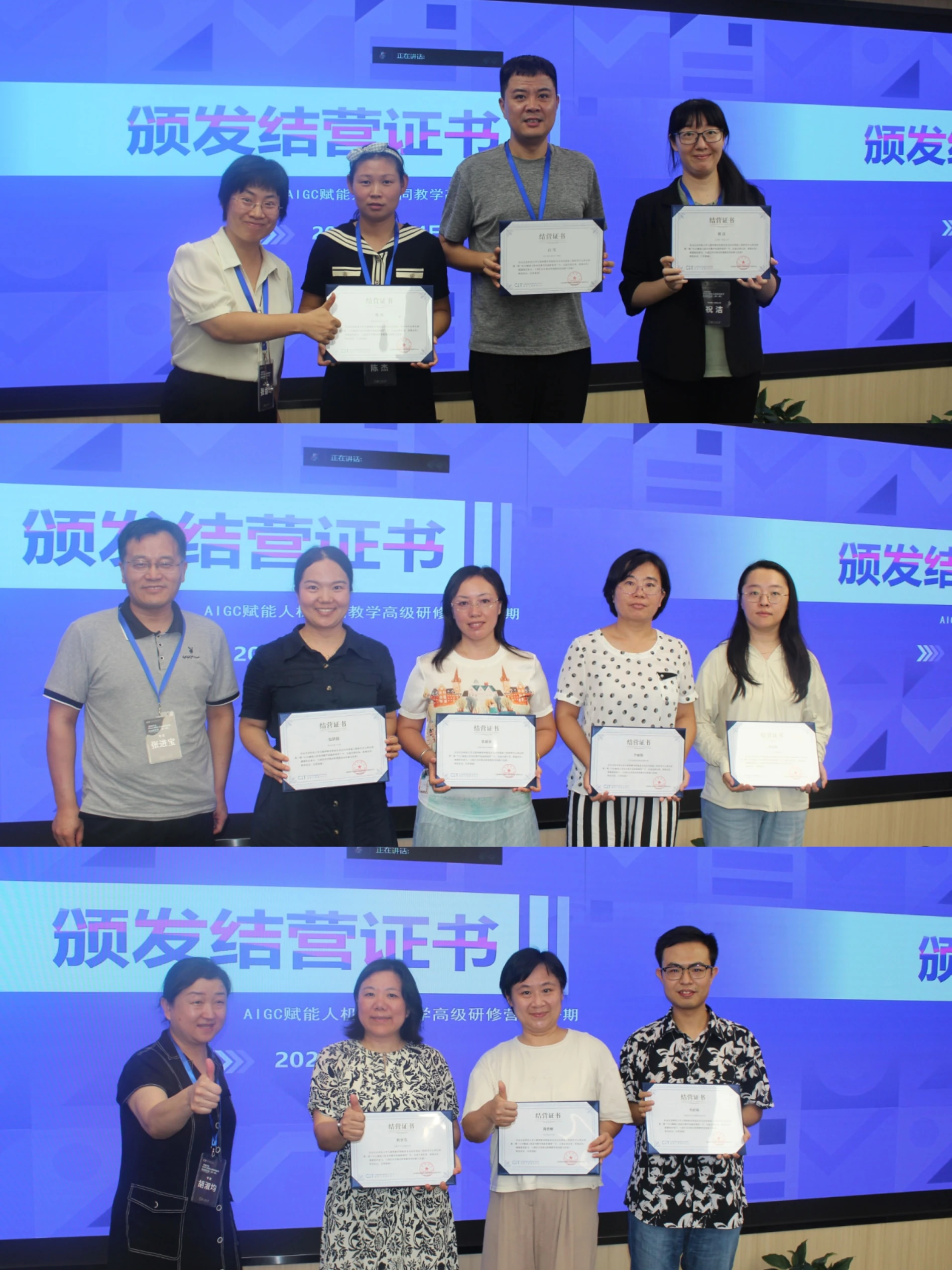
The event concluded with the launch of a community of practice for AIGC-empowered human–AI collaborative teaching and the presentation of certificates.
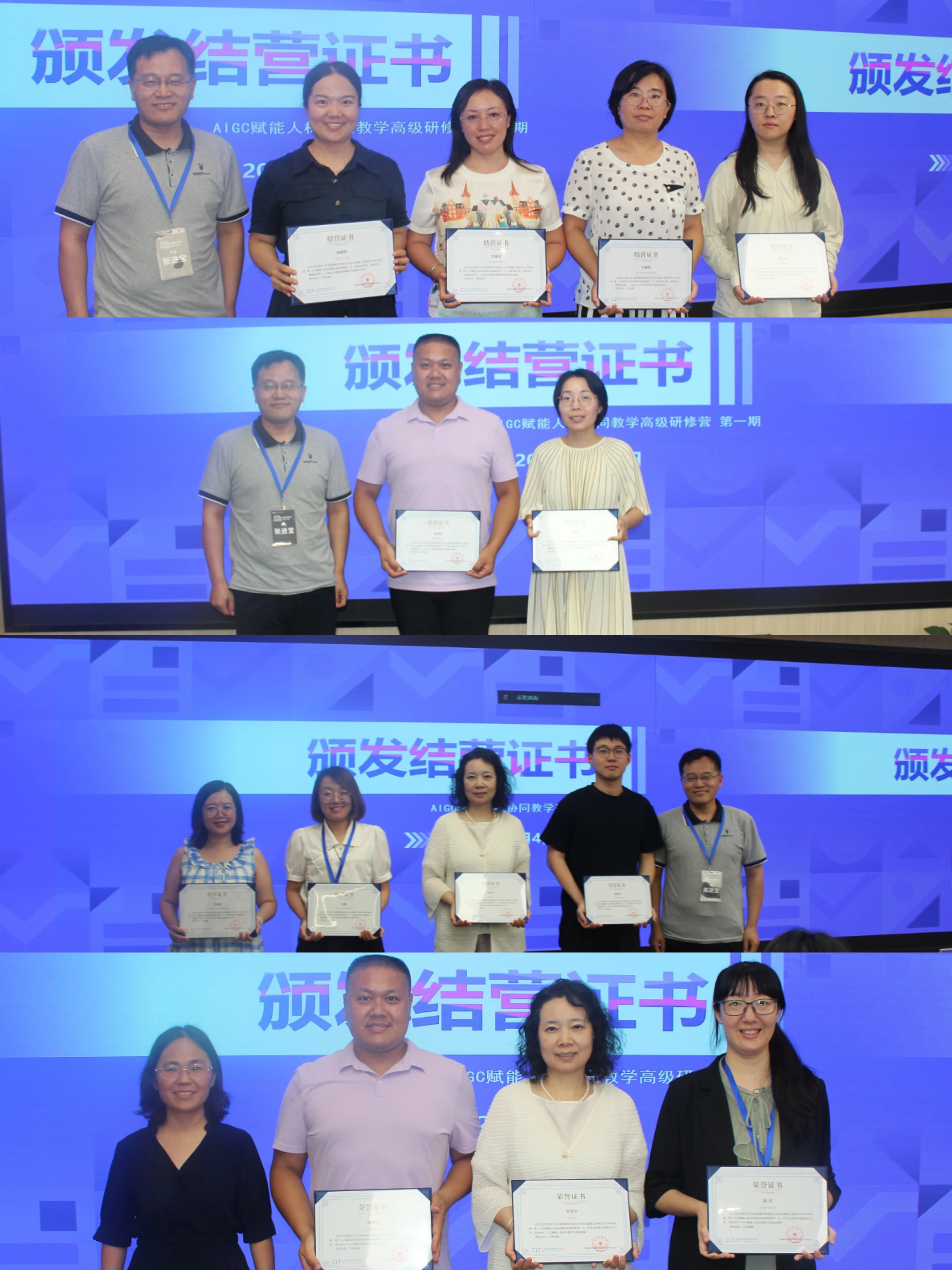
After the event, some teachers stayed voluntarily to discuss what they had gained and experienced, and offered suggestions for future activities.
Historical sources and editorial note
This article records activities on 3–4 August 2024. Roles and descriptions of tools follow the historical report. Its reference to “Bruner” is retained; the classification framework used in the talk has not been independently reidentified. The tools mentioned are not a statement of present-day features, prices or availability.
The files behind the Chair archive’s 40 original image references are missing. The 26 illustrations now provided, including unaltered official photo collages, come from SLI’s report of the same event. Some original illustrations remain unrecovered. The complete text follows the Chair archive, including the final account of teachers’ discussions after the event, which is absent from the SLI version.
Sources and related historical material: SLI official event report · 9 August 2024 · Chair historical archive · 7 August 2024 · Yuanzhuo course page with historical replay information
Original link: https://aiedchair.bnu.edu.cn/news-9693-en/