Historical report: this workshop took place on 17–24 August 2024 and has ended. The Chair’s original publication date of 25 August 2024 is retained. Positions and institutional descriptions refer to that period.
On this page
Programme and organising partners
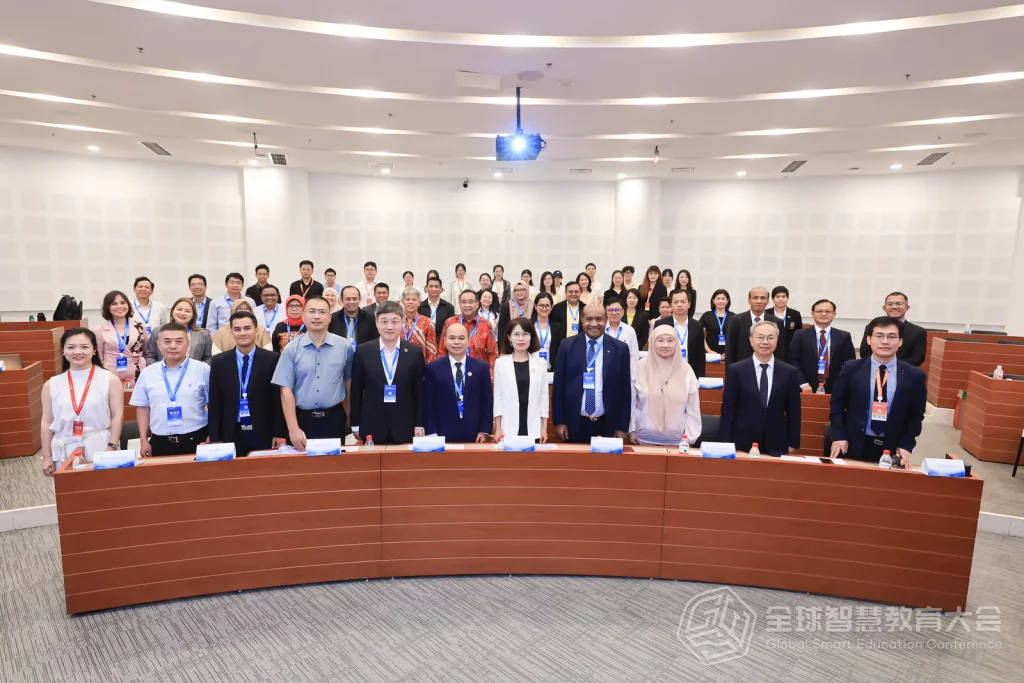
As a thematic activity of the Global Smart Education Conference 2024, the workshop for Southeast Asian TVET school principals was held successfully on 17–24 August 2024.
It was organised by the UNESCO International Research and Training Centre for Rural Education (INRULED) and the UNESCO Chair on AI in Education. Co-organisers were the Regional Centre for Technical Education Development of the Southeast Asian Ministers of Education Organization (SEAMEO TED), the China Education Association for International Exchange, the UNESCO Regional Office for East Asia and BNU’s Smart Learning Institute. The China Institute of Education and Social Development and BNU’s Faculty of Education supported the programme. The Federation of Returned Overseas Chinese and the Education Bureau of Lin’an District, Hangzhou, hosted it locally, with assistance from Zhejiang Agriculture and Forestry University.
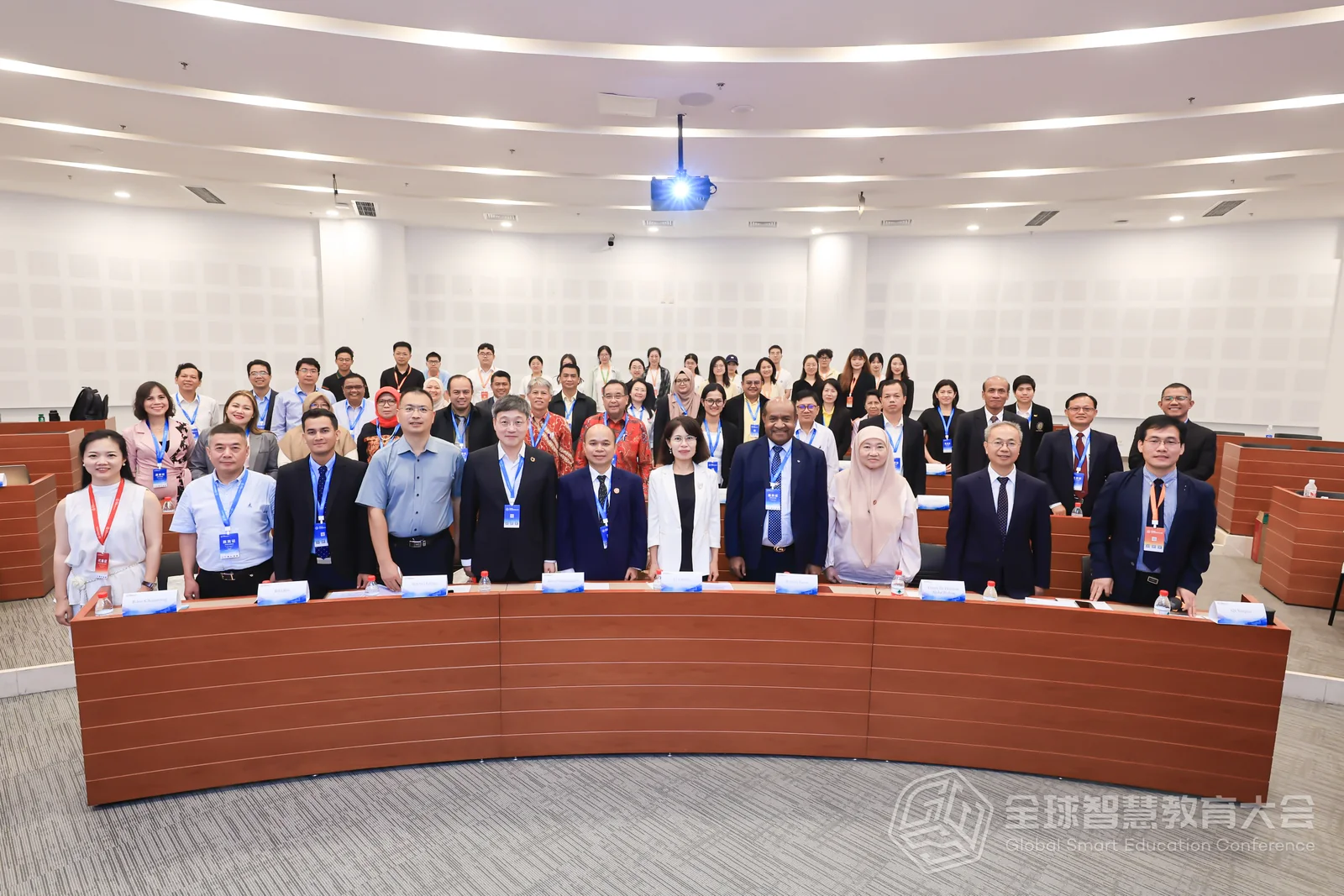
Theme and participants
TVET is an important part of Southeast Asia’s education agenda and a major field of educational cooperation and exchange between China and Southeast Asia. In the digital era, timely digital transformation of TVET is significant for balanced distribution of vocational-education resources, educational equity and innovation, talent development and rural revitalisation.
Against this background, the workshop focused on ‘Promoting Digital Transformation of TVET for Sustainable Rural Development’. It brought together education-department representatives, university experts and scholars, TVET principals, school managers and practitioners from six Southeast Asian countries, including Cambodia, Indonesia, Malaysia, Thailand and Viet Nam. They discussed digital technologies for innovation in rural education and TVET, upskilling and reskilling rural populations amid digital and green economic transitions, and developing innovative and entrepreneurial talent for rural revitalisation.
Closed-door seminars, presentations, group discussions, field research and study visits helped strengthen leadership for TVET’s contribution to sustainable rural development. They also advanced policy dialogue, practical exchange and theoretical exploration between China and Southeast Asian countries on educational development and rural revitalisation.
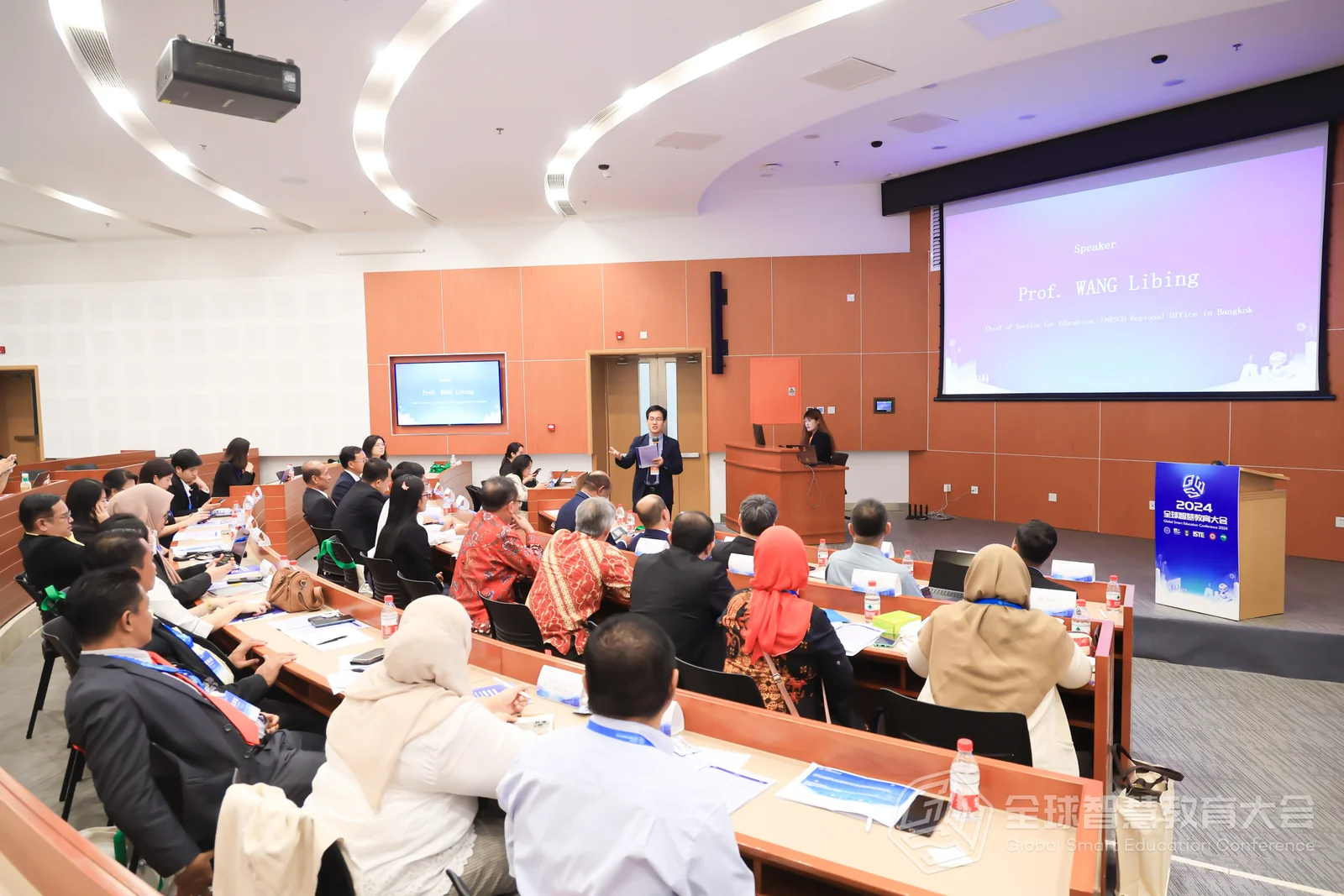
Opening symposium and country exchange
On the afternoon of 18 August, the opening symposium and partnership dialogue were held at Beijing Normal University. Welcoming remarks were delivered by INRULED Executive Director Zhao Yuchi; Habibah Abdul Rahim, Director of the SEAMEO Secretariat; Robert Parua, Education Specialist at the UNESCO Regional Office for East Asia; and Li Yanyan, Deputy Director of BNU’s Smart Learning Institute.
Khat Prumsochetra, Deputy Director of SEAMEO TED, and Wang Libing, Chief of the Education Section at UNESCO’s regional office in Bangkok, gave keynote speeches. The country-exchange contributors included:
- Bai Bin, Deputy Director of BNU’s Institute of Vocational and Adult Education;
- Mom Say, Head of the Academic Office at the National Polytechnic Institute of Cambodia;
- Hj. Ana, Vice-Dean of the Faculty of Technical and Vocational Education at Universitas Pendidikan Indonesia, and Iwan Kustiawan, Head of the Electrical Engineering Study Programme and Head of its TVET Research Centre;
- Mohd Asyraf Bin Md. Sum, Deputy Director of the Student Intake and Development Division, Department of Polytechnic and Community College Education, Ministry of Higher Education, Malaysia;
- Pattarada Rungruang, Vice-President of Thailand’s Attawit Commercial Technology College and Southeast Bangkok University;
- Le My Ha, Vice-Dean of the Faculty of Electrical and Electronic Engineering at Ho Chi Minh City University of Technology and Education, Viet Nam;
- Mary Jane M. Gonzales, Principal IV of Padre Garcia Integrated National High School, Philippines.
They shared national policies and good practices in TVET digital transformation for sustainable rural development, supporting mutual learning between countries. Participants then held ice-breaking introductions and brainstorming, and discussed and consulted on the ‘Learning Village in the Digital Era’ initiative.
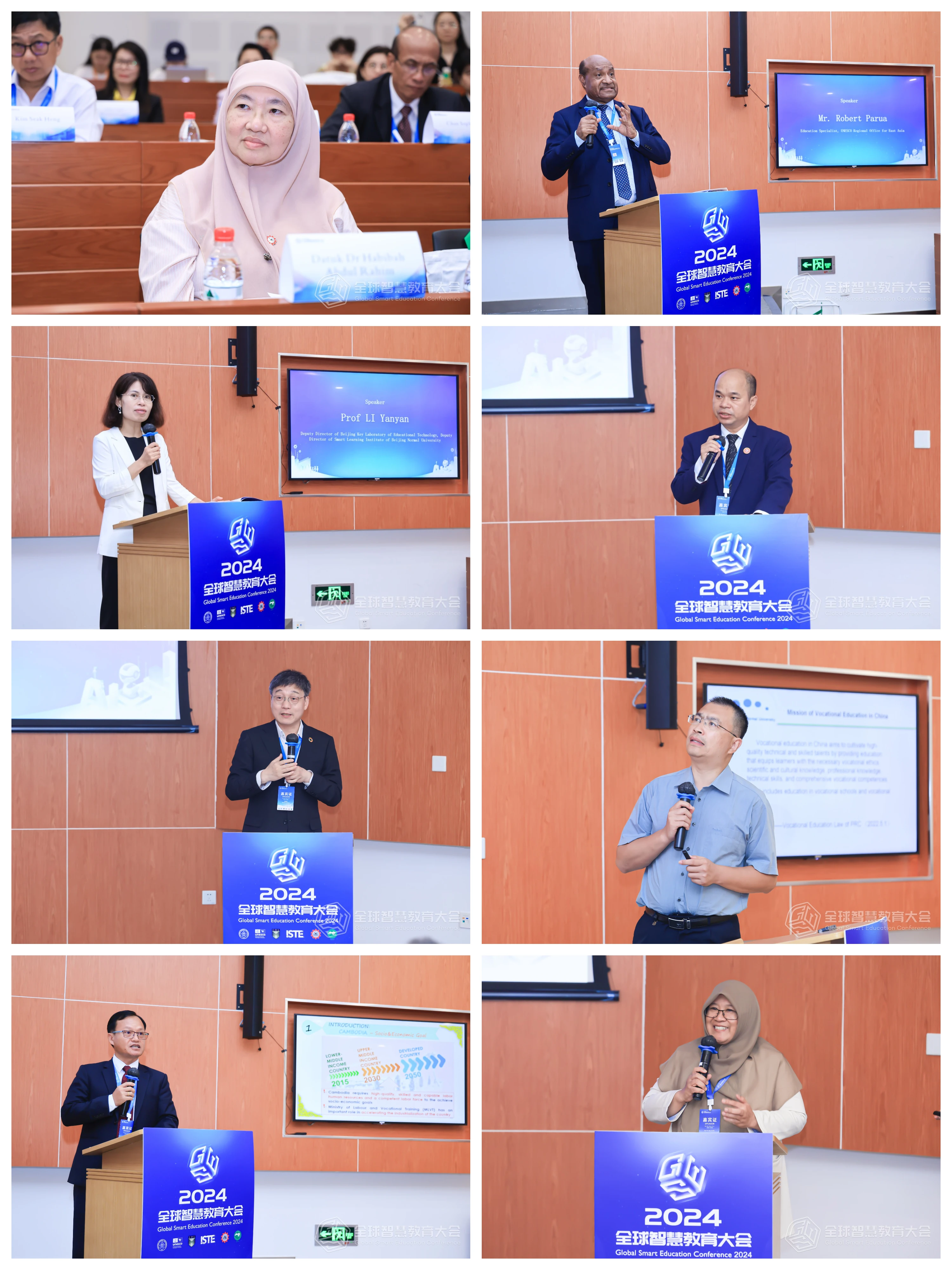
Readable diagram labels in the photograph
- The Cambodia presentation pairs 2015 with ‘lower-middle-income country’, 2030 with ‘upper-middle-income country’, and 2050 with ‘developed country’.
- The visible note says that Cambodia needs high-quality skilled human resources and a competent labour force to achieve socioeconomic goals.
- The second note describes the Ministry of Labour and Vocational Training (MLVT) as having an important role in accelerating the country’s industrialisation.
- These are timeline labels shown in the 2024 presentation, rather than a statement of present-day income status.
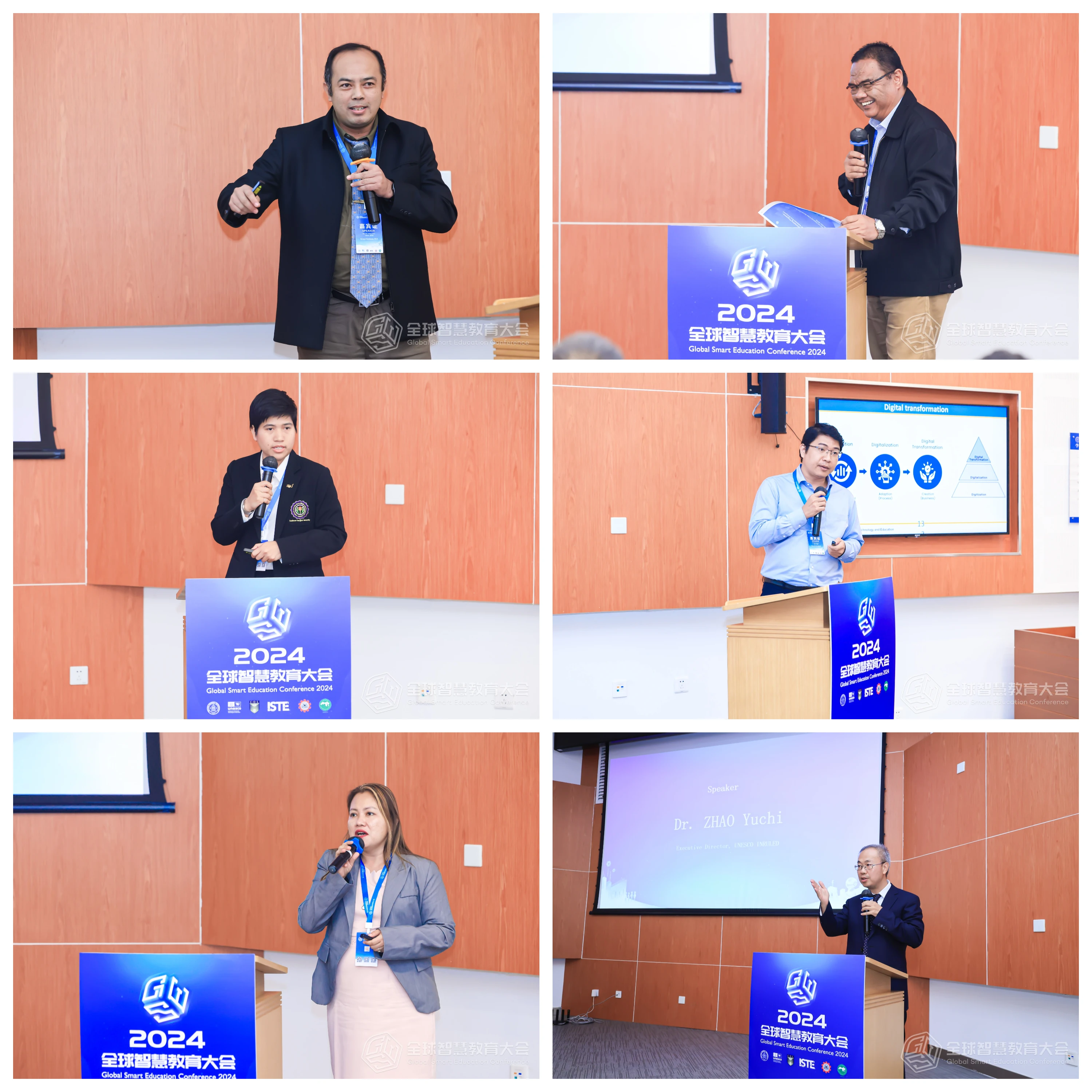
Text description of the projected digital-transformation diagram
- The slide links ‘Digitization’, ‘Digitalization’ and ‘Digital Transformation’ with arrows.
- A pyramid repeats these three levels from bottom to top: Digitization, Digitalization, Digital Transformation.
- The visible annotations associate Digitalization with ‘Adoption (Process)’ and Digital Transformation with ‘Creation (Business)’. Text hidden by the presenter is not reconstructed.
Visits and exchange in Beijing
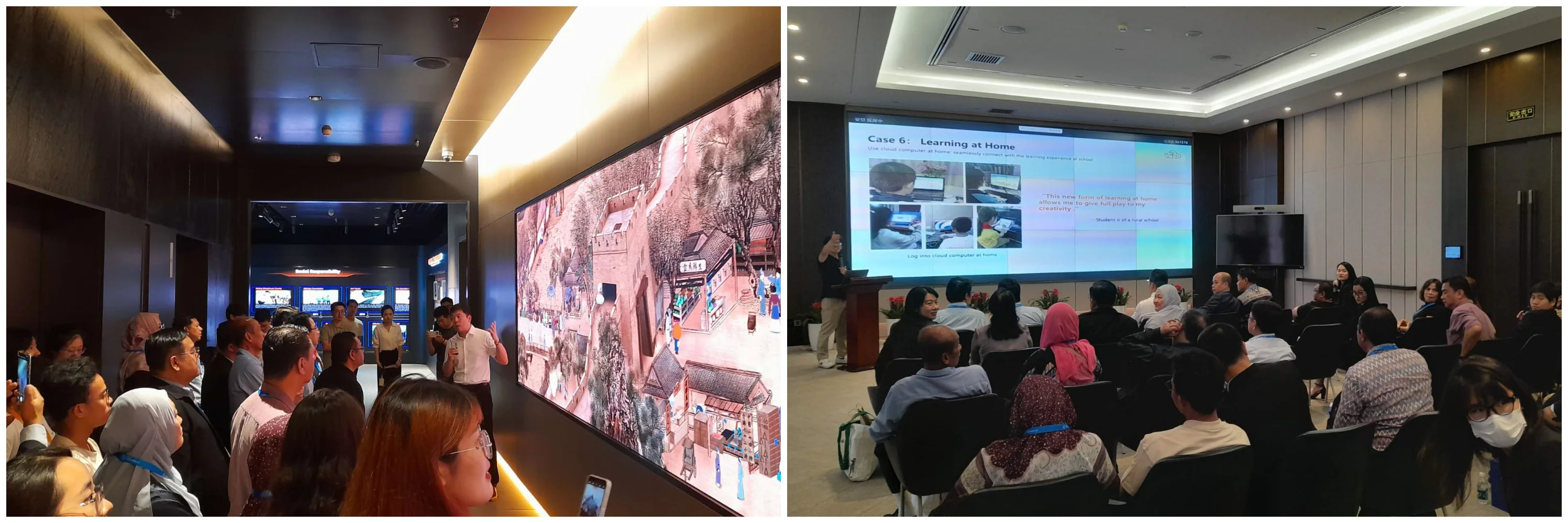
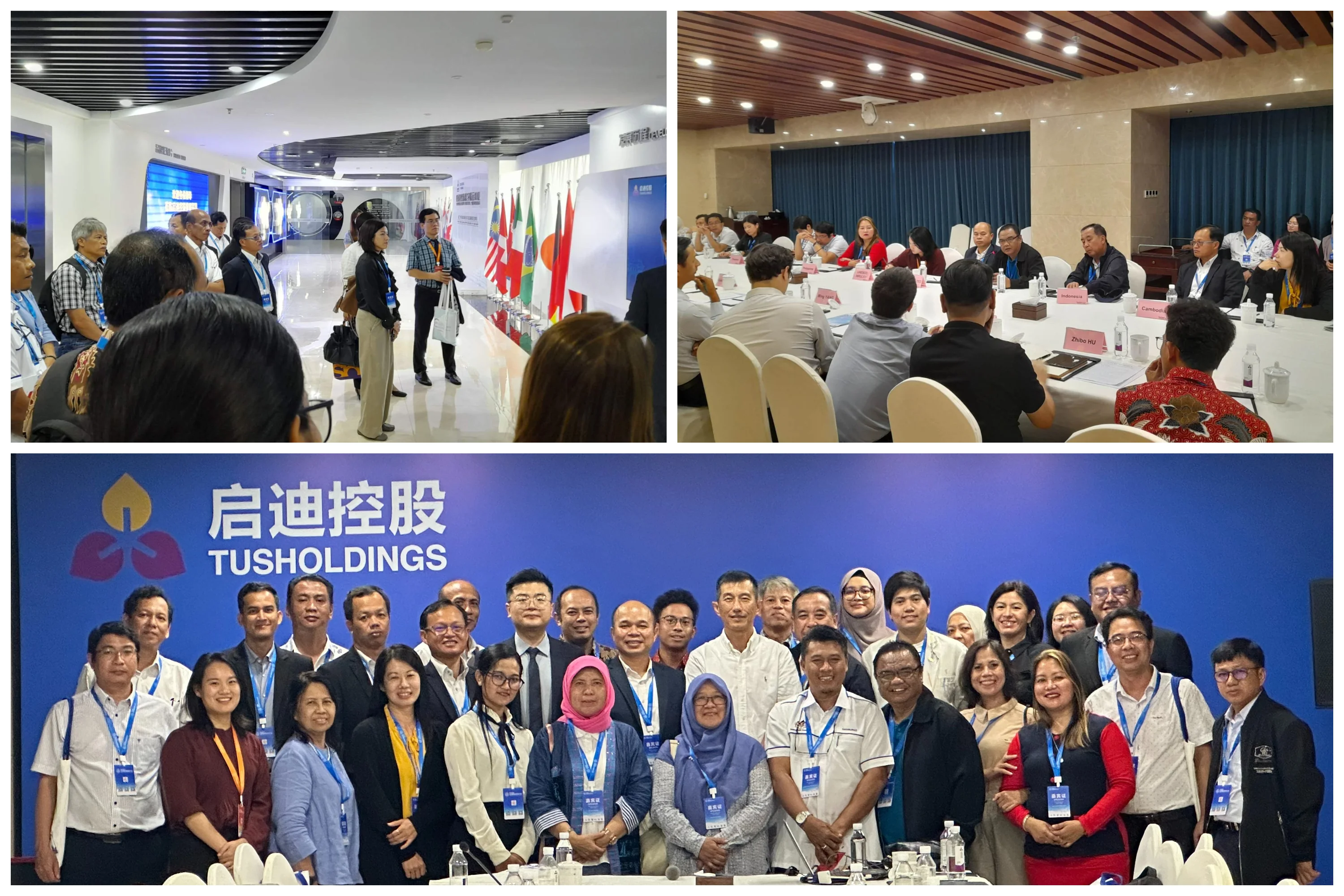
During their stay in Beijing on 19–20 August, workshop delegates attended the GSE forum on ‘Smart Villages and Education for Rural Transformation’ and exchanged country cases in its round-table discussion.
They also visited Alibaba Group, Tsinghua Science Park and other sites. These visits explored businesses’ technological development and thinking, alongside strategies and practical examples for using information technology to support rural education, innovative and entrepreneurial talent, business incubation and industrial development.
Field study in Lin’an
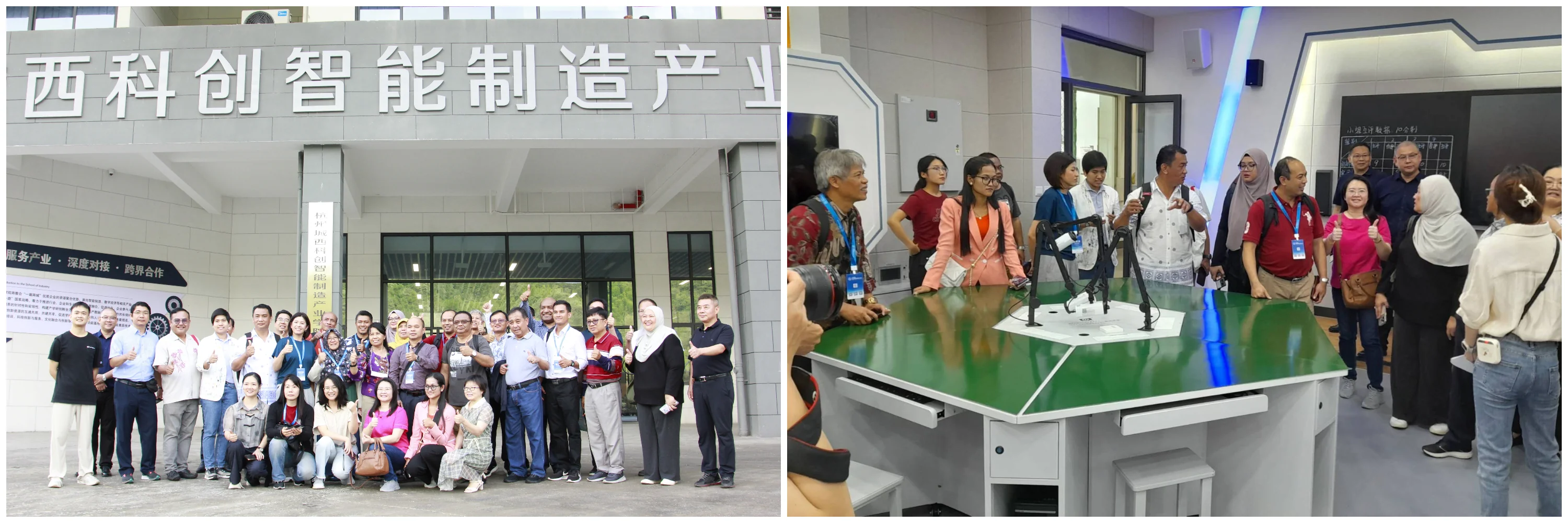
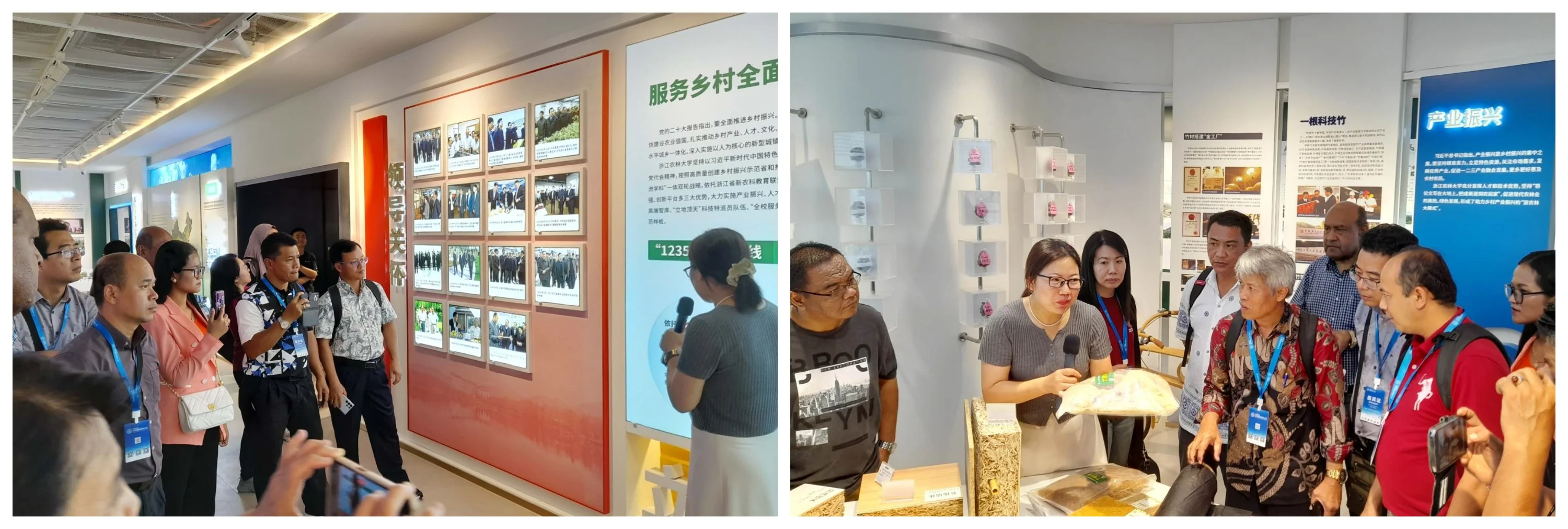
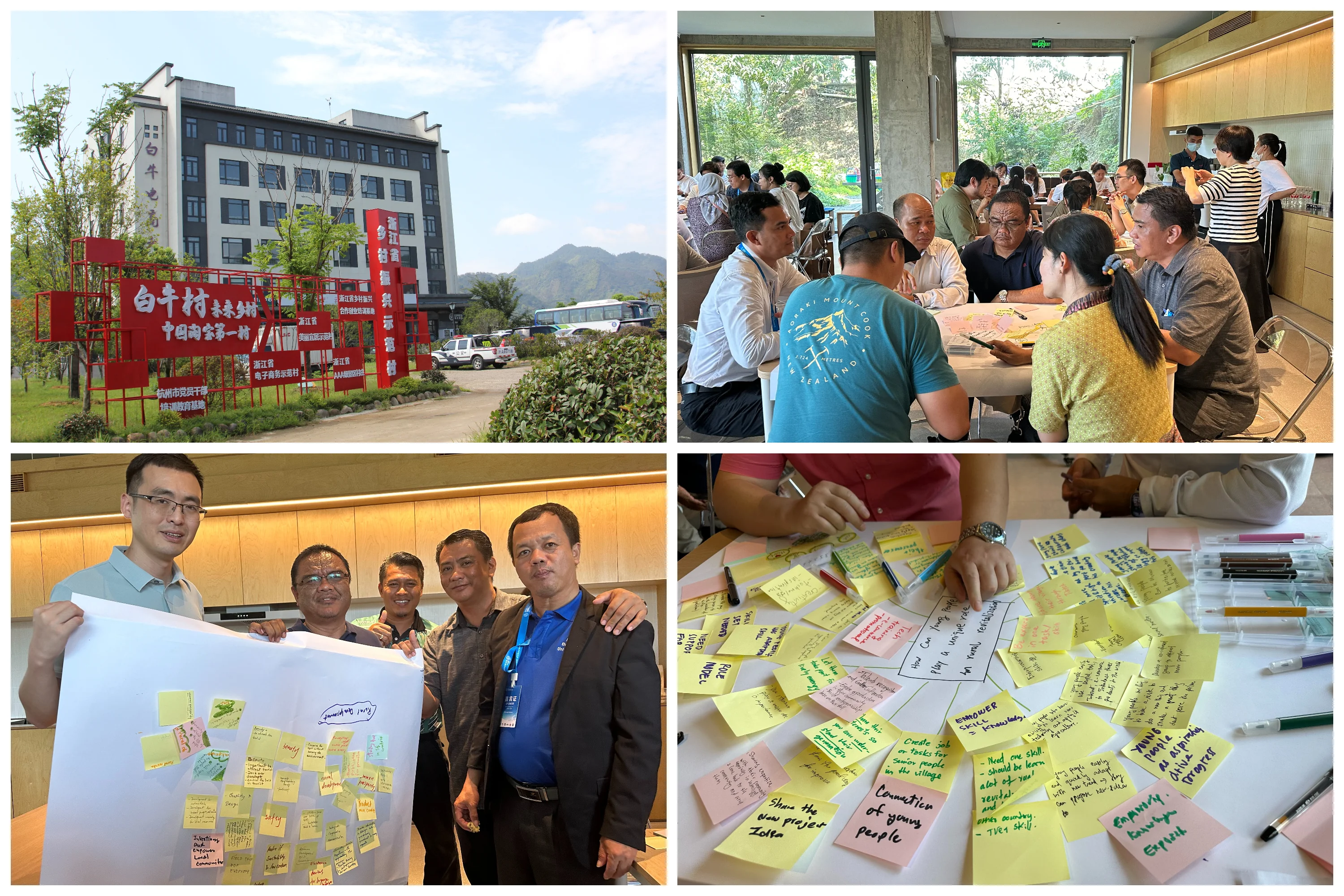
On 21–23 August, delegates travelled to Lin’an, Zhejiang, for field study. They visited the Lin’an District Vocational Education Centre and Zhejiang Agriculture and Forestry University’s rural revitalisation documentary museum to learn about innovative educational practices for sustainable rural development.
Visits to the ‘e-commerce town’ in Bainiu Village, Changhua Town, and the Xiangjian Tea House in Xiangjian Village, Longgang Town, explored emerging forms of rural industry.
Interaction with rural innovation and entrepreneurship leaders and group discussion deepened understanding of Lin’an’s ‘Qiaoliang Countryside’ practice, which mobilises overseas innovative and entrepreneurial talent for rural revitalisation. Delegates considered the educational innovation, skilled-workforce development and skills-transition needs and challenges of rural revitalisation in the digital era, and how TVET can respond and contribute to sustainable rural development.
Closing session and partnerships
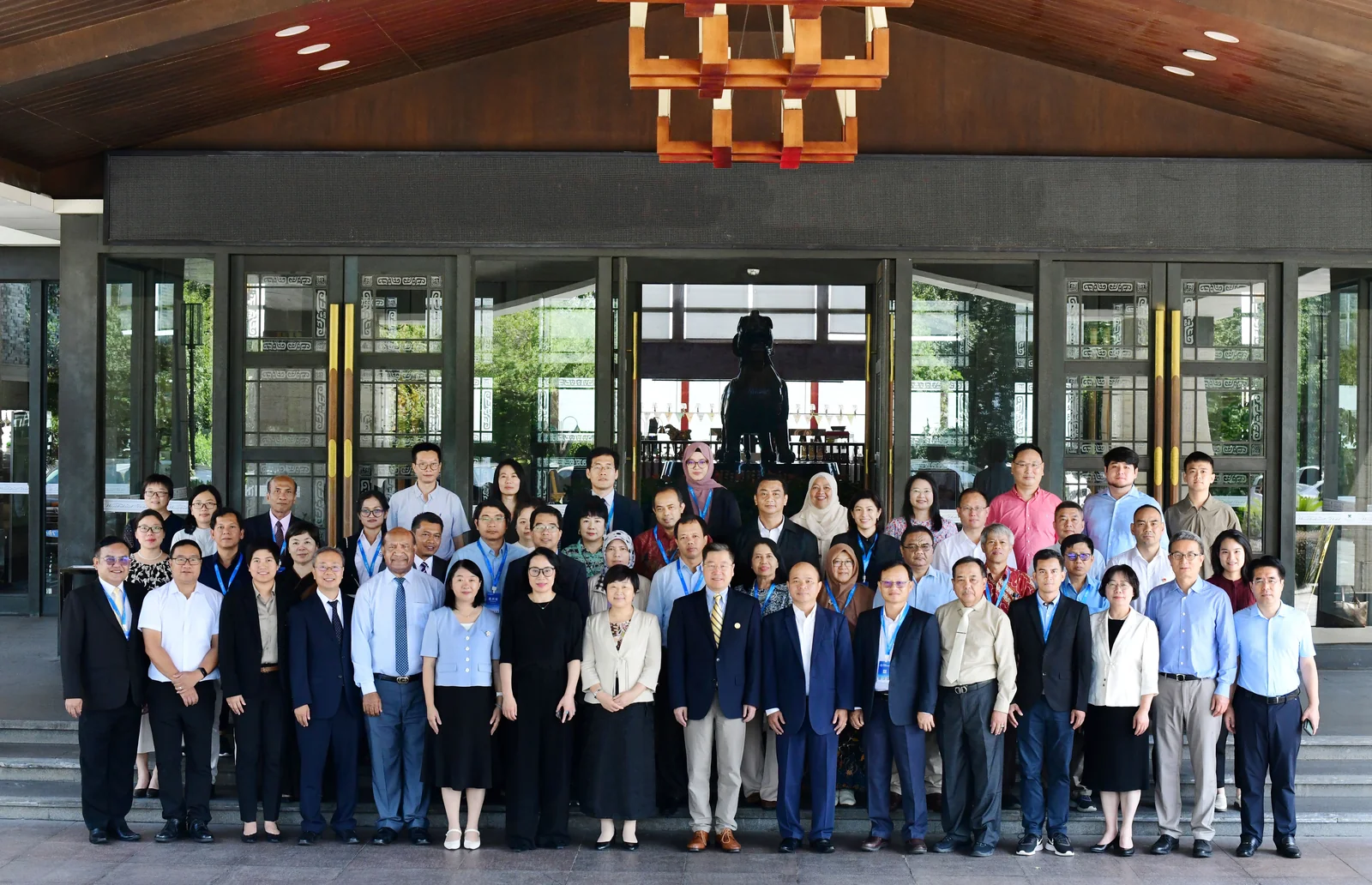
On the morning of 23 August, the Partnership Meeting on International Education and Rural Revitalisation (Lin’an, China) and the workshop’s closing session took place in Lin’an, Hangzhou. Remarks were delivered by INRULED Director Zhou Zuoyu; Khat Prumsochetra, Deputy Director of SEAMEO TED; An Yan, Deputy Secretary-General of the China Education Association for International Exchange; and Qian Meixian, Director of the Standing Committee of the Lin’an District People’s Congress.
Xu Lingdi, Chairperson of the Hangzhou Federation of Returned Overseas Chinese, and Chen Na, a member of the Lin’an District Party Standing Committee and Head of its United Front Work Department, attended. Representatives from Lin’an’s agriculture and rural affairs bureau, education bureau, Zhejiang Agriculture and Forestry University and other departments exchanged practical experience in education for rural development.
Workshop representatives from five Southeast Asian countries shared their reflections. Zhejiang Agriculture and Forestry University, the Lin’an District Vocational Education Centre and two Lin’an enterprises each signed memorandums of cooperation with Southeast Asian vocational institutions.
Robert Parua, Education Specialist at the UNESCO Regional Office for East Asia, and Chen Na, a member of the Lin’an District Party Standing Committee and Head of its United Front Work Department, summarised the workshop, expressing the hope that it would further international TVET exchange and cooperation between China and Southeast Asian countries and support rural revitalisation through TVET innovation. Afterwards, guests visited local businesses including Hangcha Group and Xizi Elevator.
Cooperation for rural futures
The workshop advanced international exchange, academic discussion and strategic cooperation between China and Southeast Asian countries in vocational education and rural development. By supporting mutual learning, capacity building, partnerships and networks, it contributed to a better rural future and progress towards the United Nations Sustainable Development Goals.
Sources and editorial notes
All seven original text units were checked against SLI’s official report of 2 September 2024 and translated in full. UNESCO INRULED’s English account of 29 August was used to verify institutional names, the SEAMEO Secretariat and Malaysian official’s offices, and Mary Jane M. Gonzales’s name. The original Chair title, date, URL and author are retained. Fifteen former image URLs are unavailable; ten complete photographs and collages from the same SLI report are used here, preserving their watermarks. This does not establish recovery of the lost files or their original first banner. The two expandable slide descriptions record legible diagram labels in the historical photographs; they do not reproduce every projected slide. Six countries’ participation in the programme and five countries’ reflections at the closing session refer to different parts of the event.
Original link: https://aiedchair.bnu.edu.cn/news-8629-en/