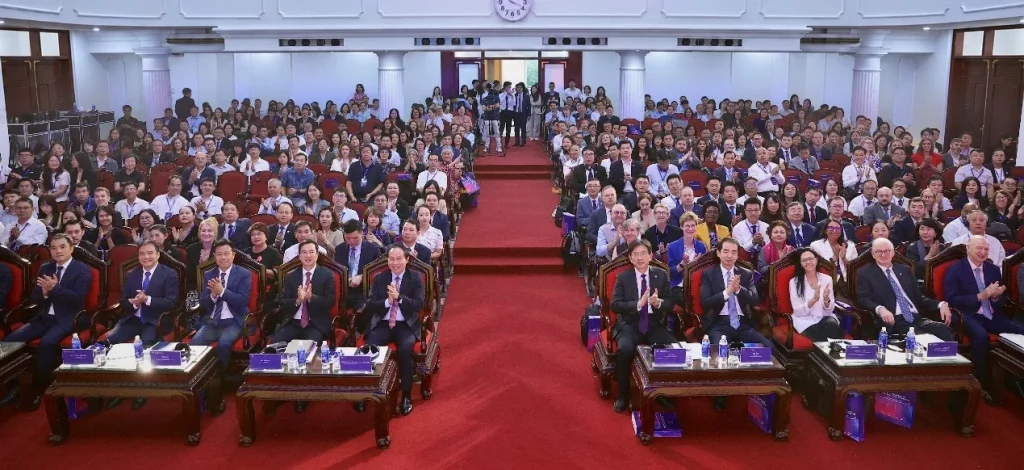
Historical seminar report: the first “Navigating the Future: Bridging Smart Education around the World” event took place on 19 April 2024.
On 19 April 2024, the Smart Learning Institute of Beijing Normal University (SLI) and the UNESCO Chair on AI in Education co-hosted the first seminar in “Navigating the Future: Bridging Smart Education around the World”. The series sought to bring together global expert perspectives on the definition and core characteristics of smart education, and the practical implications of implementing it across education systems.
Experts from several countries shared their understanding of smart education and how it can change teaching in different contexts. Asha Singh Kanwar, Chair Professor at SLI, moderated the event.
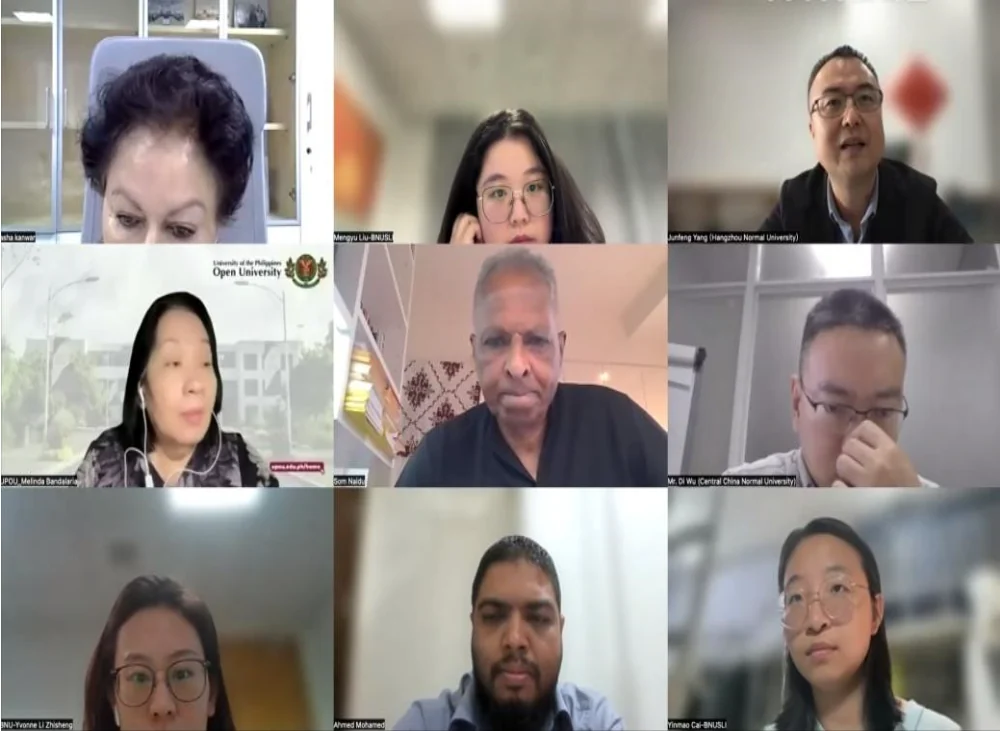
Junfeng Yang: definitions and a smart education framework
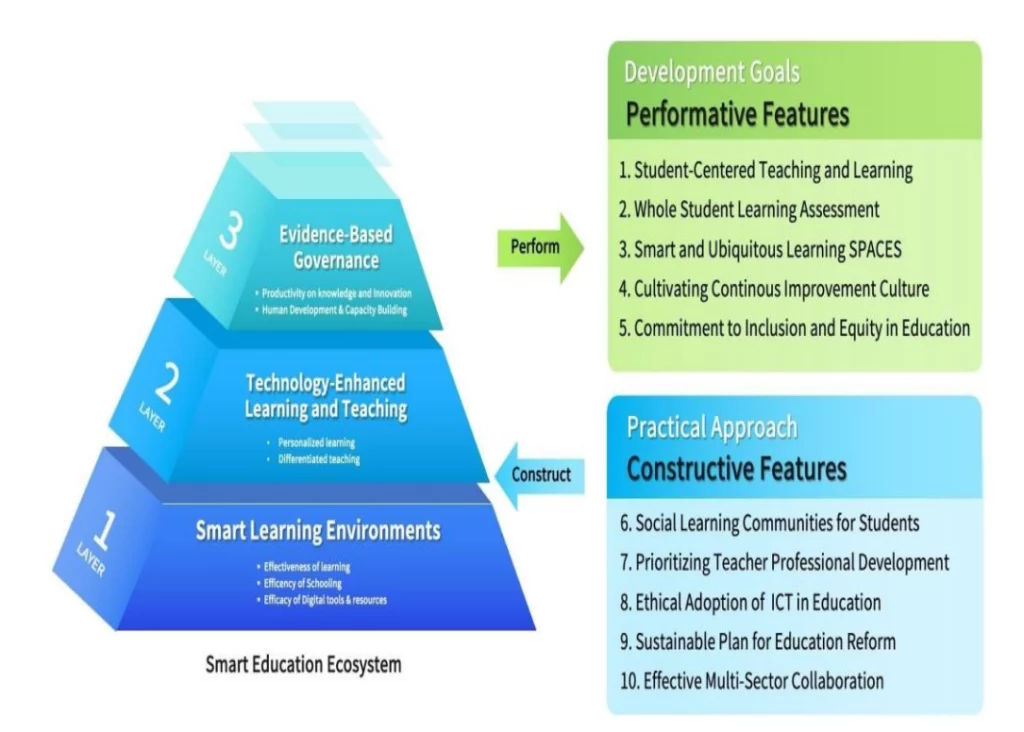
Professor Junfeng Yang (杨俊锋) of Hangzhou Normal University spoke first, representing Professor Ronghuai Huang’s team at Beijing Normal University. He introduced their work on smart education, explained its definition from the perspectives of education systems and modern science and technology, and interpreted a three-layer framework. The points below also transcribe the original framework diagram in its 2024 presentation context:
Three layers of the framework
- Smart learning environments: effectiveness of learning, efficiency of schooling, and efficacy of digital tools and resources.
- Technology-enhanced learning and teaching: personalised learning and differentiated teaching.
- Evidence-based governance: productivity in knowledge and innovation, and human development and capacity building.
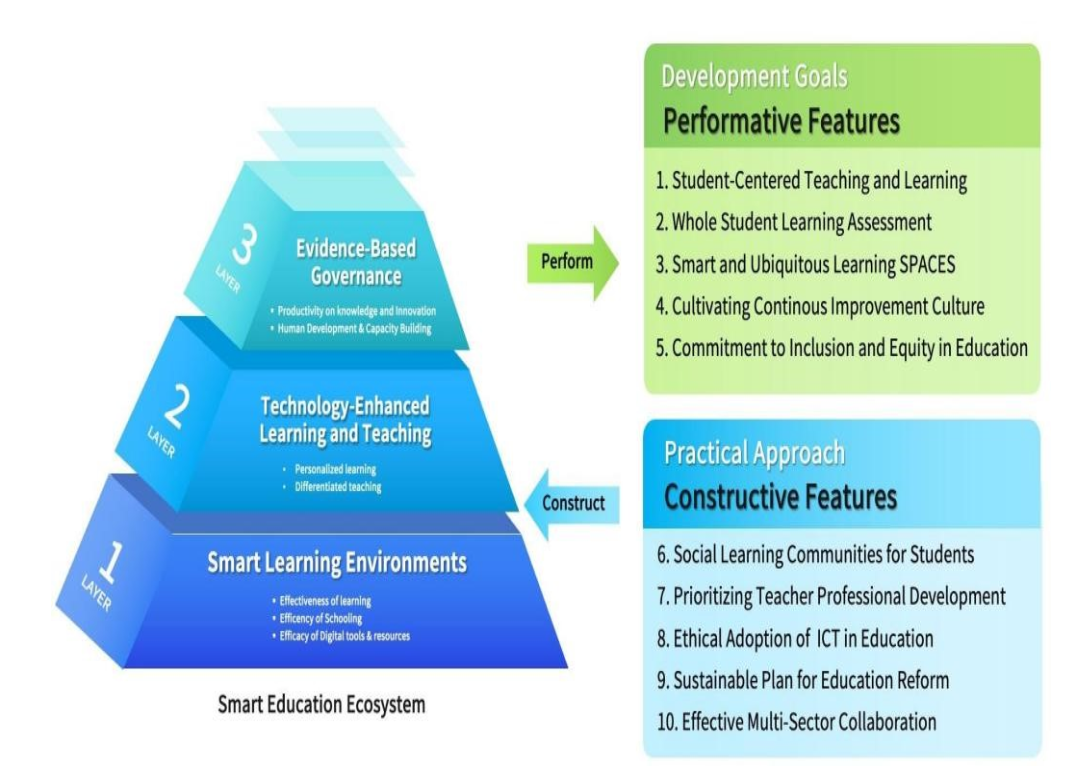
Development goals: five performative features
- Student-centred teaching and learning.
- Whole-student learning assessment.
- Smart and ubiquitous learning spaces.
- Cultivating a culture of continuous improvement.
- Commitment to inclusion and equity in education.
Practical approach: five constructive features
- Social learning communities for students.
- Prioritising teacher professional development.
- Ethical adoption of ICT in education.
- A sustainable plan for educational reform.
- Effective collaboration across sectors.
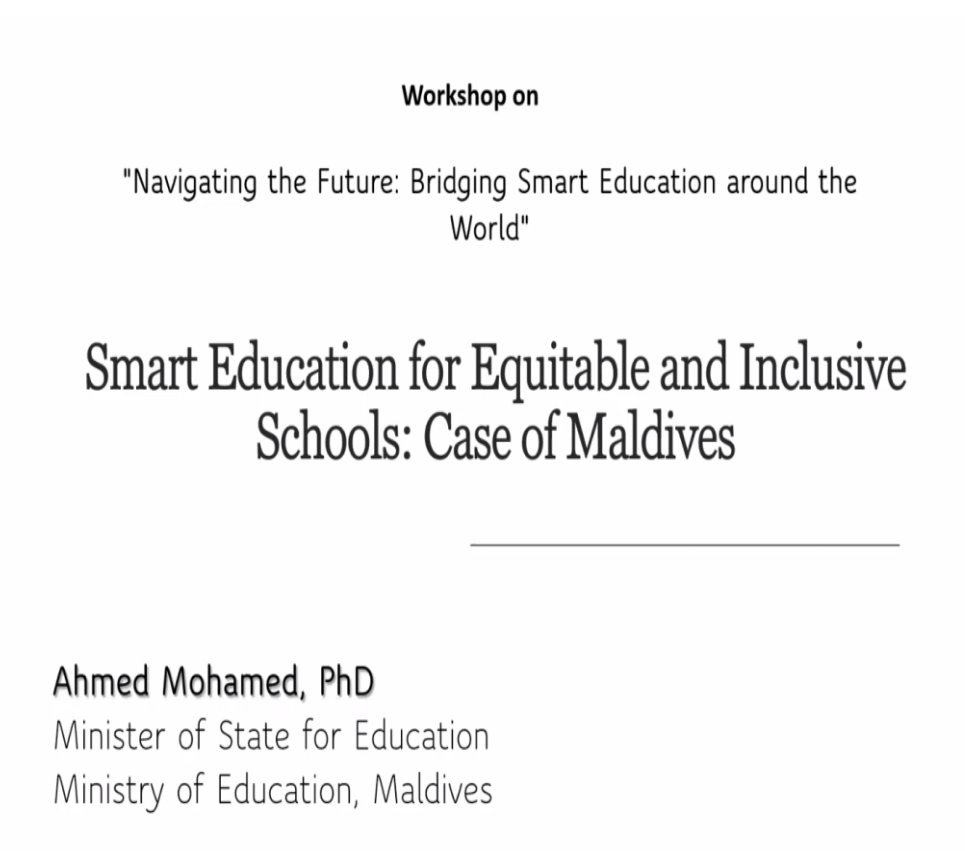
Ahmed Mohamed: equitable and inclusive schools
Ahmed Mohamed, then Minister of State for Education of the Maldives, focused on equity and inclusiveness in smart education and shared examples from the country’s practice. Drawing on national circumstances, he discussed implementation challenges and responses. His original title slide names the presentation “Smart Education for Equitable and Inclusive Schools: Case of Maldives”.
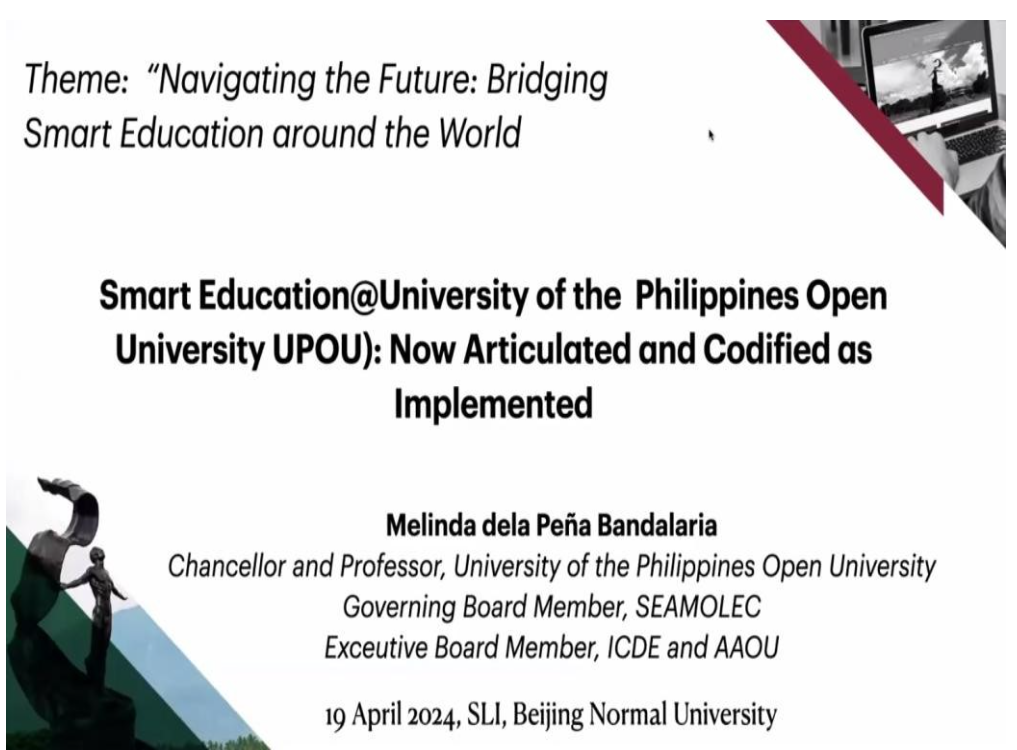
Melinda Bandalaria: smart education at UPOU
Melinda Bandalaria, then Chancellor of the University of the Philippines Open University (UPOU), presented “Smart Education @ University of the Philippines Open University (UPOU): Now Articulated and Codified as Implemented”. She described teaching and learning, governance and other processes within UPOU’s smart education practice, drawing on published literature to identify its characteristics.
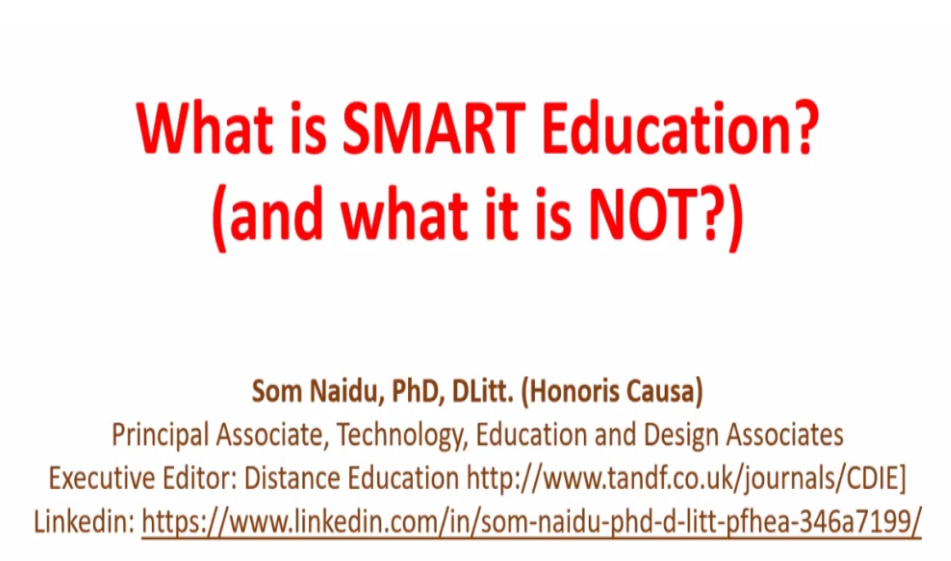
Som Naidu: concepts and responsible AI use
Professor Som Naidu, then Executive Editor of Distance Education, presented “What is SMART Education? (and what it is NOT?)”. He argued that technology is a core component of smart education and introduced the recently released Australian Framework for Generative Artificial Intelligence in Schools. He highlighted student privacy, security and safety, and responsible AI use to improve teaching and learning while addressing potential risks. He concluded with suggestions for using smart education terminology accurately.
Referenced framework: six principles in the 2023 edition
Reference supplement: the six guiding principles below come from the official 2023 Australian framework. The government announcement records approval by Education Ministers on 5 October 2023, publication of the announcement on 1 December, and implementation from Term 1 of 2024. This reference retains the version available at the time. Official 2023 Australian framework
- Teaching and learning
- Human and social wellbeing
- Transparency
- Fairness
- Accountability
- Privacy, security and safety
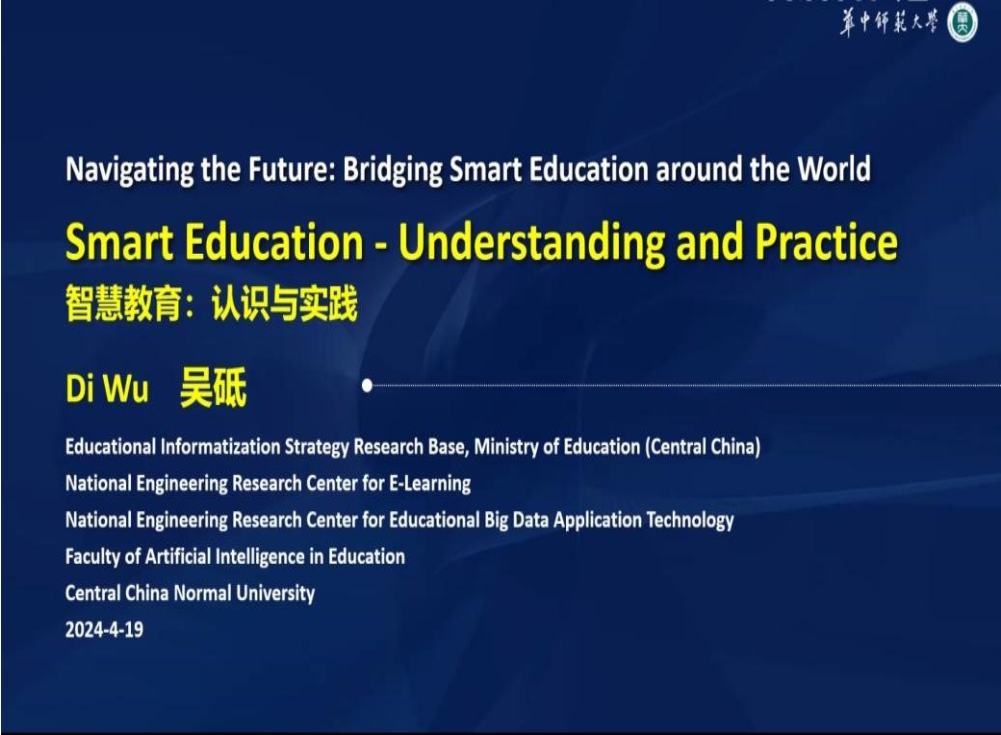
Di Wu: understanding and practice
Professor Di Wu (吴砥) of Central China Normal University presented “Smart Education—Understanding and Practice”. He discussed intelligent technologies for teaching, learning and management; ICT for educational equity; improved quality and governance; lifelong learning; and a digital education ecosystem for the intelligent era. He proposed three complementary actions towards a better educational future:
Three actions for the future
- Improve the environment and narrow the digital divide.
- Optimise provision and develop a national platform.
- Strengthen literacy and provide teacher training.
Closing remarks and plans for the series
In her closing remarks, Kanwar emphasised that smart education extends beyond schools to lifelong learning and personalised learning across all areas of life. Training a large teaching workforce is demanding; she considered intelligent technologies and smart education an effective means of improving teaching quality.
The original report said that the series would continue, promoting international expert exchange and cooperation and informing smart education theory, policy and practice. It envisaged a contribution to the future development of global education. These are the plans described in the first seminar’s 2024 report.
Sources and editorial notes
- The original Chinese and English articles were both archived on 21 April 2024. Their respective times of 11:30 and 18:00 and original URLs are preserved. The event was on 19 April; SLI’s original publication page records 23 April at 13:59. Original Chinese archive; Original English archive; SLI report of the same event; SLI original publication page
- Yang’s Chinese name is consistently 杨俊锋. The institution is the University of the Philippines Open University (UPOU). The UPOU presentation title follows the original slide and English text, with repaired parentheses; codified is understood as formalising provisions. The original slide remains available for comparison. SLI report of the same event
- Australian references were checked against the official 2023 framework and the 1 December 2023 announcement. The six principles are a reference supplement retaining that edition; readers can consult the framework and slides through the source links. Official 2023 Australian framework; Official 2023 announcement
- All six images come from SLI’s complete images of the same event, with their original proportions and content. Roles, opinions, research concepts and plans are presented in their 2024 context. The SLI source page states a CC BY 4.0 licence; source links and image attribution are retained. SLI report of the same event; SLI original publication page
AI and STEM learning resources · Special and inclusive education resources
Original link: https://aiedchair.bnu.edu.cn/navigating-the-future%ef%bc%9abridging-smart-education-around-the-world/