The GSE2023 forum on generative AI and the future of education took place in Beijing on 18 August 2023. It examined opportunities and challenges, changing educational forms, collaborative teaching between people and AI, and application ethics. Roles and project details below reflect the original 2023 report.
The forum was jointly implemented by BNU’s School of Educational Technology within the Faculty of Education, ALECSO, ISTE, BNU’s School of Artificial Intelligence and its Smart Learning Institute, with support from NetDragon.
Human-centred AI and future education
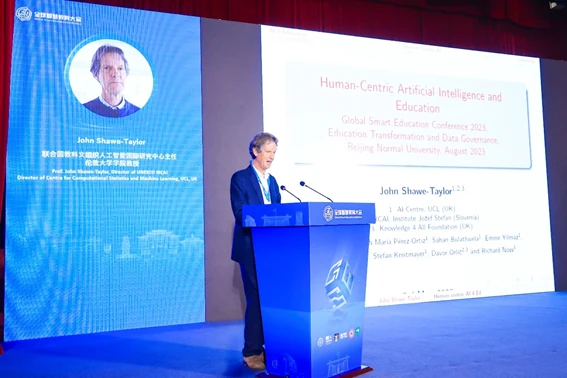
Professor John Shawe-Taylor, Director of IRCAI under the auspices of UNESCO and a UCL professor, discussed human-centred AI and education. He explained their integration, principles, frameworks, practical measures and examples.
Professor Mohamed Jemni, Director of ALECSO’s ICT Department, described AI in Arab education systems. Examples included Arab Code Week, an NFT educational platform, blockchain certification and smart learning environments built around these platforms.
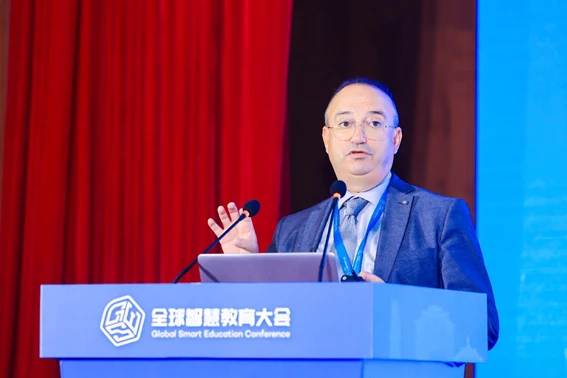
BNU School of Artificial Intelligence Dean Huang Hua reviewed the development of AI and generative AI. Examples included lesson planning, marking, question generation and solving, and search. He also highlighted challenges in personalisation and complex reasoning.
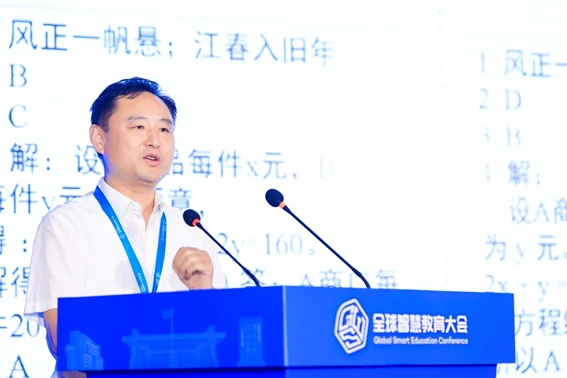
Monash University Professor Neil Selwyn examined moving from AI hype to realistic hope. He discussed application boundaries, principles and possible futures, urging reasoned consideration of social criticism and concerns.
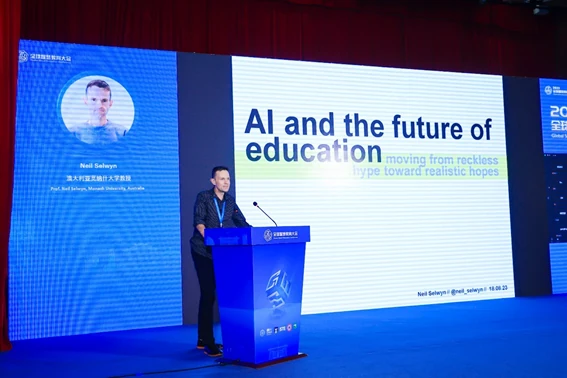
Liang Zheng, Deputy Director of Tsinghua University’s Institute for AI International Governance, examined applications, challenges and demands for educational change. He emphasised personal and character development in future schools.
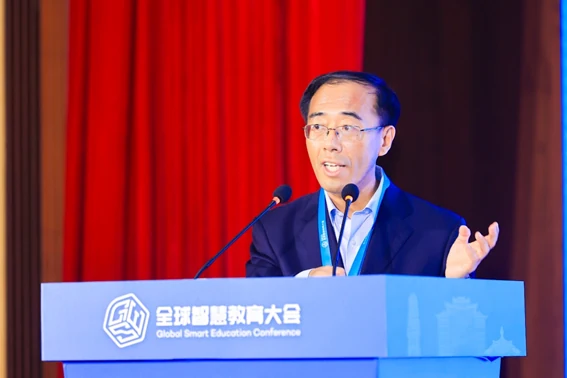
BNU School of Educational Technology Dean Wu Fati discussed collaboration between people and machines, cross-sector integration and shared creation. Generative AI and large models were developing towards greater complexity, efficiency and integration with other AI technologies. He explored their potential for personalised learning, adaptive environments, creativity, collaborative teaching and quality resources.
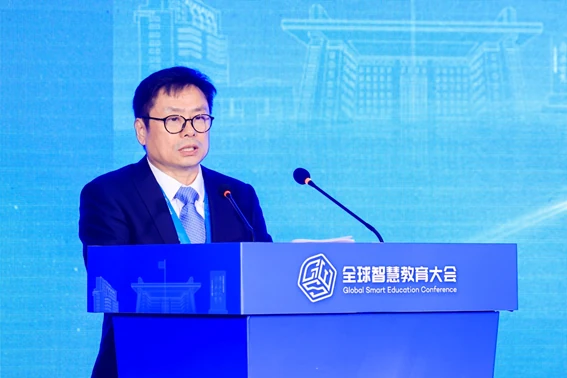
Dialogue with four large AI models
The dialogue session invited experts, teachers and pupils to answer questions alongside four different large AI models. Participants included Jiao Jianli, Director of South China Normal University’s Center for Future Education; Annie Ning, ISTE Director of Asian Affairs; BNU Associate Professor Ahmed Tlili; Fu Minjia, an information technology teacher at Lixian Primary School in Quzhou, Zhejiang; and one junior-secondary and one primary-school pupil.
Jiao Jianli introduced ten questions about challenges in educational applications. The two pupils drew on everyday experience and questioned experts and models, with examples including:
- What role will AI play in the future?
- Will AI replace my teacher?
- Do aliens really exist?
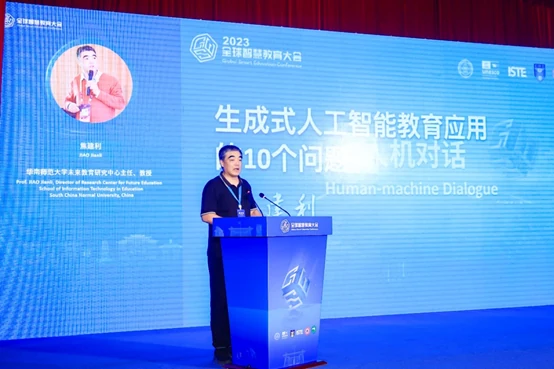
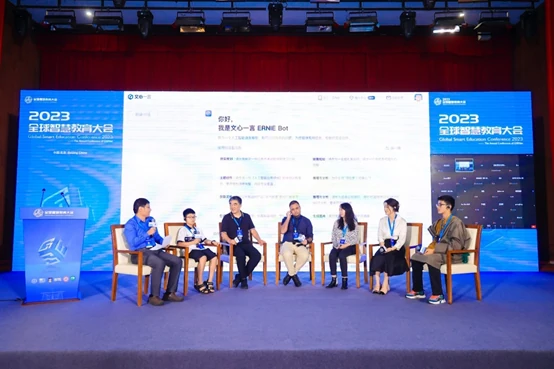
BNU Associate Professor Lu Yu, from the Advanced Innovation Center for Future Education, moderated the dialogue and invited presentations.
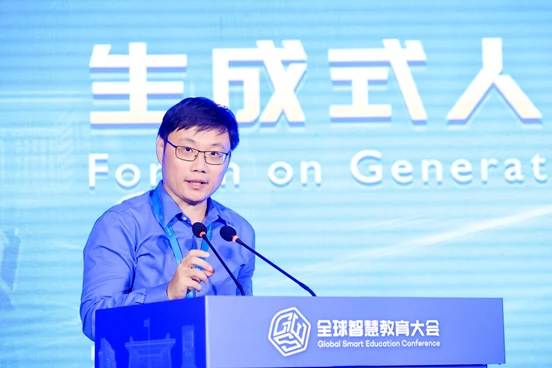
Education–industry cooperation and applications
East China Normal University Professor Gu Xiaoqing, Director of the Shanghai Engineering Research Center of Digital Education Equipment, discussed how new AI calls for innovation through education–industry integration. Changing technologies reshape views of knowledge; open education needs new perspectives and should incorporate knowledge production into education systems.
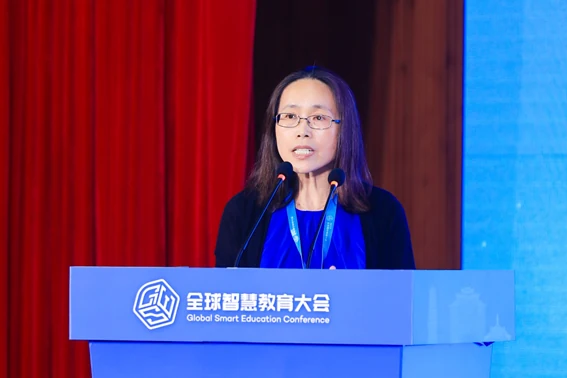
NetDragon Senior Vice-President and CTO Chen Hong presented generative technology in teaching content production, sharing examples combining established production methods and generative AI.
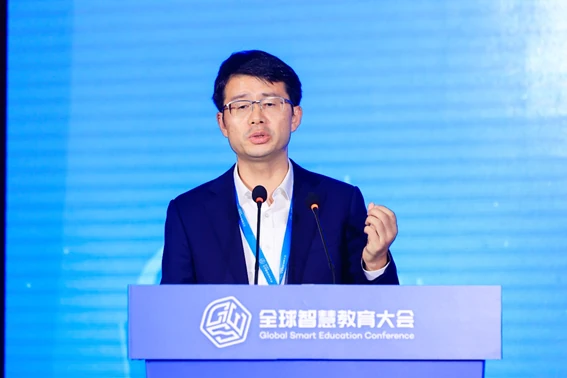
Zhang Zhi, Director of Shanghai Baoshan District’s Education Bureau, described its AI education brain initiative, combining management cases and research perspectives on generative AI.
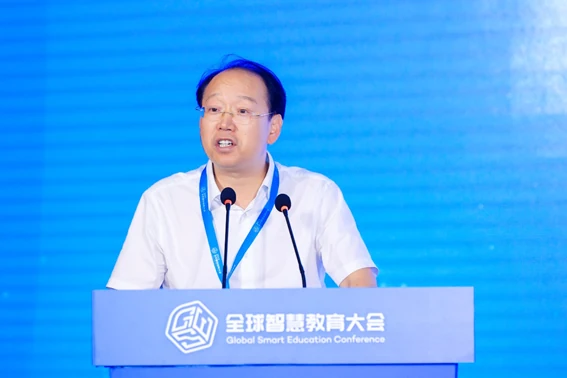
iFLYTEK Vice-President Zhou Jiafeng discussed AI and digital integration for quality education, presenting advances in core and systemic technological innovation and their applications.
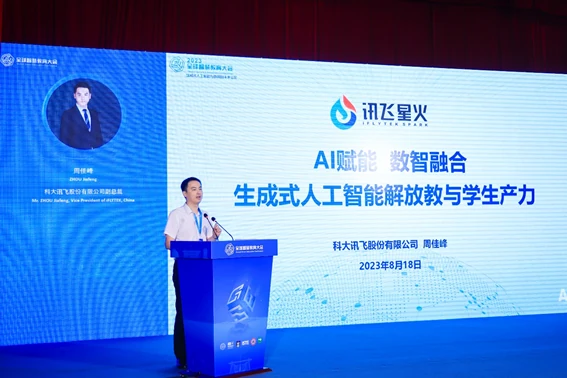
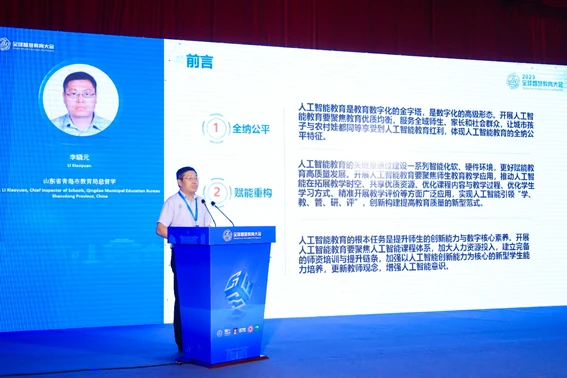
Qingdao Education Bureau Chief Inspector Li Xiaoyuan shared the city’s approach to AI-enabled educational development.
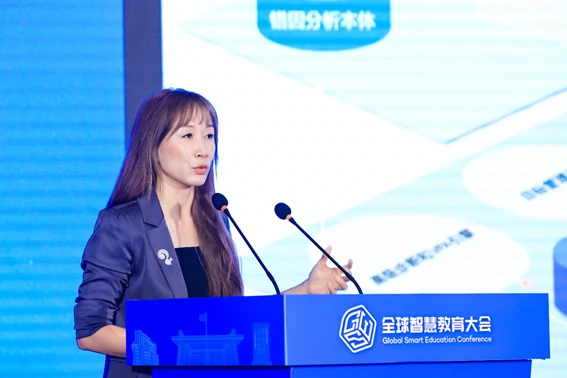
Squirrel AI founding partner Liang Jing used level-five autonomous driving as an analogy to present progress and solutions in adaptive learning hardware and software.
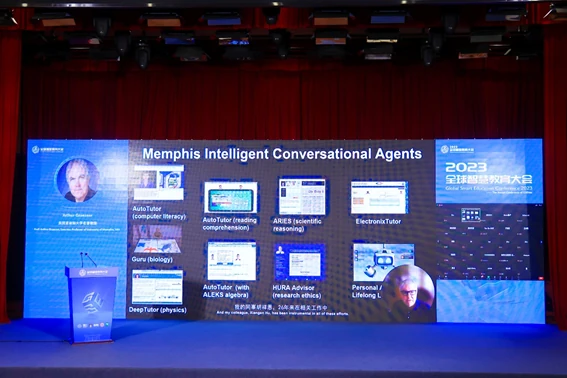
University of Memphis Professor Emeritus Arthur Graesser described conversational agents in learning environments.
Publications: research and youth AI cases
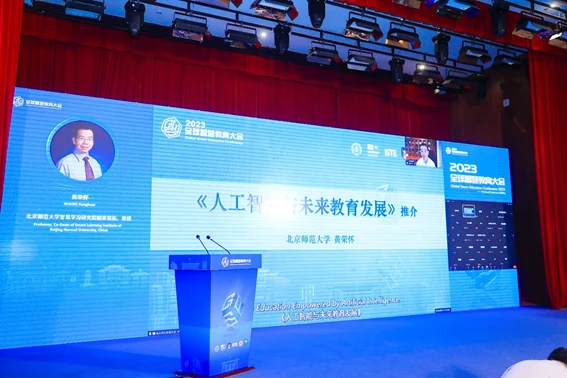
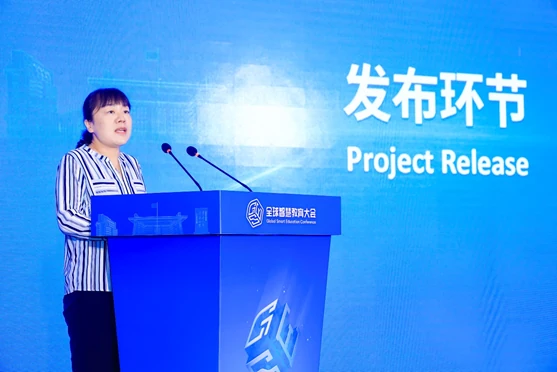
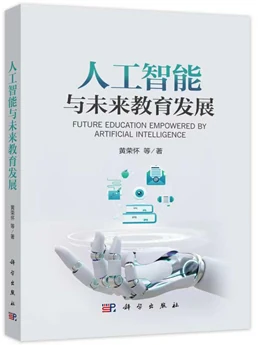
The forum launched Future Education Empowered by Artificial Intelligence, written by Huang Ronghuai and colleagues and published by Science Press. Fu Yan, head of its Education and Psychology Division, spoke on behalf of Deputy General Manager Yan Xiangdong. She described research on AI, future education, educational change, application characteristics and responses to potential risks, highlighting its theoretical, practical and strategic relevance.
Huang explained that the book was an output of the 2019 National Social Science Fund key education project on AI and future education development, which he led with teams from BNU, Southwest University, Central China Normal University, Zhejiang Normal University and Beijing Sport University.
Set against technological change and China’s educational reforms, it examines intelligent technologies’ roles and effects, global challenges and practical concerns. Topics include trustworthy AI, student growth, teacher development and new learning environments; educational characteristics, AI’s potential and mechanisms, implementation and governance. It is intended for educational technology students and teachers and others interested in smart education.
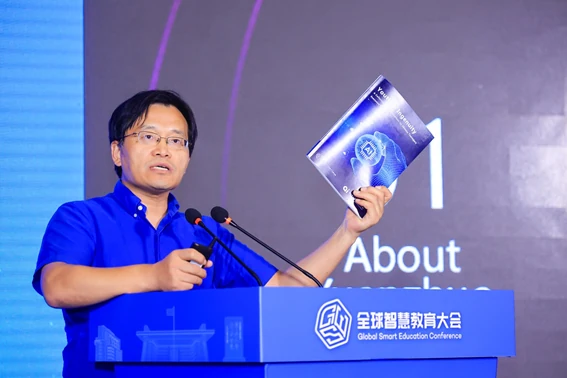
BNU Associate Professor Zhang Jinbao also introduced and launched the executive summary of Youthful Ingenuity: A Collection of AI Innovations by Chinese Teenagers. Initiated and implemented by Yuanzhuo, it identifies, nurtures and showcases youth AI innovation. He discussed implementation, case highlights and future directions.
Further reading: SLI’s original forum report; SLI’s Autumn 2023 newsletter.
Original link: https://aiedchair.bnu.edu.cn/news-6042-en/