Historical training report: this article revisits the three-day AIGC course of 15–17 May 2024. Roles, course information and tool interfaces are retained in their original context; this is not a current course or registration notice.
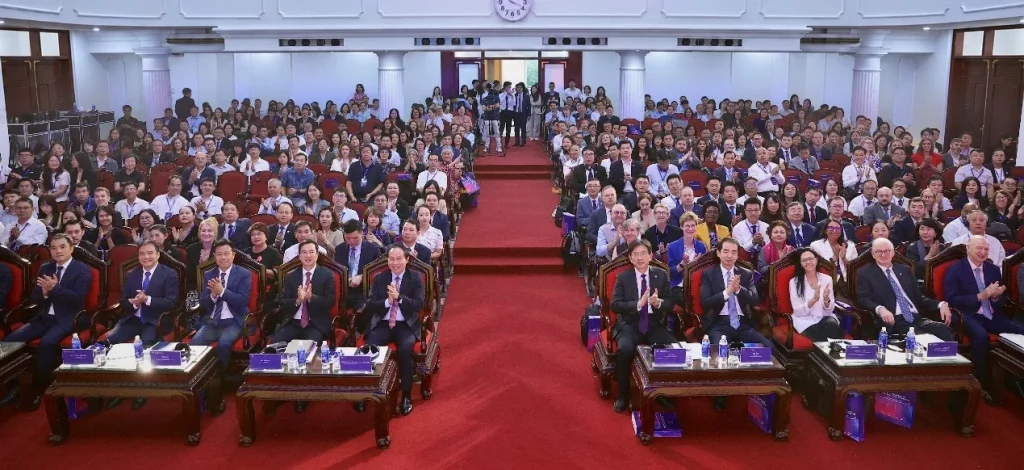
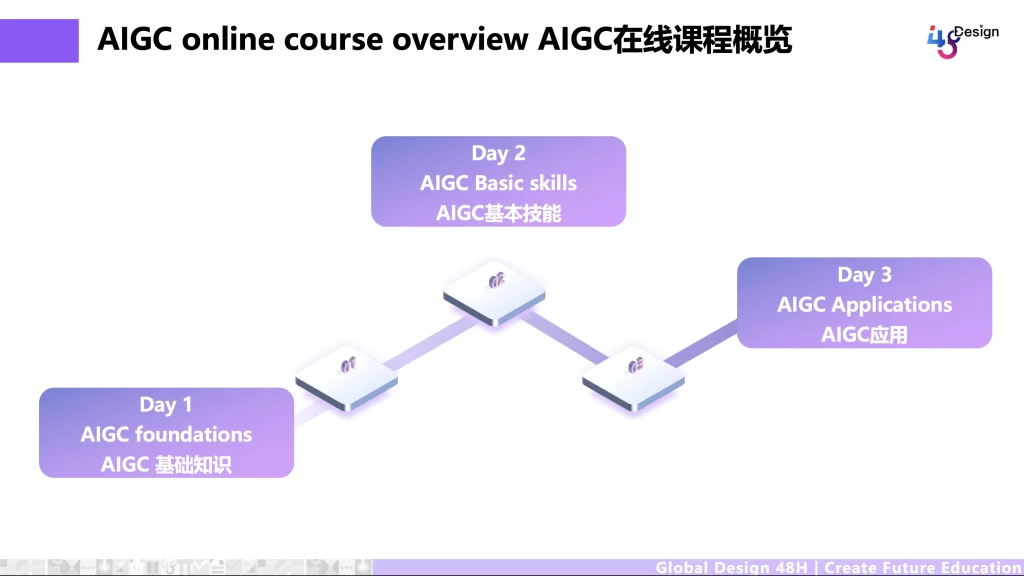
To help entrants produce high-quality designs and develop their competition skills and creativity, the organising committee of the seventh Global Competition on Design for Future Education ran three days of online training in artificial intelligence-generated content (AIGC), on 15–17 May 2024. Entrants from different countries and regions joined to develop their technology application capabilities.
Lecturers and learning arrangements
- WANG Huanhuan: the original Chinese article and SLI report described her as an assistant researcher at Beijing Normal University and focal contact for the UNESCO Chair on Artificial Intelligence in Education. The original English article used assistant professor. Both role descriptions are retained as 2024 source records.
- DA Ting: a postdoctoral fellow at Beijing Normal University.
- ZHANG Ran: the Chinese original identified him as technical director of 天宝莅德电子科技(上海)有限公司; the English original described him as technical director for SketchUp Greater China at Trimble Inc. The duplicated words “Technical Director” have been removed while preserving both versions’ organisational and role information.
The course combined synchronous and asynchronous learning so entrants could study flexibly at their own pace. WANG Huanhuan and DA Ting offered theoretical insights and practical guidance; ZHANG Ran contributed technical expertise informed by his technical-director role and substantial industry experience. Statements about efficient learning reflect the original course design and report.
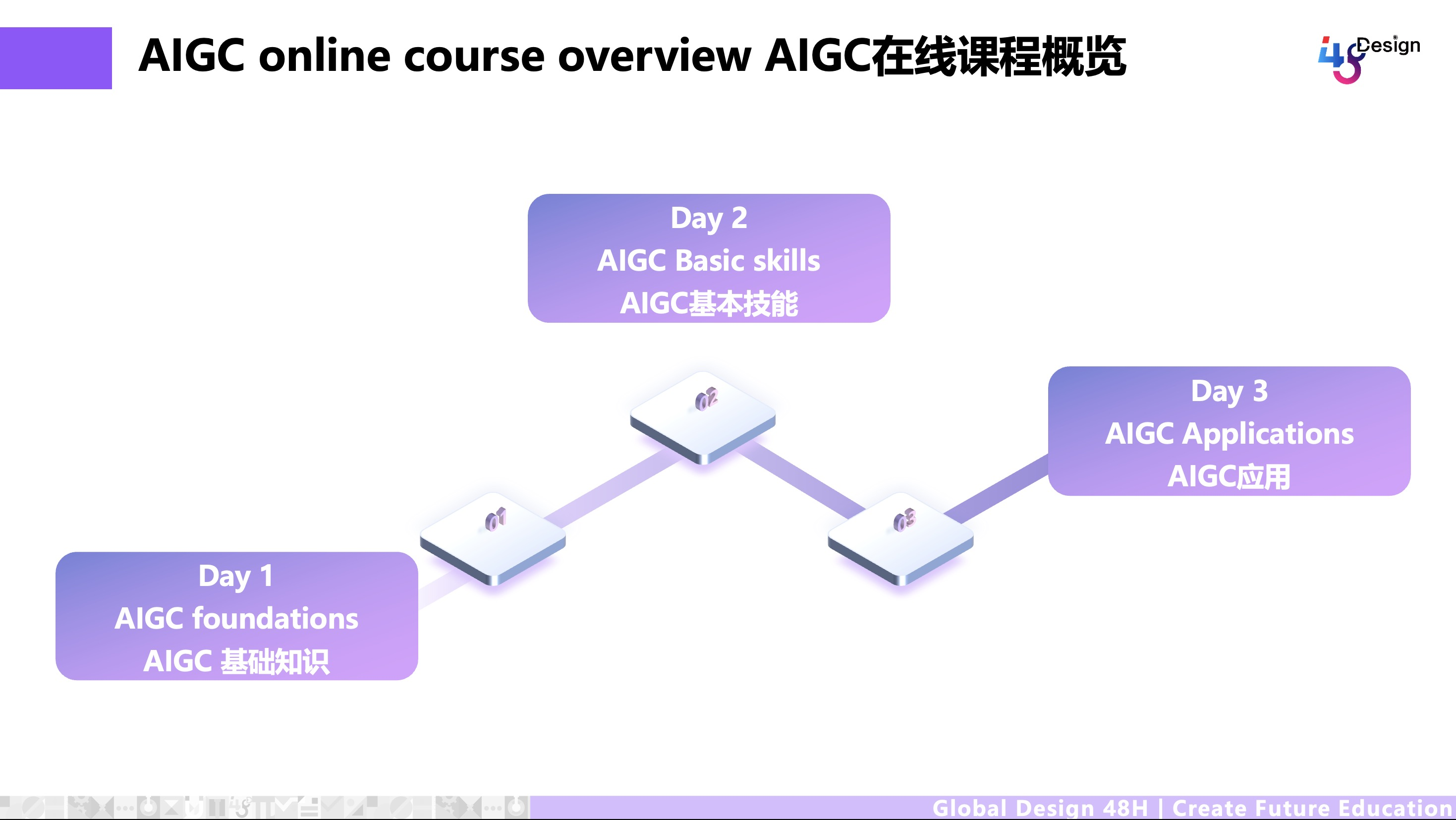
15 May: AIGC foundations and course framework
Participants explored the three-day course framework, AIGC foundations and principles, and the use of tools to support competition designs. The slides introduced a classification of large language models to explain different application settings.
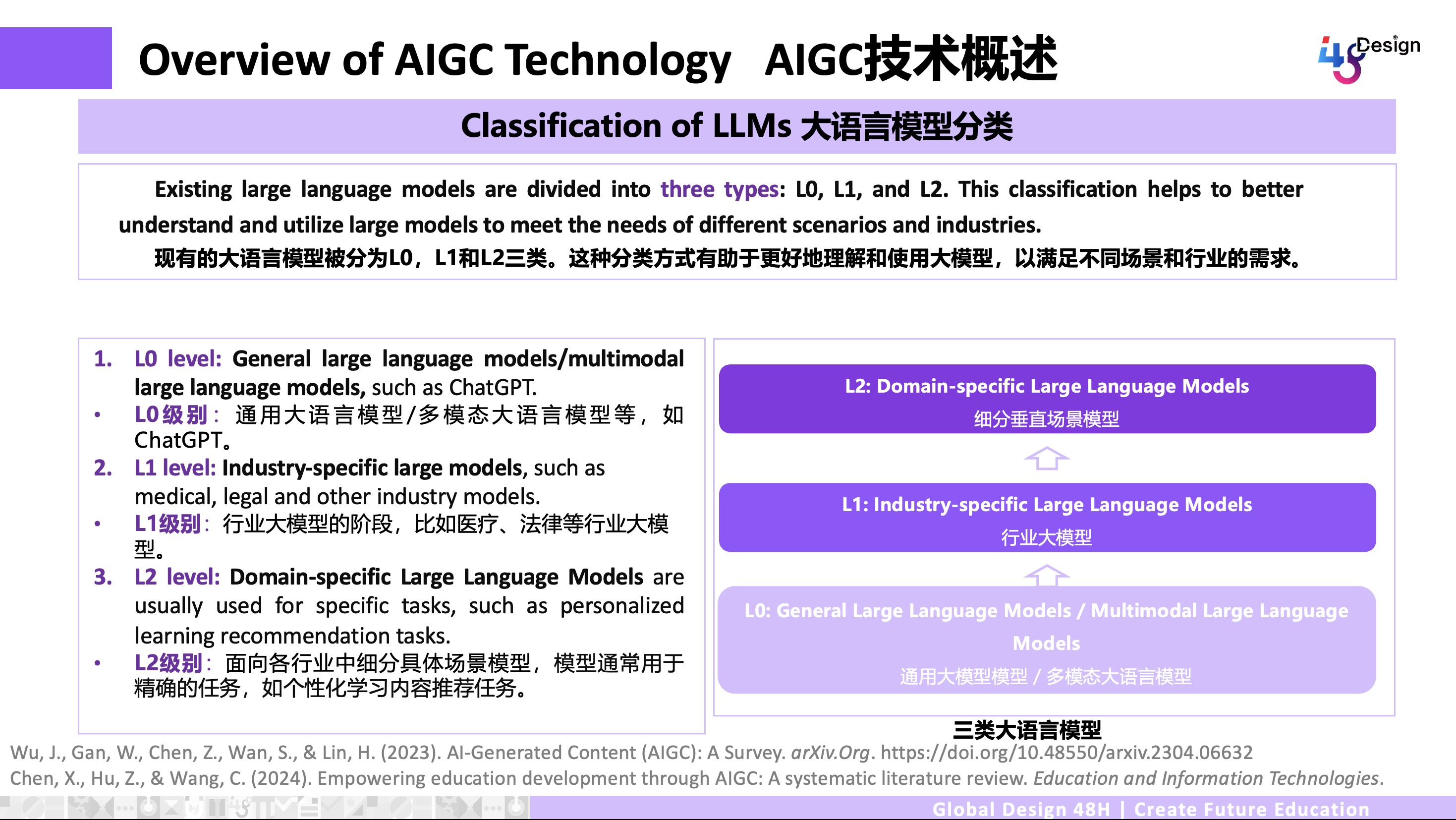
The slides’ three-level model classification in text
- L0: general large language models or multimodal large language models, with ChatGPT as the slide’s example.
- L1: industry-specific models, with medicine and law as examples.
- L2: domain- or scenario-specific models for particular tasks, such as personalised learning-content recommendations.
16 May: basic AIGC skills and prompting
Participants studied the basic principles and key components of writing prompts, practising AIGC for information retrieval, brainstorming, image design, paragraph drafting and slide creation.
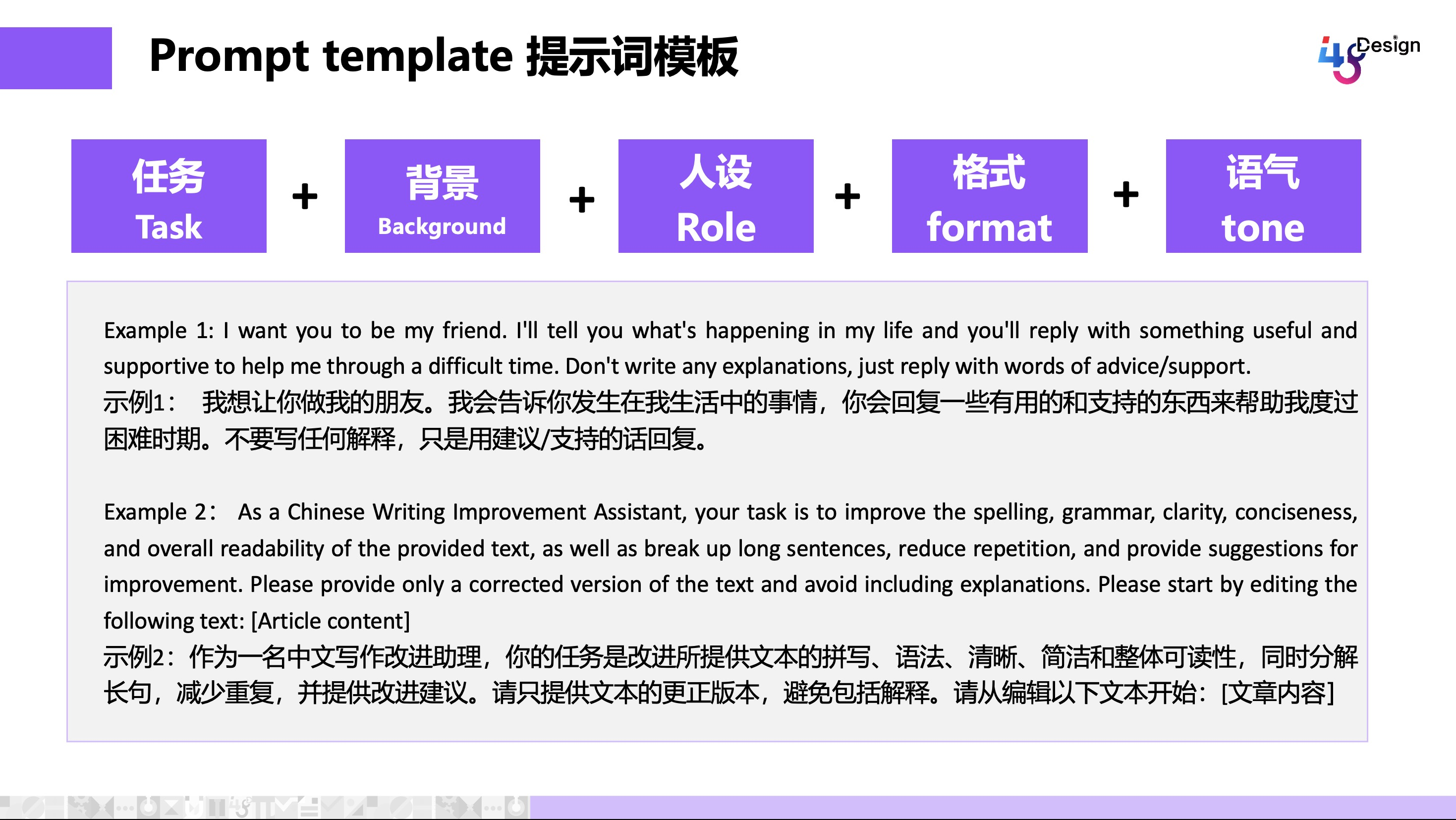
The slides’ prompt template and examples in text
- Task: specify the work to be done.
- Background: provide context.
- Role: specify the perspective the model should adopt.
- Format: describe the organisation of the output.
- Tone: describe the style of expression.
Slide example 1: I want you to be my friend. I will tell you what is happening in my life, and you will reply with something useful and supportive to help me through a difficult time. Do not write explanations; reply only with advice or support.
Slide example 2: As a Chinese writing improvement assistant, improve the spelling, grammar, clarity, conciseness and overall readability of the supplied text, while breaking up long sentences, reducing repetition and suggesting improvements. Provide only the corrected text without explanations. Begin by editing the following text: [Article content].
17 May: advanced AIGC applications and creation
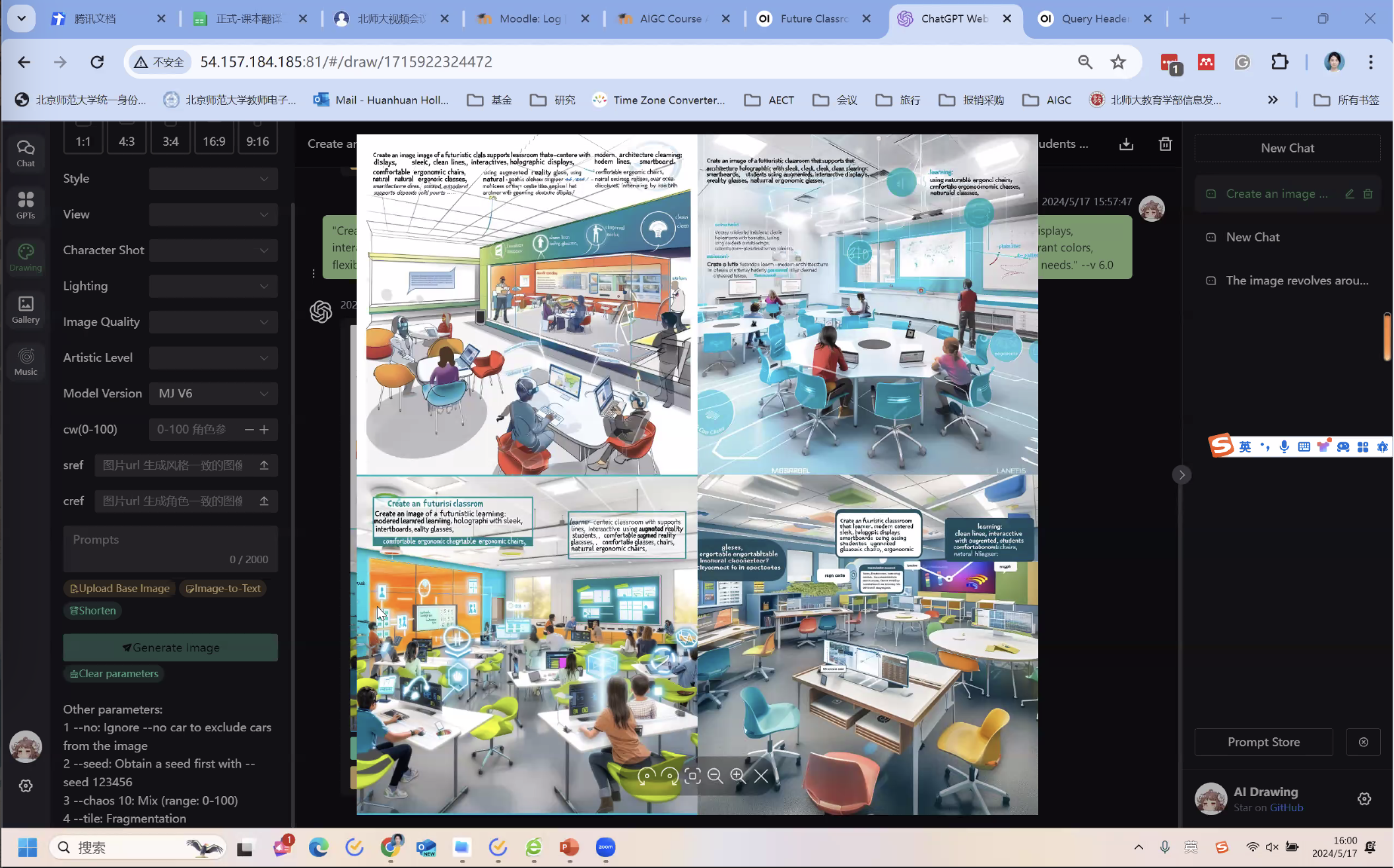
Participants developed advanced skills and practical applications, including integrating AI with SketchUp products and creating lyrics, music, images and video, alongside evaluating their own outputs. Original captions also described generating and executing SketchUp Ruby code through the OpenAI API, and using large language models to generate Midjourney prompts for future-classroom illustrations.

Participant feedback and the original follow-up learning offer
The report relayed generally positive participant feedback about the practical, up-to-date content, particularly the AIGC demonstrations and hands-on activities, and perceived gains in technology application. These are reported participant views; no respondent count, survey instrument or quantitative evaluation was supplied.
The original article told people who had not registered that they could study through Moodle, describing this as supporting equitable access to skill development. The former address https://learn-tn.com/moodle/ is retained only as a historical record. Certificate validation failed during this review, so access and login were not pursued; current course or replay availability has not been confirmed.
The report said the competition encouraged entrants to use AIGC in their designs. Organisers looked forward to seeing improved technical capability reflected in subsequent entries, stimulating creativity and a culture of innovation and supporting an engaging, high-quality competition. These were expectations expressed in 2024, rather than verified results for every entrant.
References listed on the original slides
The original bibliographic details and official abstract pages are provided below. Titles, authors and publication information were checked; the papers have not been translated in full and paid full texts were not accessed. L0/L1/L2 is the teaching classification used by these slides, and the prompts are historical teaching examples.
- Wu, J., Gan, W., Chen, Z., Wan, S., & Lin, H. (2023). AI-Generated Content (AIGC): A Survey. arXiv:2304.06632.
- Chen, X., Hu, Z., & Wang, C. (2024). Empowering education development through AIGC: A systematic literature review. Education and Information Technologies. DOI:10.1007/s10639-024-12549-7.
Sources and editorial notes
- Both original titles, URLs and the 22 May 2024 at 10:10 archive times are preserved. The course ran on 15–17 May. The SLI page’s head PubDate metadata is 29 May at 09:58; its current research-section template does not display that publication date in the body. These sources of dates are distinguished. · Original Chair report in Chinese · Original Chair report in English · Related SLI report
- The ten original Chinese and English image references represent five illustrations. Full masters from the English article’s media library are used, with decoded pixels matching the corresponding SLI images. All five remain in course order; the English article’s stray duplicate third-day caption has been placed once with its correct image. · Original Chair report in Chinese · Original Chair report in English · Related SLI report
- The classification, prompt components and two examples have six-language text equivalents while the original pictures remain unchanged. The SketchUp picture is a presentation introduction; future classrooms are generated examples, not photographs of real rooms. Web addresses and interfaces within screenshots belong to the 2024 demonstration and are not recommendations of current tool entry points.
Read the original training and project mentoring notice · Explore AI and STEM learning resources
Original link: https://aiedchair.bnu.edu.cn/aigc-online-training-enhances-contestants-technology-application-capabilities/