
On 27 October 2026, the Advanced Innovation Center for Future Education at Beijing Normal University listed a study by Pian Yang and Yu Shengquan in the Journal of Distance Education. The authors propose cognitive resonance as a framework for understanding when external support from generative AI can help learners build and transfer their own understanding.
From receiving answers to building understanding
The framework follows four parts of learning: connecting new knowledge with what learners already know, making their reasoning visible, reflecting on and regulating their strategies, and applying what they learn in new situations. It examines how the fit among task structure, interaction, learning goals and context shapes what the same tool can contribute in different classrooms.
Designing learning tasks
The study discusses probabilistic recombination, dialogue, model hallucinations and multi-role simulation. It proposes working with multiple sources, asking learners to explain their reasoning in dialogue, designing tasks that require verification and critique, and using role-based collaboration to apply learning in new contexts. These are principles for designing instruction.
Pian Yang and Yu Shengquan, Journal of Distance Education, vol. 44, no. 5, 2026. DOI 10.15881/j.cnki.cn33-1304/g4.2026.05.004.
Sources and further reading
- BNU Advanced Innovation Center for Future Education
- National science journal platform · article record
Related coverage from CITLAB (Chinese)
How can generative AI support deep cognitive construction? Mechanisms and design principles of cognitive resonance
1. School of Information Technology Education, Beijing Institute of Education
2. Advanced Innovation Center for Future Education, Beijing Normal University
Abstract:Generative artificial intelligence is accelerating its integration into teaching practices, but how external intelligent support can be transformed into the deeper cognitive development of learners remains to be clarified. Given the current reality that the use of GenAI in education often leads to “cognitive debt” and results in limited use of basic tools, the study first defines the concept of deep cognitive construction. It identifies four key cognitive needs: knowledge association and structural reorganization, cognitive expression and construction, reflection and metacognitive regulation, and cognitive transfer and social collaboration. Based on this, the concept of “cognitive resonance” is proposed as a systematic analytical framework. The internal mechanisms by which GenAI supports deep cognitive construction are explained from three aspects: conditions, processes, and outcomes. It is shown that structural alignment, interactive alignment, goal alignment, and contextual alignment are necessary prerequisites for cognitive resonance. Additionally, the roles of four mechanisms—probability reorganization, dialogue interaction, content illusion, and multiple roles—in supporting deep cognitive construction are analyzed. Four teaching principles are then proposed: context design oriented toward multi-source connections, dialogue design oriented toward process externalization, task design oriented toward critical evaluation, and role design oriented toward collaborative transfer. The study aims to provide a more integrated analytical perspective for understanding how GenAI supports deep cognitive construction, and to offer design guidelines for transforming GenAI from a tool for providing answers into a means of fostering cognitive development.
Keywords:Generative artificial intelligence; cognitive resonance; deep cognitive construction; human-machine collaboration; instructional design
1. Problem presentation
Generative AI, as a crucial technological force in the new wave of educational reforms, is rapidly being applied in various educational contexts such as teaching design (Feng Xiaoying et al., 2025), classroom interaction (Wan Kun et al., 2025), and assessment and feedback (Luo Heng et al., 2024). It has become a key factor in promoting smart education and deep learning practices. Numerous studies and practices have shown that GenAI possesses capabilities such as cross-modal information integration, contextual language generation, and conversational interaction (Lei Hao et al., 2025). These capabilities provide extensive opportunities for learners to construct complex knowledge and engage in advanced thinking activities. Driven by this technological trend, there is a growing demand for deep learning in the education sector. However, in reality, most applications of GenAI remain at a basic level, such as providing quick answers or generating text content, and they fail to effectively support the deep cognitive processes of learners.
For learners, using content generated by artificial intelligence does not equate to truly understanding and applying that content. Existing research indicates that when learners rely heavily on GenAI for direct answers and engage less in the analysis and reasoning of problems, they may achieve seemingly complete outputs in the short term. However, when they are without the technical support and need to apply knowledge independently, issues such as weak understanding and limited ability to apply knowledge are often encountered. This can be described as a cumulative “cognitive debt” phenomenon (Kosmyna et al., 2025). In fact, the essence of learning is not determined by the total amount of technology available, but by how technology aligns with the learner’s existing experience, knowledge structure, and cognitive needs, thereby creating an efficient cognitive system. Based on this, this paper discusses the core issue of “how generative artificial intelligence can support deep cognitive development,” focusing on three related questions: first, what cognitive demands does deep cognitive development pose; second, through what mechanisms can GenAI play a role; and third, how teachers should redesign their teaching methods so that the use of GenAI in education shifts from being a tool for providing answers to serving as a means of supporting the development of thinking skills.
II. The core needs for deep cognitive construction
In the context of accelerated knowledge iteration and increasing problem complexity, the cognitive tasks faced by learners are changing. They need to not only understand knowledge, but also identify relevant information from various sources, adjust their cognitive strategies when dealing with complex tasks, and apply knowledge in real-world situations. In this regard, research in cognitive and learning science has shifted its focus from merely acquiring knowledge to whether learners can develop stable and transferable deep cognitive structures. Deep cognitive construction represents a comprehensive extension of concepts such as cognitive construction, deep learning, and knowledge construction, all based on this understanding of the issue. From a theoretical perspective, cognitive construction emphasizes that learners actively adapt their existing schemas to create new cognitive structures (Piaget, 1964); deep learning focuses on the value of higher-order thinking, deep understanding, and transferable application (Guo Hua, 2016); and knowledge construction incorporates meaning negotiation and social interaction into the core mechanisms of cognitive development (Zhao Jianhua, 2007). Although these three concepts have different focuses, they all point toward one fundamental idea: meaningful learning is a dynamic process in which learners actively reconstruct their cognitive structures through continuous interaction with the external world. On this basis, Mayer’s multimedia learning theory provides further mechanisms for understanding this idea from the perspective of cognitive processing. His assumptions about dual-channel processing, limited cognitive capacity, and active processing reveal the cognitive pathways that enable learners to transform external information into internal meaning, offering important insights for understanding multimodal information processing, cognitive load regulation, and active meaning generation in the context of generative artificial intelligence (Mayer, 2024).
Based on the above understanding, this paper defines “deep cognitive construction” as the process in which learners, on the basis of their existing knowledge, actively select, organize, and integrate multi-dimensional information streams. This leads to the dynamic adjustment and system restructuring of their existing cognitive frameworks. Through continuous social interaction, a cognitive structure that can be utilized across different contexts is formed. In terms of its characteristics, deep cognitive construction involves the continuous deepening of both the cognitive structure and the ways of cognitive processing. This can be analyzed from four dimensions: structure, expression, regulation, and transfer, as shown in Table 1.
Table 1: Dimensions of understanding in deep cognitive construction and their relationship with existing theories
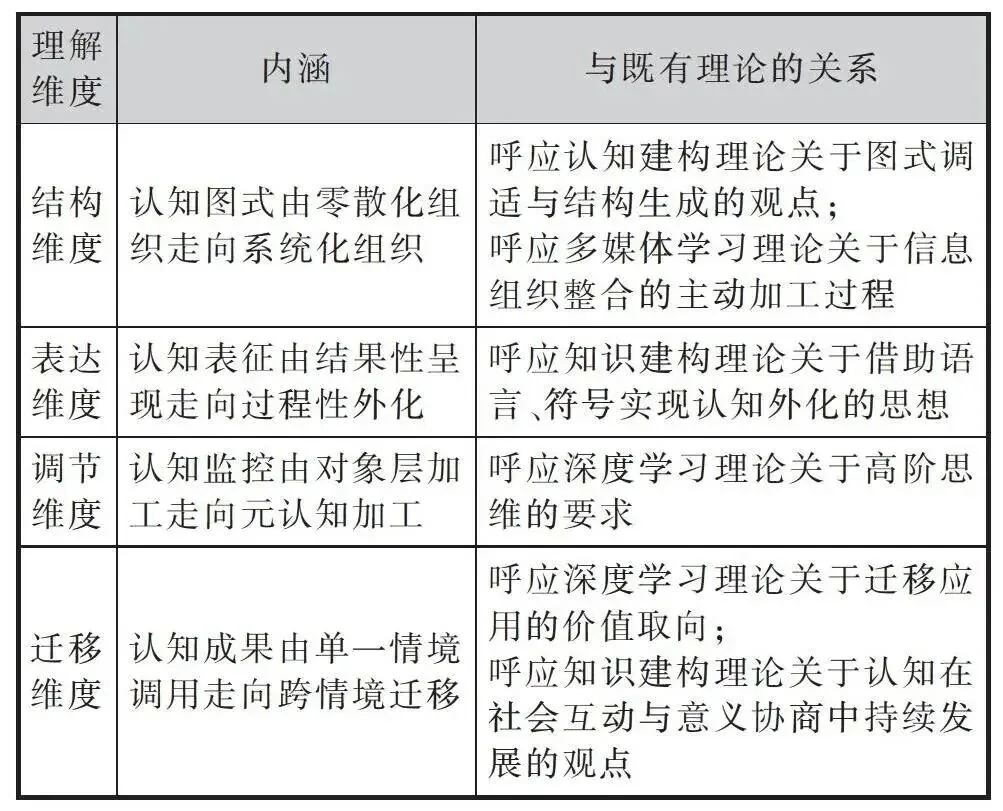
Read the table as text
| Dimension | What changes | Connection with existing theories |
|---|---|---|
| Structure | Cognitive schemas move from fragmented to systematic organization | Schema accommodation and the formation of structures, and the active organization and integration of information in multimedia learning |
| Expression | Learners move from presenting results to making their thinking process visible | Knowledge construction through making cognition explicit in language and symbols |
| Regulation | Monitoring moves from the task itself to metacognitive processing | Deep learning theories’ emphasis on higher-order thinking |
| Transfer | Learners apply what they know across contexts rather than in a single setting | Transfer in deep learning, and the view that cognition develops through social interaction and negotiation of meaning |
The four dimensions mentioned above clarify the key cognitive tasks required for the occurrence of deep cognitive construction: the systematic organization of cognitive structures, the externalization of processes, meta-cognitive processing, and cross-situational transfer. Based on this, this paper proposes that deep cognitive construction has four core requirements, and these requirements are presented in a sequential logical order.
1. The starting point for the construction of deep cognitive understanding: knowledge relationships and structural reorganization
Deep cognitive construction begins with the internal cognitive processing of the learner. It involves the learner using external information to actively adapt their existing cognitive structures. This requires the learner to go beyond mere information reception; instead, through mental processes such as concept organization and causal analysis, they can integrate new and old knowledge, thereby constructing a coherent cognitive framework (Bruner, 1961). The role of knowledge association and structural reorganization is to help learners establish stable internal mental representations, thereby providing a structured foundation for subsequent cognitive processing.
2. The mediating mechanism of deep cognitive construction: cognitive externalization and expression construction
After the internal cognitive structure of an individual is initially formed, learners must break through the boundaries between implicit cognition and explicit expression, and use intermediate mechanisms to transform this cognition into visible, communicable symbols (Vygotsky, 1978). The role of cognitive externalization and expression construction can be seen in two dimensions: internally, the process of expression helps to reveal the blind spots and contradictions within the cognitive structure, thereby prompting learners to reflect on themselves and make internal adjustments; externally, the visible results provide a medium for feedback from others and collaborative exploration within a group, allowing the cognitive structure to be continuously improved through a cycle of expression, feedback, and further expression.
3. The motivational mechanisms of deep cognitive construction: reflection monitoring and metacognitive regulation
To ensure that the processes of internalization and externalization do not deviate from their intended path, the cognitive system requires appropriate motivational mechanisms to enable real-time guidance and quality monitoring. Reflective monitoring and metacognitive regulation constitute these motivational mechanisms; their core lies in the awareness and control of the deep cognitive construction process (Chi et al., 2014; Flavell, 1979). Reflective monitoring and metacognitive regulation enable learners to continuously assess the achievement of goals and the effectiveness of their strategies throughout the process of deep cognitive construction (Yin Xinghan et al., 2025), thereby facilitating a transition from being passive task executors to active self-monitors. Existing research also indicates that learners with strong metacognitive abilities are more able to maintain target sensitivity and strategic flexibility, resulting in higher levels of cognitive construction effectiveness during the learning process (ElSayad, 2024).
4. An important means of deep cognitive construction: cognitive transfer and social collaboration
The outcomes of deep cognitive construction must ultimately be applied in various contexts. To ensure its applicability across different situations, learners need to use real-world practices as a medium to transfer and refine their cognitive structures through social collaboration. This allows the results of cognitive construction to be transformed into practical abilities for solving various real-world problems. The role of cognitive transfer and social collaboration is to support the coordinated operation of key mechanisms such as the reorganization, externalization, and metacognitive regulation of cognitive structures, as well as to provide a bridge between the formation and implementation of cognitive outcomes. Thus, they become important tools for achieving deep cognitive construction.
III. Cognitive Resonance: The core principle of how GenAI facilitates deep cognitive construction
Generative artificial intelligence is reshaping the relationships between learners and knowledge, tools, and contexts. It creates new technological conditions for the development of deep cognitive processes. However, technological intervention does not necessarily lead to deeper cognitive development. From a research perspective, current studies on how generative artificial intelligence supports learning can be categorized into three approaches: first, the “supply” approach, which focuses on the multiple tools provided by generative artificial intelligence and the conditions that facilitate learning (Shan Junhao et al., 2024; Lu Yu et al., 2025; Su Rui, 2025); second, the “scaffolding” approach, which emphasizes the teaching support functions of generative artificial intelligence and the specific processes that promote learning (Wang Siyao et al., 2024; Zhao Xiaowei et al., 2025); third, the “enhancement” approach, which focuses on the effects of generative artificial intelligence on learning development and the outcomes that result from learning (Shi Lan et al., 2026; Tang Qianwen et al., 2026). These three approaches each offer explanations related to “what the technology provides,” “how the technology influences learning,” and “what outcomes result from its use.” However, in practical teaching applications, if any of these approaches is emphasized too much, it may lead to the misconception that resource provision is equivalent to actual learning behavior, or that external support is a sufficient condition for internal cognitive development, or that the desired outcomes are directly equivalent to the mechanisms that occur during the learning process. This results in a one-sided understanding of how generative artificial intelligence supports deep cognitive development. Therefore, it is necessary to adopt a more integrated analytical approach that connects conditions, processes, and outcomes, and to explain how external intelligent support can effectively complement the learner’s internal cognitive system, thereby gradually producing observable outcomes of enhanced cognition through continuous interaction between the two.
(1) The concept of cognitive resonance is proposed
Based on the above analysis, this paper introduces the concept of “cognitive resonance”. From a holistic perspective that encompasses conditions, processes, and outcomes, it explains how generative artificial intelligence supports the deep cognitive construction of learners. The term “resonance” is used to describe the phenomenon of energy gain that occurs when different physical systems have consistent frequencies, structures, and rhythms (Jothimurugan et al., 2016). This principle of “synchronized interaction and synergistic effect” has been applied in cognitive science research: current neuroscientific studies indicate that the synchronization of neuronal activities is an important physiological basis for individual information processing and memory formation (Jutras et al., 2010). In terms of the internal structure of resonance, it involves three consecutive processes: matching, coupling, and gain. Matching is a prerequisite for the occurrence of resonance; coupling represents the specific processes of continuous interaction between systems; and gain refers to the overall effect that results from resonance, which is significantly greater than the simple sum of the individual effects of the two systems. Therefore, introducing the concept of resonance into the field of educational research helps to integrate the conditions, processes, and outcomes related to generative artificial intelligence’s support for deep cognitive construction within a single analytical framework.
The “cognitive resonance” mentioned in this paper refers to a state in which, during the learning activities carried out with the help of generative artificial intelligence, the intelligent system and the learner’s cognitive system reach a certain degree of cognitive alignment. Through continuous human-machine interaction and the synergistic effect of various mechanisms, cognitive enhancement is achieved. In this context, technical systems serve as an important support for expanding the capabilities of learners; they help learners overcome their inherent limitations in terms of cognitive resources, experience range, and information processing speed. As a result, a synergistic effect of “1+1>2” can be achieved during the process of deep cognitive construction. The key value of cognitive resonance lies in integrating the concepts of supply-oriented, scaffolding-oriented, and enhancement-oriented approaches into a single concept, thereby enhancing the overall understanding of how generative artificial intelligence facilitates deep cognitive construction.
(II) The basic essence of cognitive resonance
The concept of cognitive resonance includes three interconnected aspects: the prerequisite alignment conditions, the process of synergistic interaction, and the outcomes of cognitive enhancement, as shown in Figure 1.
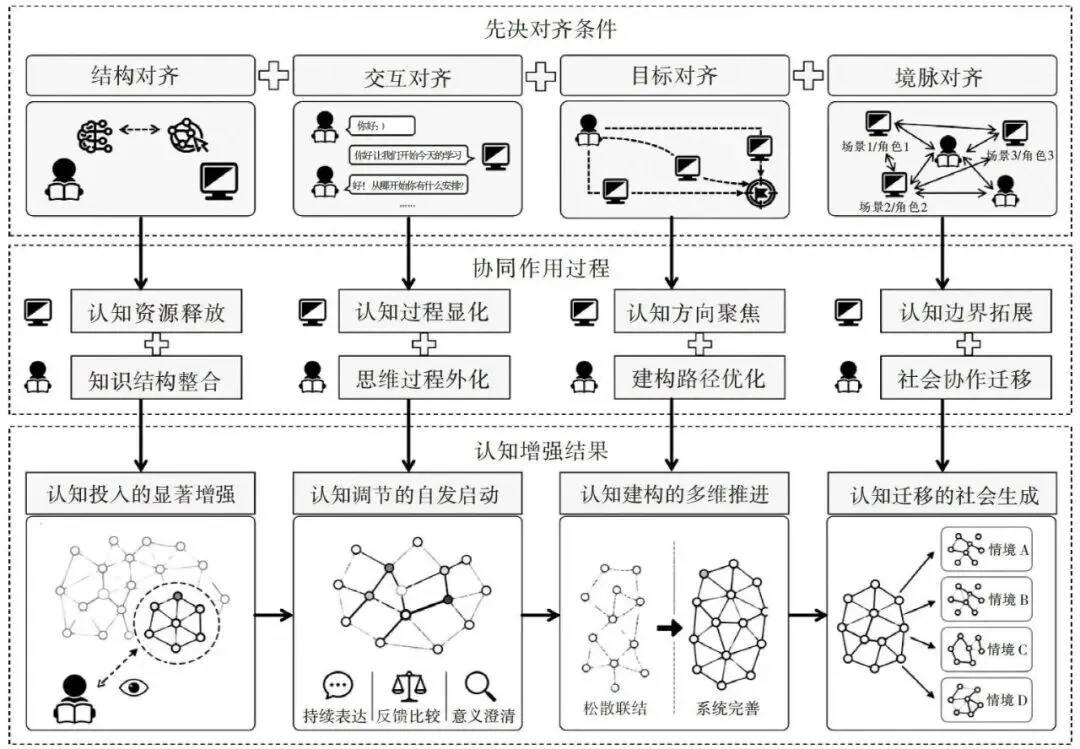
Figure 1: The “conditions–processes–results” aspects of cognitive resonance
1. Prerequisites for alignment conditions
The prerequisite for cognitive resonance to occur is the alignment of various aspects. Based on the four core requirements for deep cognitive construction, technological systems must be aligned with the learner’s cognitive system in four aspects: First, structural alignment – that is, the way in which knowledge is organized in the technological system should match the existing schemas in the learner’s cognitive system, so that external information can be presented in a manner that aligns with the learner’s cognitive processing processes. Second, interactive alignment – that is, the way in which information is exchanged within the technological system should correspond to the learner’s cognitive expression habits, enabling continuous human-machine interaction through multimodal means. Third, goal alignment – that is, the functions of the technological system should be consistent with the learner’s cognitive development goals, so that the use of technology serves not only the completion of immediate tasks, but also promotes deeper understanding and long-term development (Wiener, 1960). Fourth, context alignment – that is, the scenarios, roles, and social relationships created by the technological system should match the real-world situations in which the learner operates, allowing learning activities to be integrated into a context that is closer to real practice. These four types of alignment constitute the prerequisites for cognitive resonance, and they determine whether external intelligent support can effectively enter the learner’s deeper cognitive processes.
The ability of generative artificial intelligence to meet the aforementioned prerequisites for alignment stems from four key technical characteristics. First, generative artificial intelligence relies on neural network architectures and distributed representation mechanisms, enabling multi-level mappings between language, knowledge, and logical relationships. Studies have shown that large language models exhibit certain similarities with the brain activity involved in human language processing. An increase in model size and training data volume also enhances the similarity between the model and brain activity (Gao et al., 2025; Ren et al., 2025). This mapping relationship provides a foundation for structural alignment. Second, generative artificial intelligence possesses multi-modal interaction capabilities; it can understand the learner’s intentions during multiple interactions, thereby reducing the barriers to expression and interaction for the learner (Li et al., 2024). This facilitates alignment in interactions. Third, generative artificial intelligence serves as an interface for human-machine negotiation through natural language dialogue. Learners can incorporate short-term task objectives and long-term development goals into the interaction process using prompts. The clarity and semantic specificity of these prompts affect the quality of the generated content and the degree of focus on the goals (Afshar et al., 2024; Jacobsen et al., 2025). This interaction regulation mechanism contributes to alignment in goals. Finally, generative artificial intelligence has the ability to simulate roles and coordinate agents, enabling the creation of diverse collaborative environments within task contexts. This supports alignment in context.
2. Process of synergistic interaction
The process of synergistic interaction serves as an intermediate step between the prerequisite alignment conditions and the outcomes of cognitive enhancement. As a form of continuous interaction between technology and humans, cognitive resonance relies on four main mechanisms of human-machine collaboration to provide procedural support for the development of deep cognition.
First, there is the “Machine: Release of Cognitive Resources – Person: Integration of Knowledge Structures” mechanism. Based on structural alignment, generative artificial intelligence transforms scattered information into a structured and interconnected format. This helps learners release their cognitive resources from the fragmented processing of information, thereby reducing their cognitive load when dealing with disordered information (Yu Shengquan et al., 2023). At the same time, by comparing and analyzing the similarities and differences between new and old concepts, learners can integrate or adapt the newly acquired information into their own cognitive structures.
Secondly, there is the mechanism of “Machine: the manifestation of cognitive processes; Human: the externalization of thought processes”. Based on interactive alignment, generative artificial intelligence facilitates continuous human-machine dialogue interactions, thereby gradually guiding learners to make their implicit cognitive structures explicit. In turn, learners externalize their thought processes through their responses, thereby clarifying and organizing their own cognitive structures.
Thirdly, the “Machine: Focus on Cognitive Direction – Person: Optimize Constructive Paths” mechanism. Based on the alignment of goals, generative artificial intelligence incorporates meta-cognitive support mechanisms, continuously reminding or reiterating the learning objectives and key points to the learners, thereby helping them focus on the direction of deep cognitive construction. With the support of meta-cognition, learners can identify and correct their deviations, enabling continuous reflection and optimization of their cognitive construction processes.
Fourthly, the “Machine: Expanding Cognitive Boundaries – Human: Transfer of Social Collaboration” mechanism. Based on the alignment of contexts and perspectives, generative artificial intelligence enables the expansion of complex cognitive domains that are beyond the scope of individual learners’ experiences. Through negotiation of diverse perspectives and collaborative problem-solving, learners can test and adapt their cognitive structures to different situations, thereby achieving the transfer of deep cognitive development outcomes.
3. Results of cognitive enhancement
The results of cognitive enhancement are the effects produced by cognitive resonance. This is manifested in the “1+1>2” effect that arises from the effective alignment and continuous coupling between external intelligent systems and the learner’s cognitive system. It involves four successive levels: First, a significant increase in cognitive effort; this means that learners can activate the internal cognitive structures related to external information in a shorter time, and they can engage effectively in cognitive activities that have a constructive nature. Second, spontaneous initiation of cognitive regulation; this means that learners actively identify their own cognitive biases during continuous expression, comparison, and clarification, thereby triggering adjustments to their cognitive structures. Third, multi-dimensional advancement of cognitive construction; this means that, under the guidance of metacognition, learners gradually focus on the essence of problems, and their existing cognitive structures move from being loosely connected to becoming more organized and complete. Fourth, social generation of cognitive transfer; this means that, after continuous construction, the learner’s cognitive structures become stable and accessible, and they can be tested and expanded in various situations and through various interactions.
IV. How to Understand Resonance: The Mechanism by Which GenAI Facilitates Deep Cognitive Construction
To transform the deep cognitive construction supported by GenAI into a comprehensible and actionable teaching and learning process, it is necessary to return to the context of teaching. This involves analyzing how generative artificial intelligence facilitates learners’ ability to establish connections between knowledge, construct expressions, reflect and monitor, and engage in social collaboration within specific learning tasks. Accordingly, this paper begins with the four core requirements of deep cognitive construction, and further explains how GenAI achieves cognitive resonance through probability reconfiguration, dialogue interactions, content hallucinations, and various roles, as shown in Figure 2.
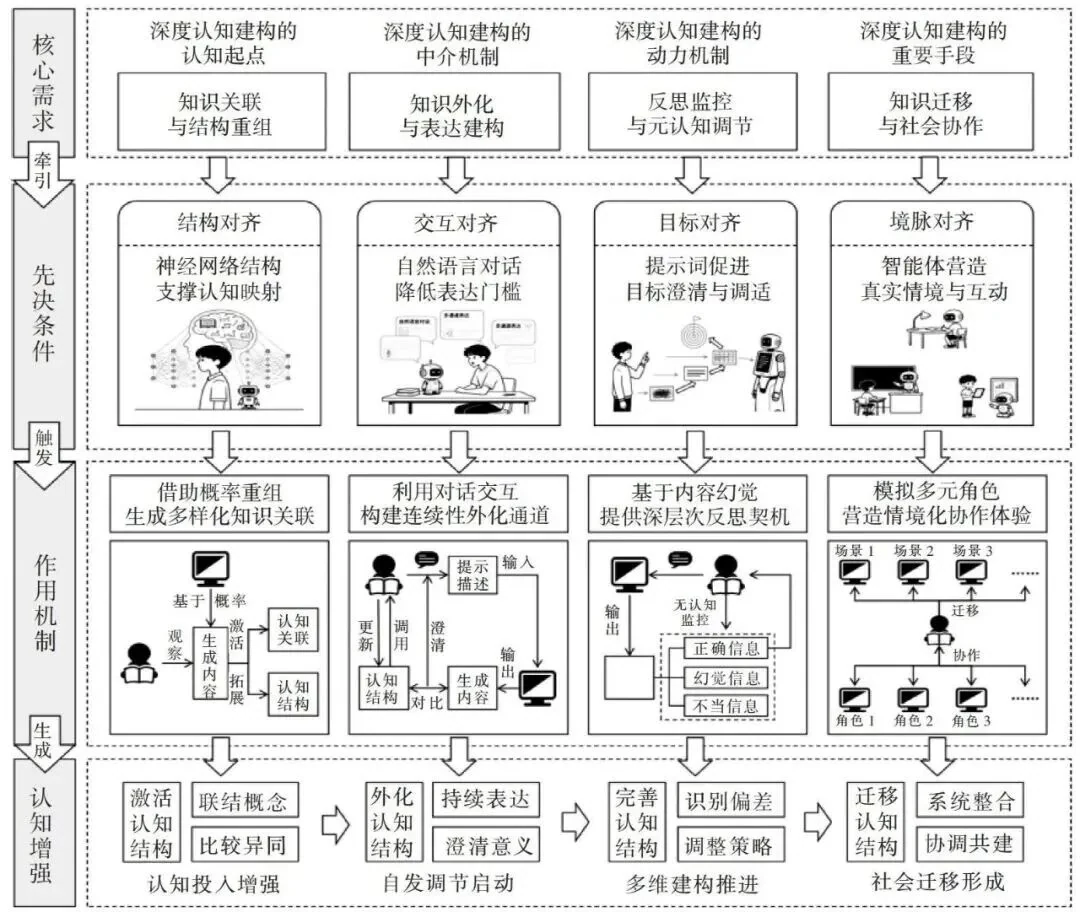
Figure 2: The mechanisms by which GenAI supports deep cognitive construction
(1) Utilize probability-based reconfiguration to generate diverse knowledge connections
The probabilistic reconfiguration capabilities of generative artificial intelligence provide the conditions for activating the learners’ existing schemas and enhancing cognitive engagement. On one hand, the model learns the patterns and structures of human knowledge representation by analyzing large-scale texts, thereby enabling the generated content to be more readable in form and to fit well with the learners’ existing cognitive structures. On the other hand, the model dynamically predicts subsequent words based on conditional probability distributions, allowing the same knowledge entity to be interpreted from different perspectives and through different reasoning paths. This results in the generated content being somewhat novel in nature, thereby introducing moderate differences and stimuli to the existing cognitive structures. Together, these effects enable learners to experience cognitive tension within a comprehensible framework, thereby shifting their cognitive resources from memorization-based processing to analysis-based processing, and thus improving the level of cognitive engagement. Under the effect of cognitive activation, learners experience enhanced cognition in two aspects: first, concept connection, that is, linking the content generated by GenAI with their own cognitive structures; second, comparison of similarities and differences, that is, identifying the similarities and differences between new and old knowledge, thereby deepening their understanding of the relationships between knowledge elements.
The above-mentioned cognitive activation mechanisms manifest in specific learning contexts as teachers using the probabilistic recombination properties to generate diverse forms of knowledge representations and interpretation methods. This enables learners to establish connections between new and old knowledge, identify similarities and differences, and develop a more structured understanding. Taking mathematics learning as an example, teachers use GenAI to generate propositions that describe geometric figures in ways different from those presented in textbooks. Since the model has learned the stylistic features of mathematical texts, the generated content appears “like propositions” in form, allowing it to be connected with learners’ existing knowledge of theorem expressions. At the same time, the probabilistic recombination properties of the model also introduce uncertainties regarding the correctness of these propositions, thereby creating cognitive tension. When faced with such unfamiliar problems, learners must invest their cognitive resources in meaningful processing: they need to analyze whether these problems can be derived from known theorems, whether there are counter-examples, and how they compare with textbook descriptions. In this process, learners no longer merely memorize the content of textbooks; instead, through the connection of concepts and comparison of similarities and differences, they gradually develop general rules for constructing propositions. This helps them develop the ability to apply strategies to solve unfamiliar problems required in new college entrance exams and high school entrance exams.
(II) Utilize dialogue interactions to create a continuous external communication channel
The conversational capabilities of generative artificial intelligence provide the conditions for externalizing the learners’ implicit cognition and facilitating cognitive regulation. On one hand, the models support multi-modal interactions such as text, voice, and images, thereby reducing the cognitive barriers for learners and enabling the externalization of implicit cognition into observable and manipulable forms. On the other hand, the models can continuously understand the input provided by learners in the context and provide immediate feedback, allowing the externalization of cognition to occur over multiple rounds rather than just once. Together, these factors enable learners to gradually transform their vague implicit cognition into clear external expressions within a convenient and sustainable conversational process, thus providing an objective medium for cognitive regulation. Under the influence of this externalization of cognition, learners can experience cognitive enhancement in two ways: first, through continuous expression, where they continuously supplement, refine, and improve their own expressions based on the responses from the GenAI, thereby actively participating in the process of deep cognitive construction; second, through the clarification of meaning, where they identify and correct any omissions, contradictions, or ambiguities in their original expressions by comparing them with the model’s feedback.
In specific learning contexts, this mechanism of externalizing cognition manifests as teachers using the characteristics of dialogue interactions to create channels for continuous expression and feedback. This enables learners to transform their implicit understanding into external representations, thereby correcting and clarifying their own cognition. Taking history learning as an example, teachers guide learners to collaborate with GenAI in generating images depicting the urban life of a certain historical period. First, learners need to organize prompts related to aspects such as architectural styles, people’s activities, and clothing styles of that historical period, thereby converting their internal historical knowledge into clear external expressions and achieving an initial externalization of cognition. After the model generates the image based on these prompts, the externalized product becomes a dual-modal information system that combines text and images. At this point, learners must compare the image with their original intentions, identify any discrepancies between the image and their own descriptions, or areas where their cognition is unclear, and then continuously refine the generated result by adjusting the prompts. This iterative process allows the learners’ implicit cognition to become more visible through continuous expression, and their ability to analyze historical facts to be improved. Meanwhile, teachers can also review the interaction process between humans and the AI, identify the points where learners make cognitive errors or have unclear expressions, and then carry out targeted instructional interventions.
(3) Based on content illusions, providing opportunities for deep reflection
The hallucination property of generative artificial intelligence provides conditions for enhancing learners’ metacognitive monitoring and promoting cognitive construction. On one hand, models are influenced by factors such as sampling mechanisms, biases in training data, and errors in understanding context, which may result in the generation of fictional, one-sided, or inaccurate information. This leads to inherent uncertainty in the model’s output, and learners cannot simply accept the generated content as it is. On the other hand, this uncertainty breaks the traditional one-way model of authoritative, definitive answers in teaching, transforming closed and fixed knowledge content into open and discussable topics, thereby giving learners room to question. Together, these factors enable learners to shift from passive acceptance to active scrutiny when faced with seemingly reasonable but potentially unreliable content, and to continuously improve their cognitive structures through metacognitive monitoring. Under the influence of metacognition, learners can experience an enhancement in their cognition in two ways: first, by identifying biases—that is, actively judging the validity and reliability of the generated content, and identifying factual errors, logical flaws, and value biases within their own knowledge structure; second, by adjusting their strategies, i.e., correcting their cognitive approaches based on the identified issues, thereby continuously improving their cognitive construction.
The aforementioned metacognitive monitoring mechanisms manifest in specific learning contexts when teachers treat the uncertain content generated by GenAI as something that can be questioned and verified. This enables learners to develop critical thinking and metacognitive monitoring skills through interactions with such uncertain information. Taking writing instruction as an example, teachers can design a two-stage task that involves the use of GenAI to assist with writing: In the first stage, learners complete a preliminary draft of their writing independently, then conduct self-assessment using a “writing self-assessment card”. Afterward, they input both the draft and their self-assessment results into GenAI, which provides suggestions for improvement. In the second stage, learners revise their texts based on the suggestions from GenAI, and record which suggestions are adopted, which are rejected, and the reasons behind those decisions. They also identify key moments of “human-machine interaction” during the process, such as how certain prompts were used to improve the quality of the writing, or how inappropriate examples provided by the model were identified and corrected. Through this “generation–analysis–correction” cycle, learners can monitor their writing process comprehensively, evaluating the quality of the output produced by the model while improving their own writing. This allows the opportunities for reflection arising from content illusions to be transformed into actual cognitive activities.
(4) Simulate various roles to create a contextual collaborative experience
The collaborative nature of multi-agent systems in generative artificial intelligence provides conditions for promoting knowledge transfer among learners and developing social collaboration skills. On one hand, multi-agent systems can configure various models with different functions within the same task context, enabling a division of labor based on diverse perspectives. This allows learners to overcome the limitations of a single cognitive processing approach through the comparison and integration of different viewpoints. On the other hand, multi-agent systems can organize complementary roles to work together under unified task rules, creating a social-like collaborative environment. As a result, learners can engage in social cognitive processes such as information coordination, role coordination, and responsibility allocation during complex tasks. Together, these effects enable learners to continuously test, refine, and reconstruct their cognitive structures through the interaction of diverse perspectives and roles. This promotes cognitive development from an individual level to a social level. Under the collaborative action of multiple roles, learners can experience enhanced cognition in two aspects: first, system integration, which involves filtering, linking, and integrating information from various agent outputs, thereby reconstructing one’s own analytical framework through comparison; second, coordinated cooperation, which involves understanding the functions and output mechanisms of each role, and effectively integrating the useful outputs of all roles to develop organizational skills and a sense of cooperation during the process of completing tasks together.
The aforementioned social construction mechanisms manifest in specific learning contexts as teachers utilizing multiple agents to create heterogeneous perspectives and roles, thereby enabling learners to integrate, transfer, and expand the outcomes of their existing knowledge in social interactions. For example, in the teaching of “Multidimensional Interpretations of the Impact of Globalization” in high school politics, teachers can design tasks that require learners to engage in discussions with agents from different perspectives—such as economic, cultural, and ecological perspectives—on whether globalization is more beneficial than detrimental. Learners need to identify the logical starting points and value considerations behind each argument, and then reconstruct their analytical frameworks to produce more comprehensive and balanced arguments. Another example is in the “Design of Green Teaching Buildings” project: teachers can assign learners roles of expert agents responsible for material retrieval, energy consumption simulation, and visual representation. As project leaders, learners must understand the functions and logic of these agents, use the information appropriately, and gradually improve their design plans. During this process, learners bring together the cognitive materials that have been reorganized through probability, the explicit expressions of cognition that result from dialogue interactions, and the reflective adjustments triggered by content illusions. These elements are then tested and refined in new task contexts and collaborative relationships, allowing the outcomes of individual knowledge construction to be expanded and solidified within social interactions, thereby achieving cognitive advancement in an open and dynamic collaborative environment.
V. Moving towards cognitive resonance: Teaching design principles that leverage GenAI to facilitate deep cognitive construction
To achieve a state of cognitive resonance in teaching practice, it is necessary to focus on the learners’ needs for deep cognitive construction. Through effective teaching design, problem situations, dialogue processes, assessment tasks, and collaborative relationships can be reconfigured, thereby transforming the capabilities of GenAI into tools that can be effectively utilized by learners for deep cognitive construction. Therefore, this paper proposes four teaching design principles aimed at achieving cognitive resonance, in order to provide a theoretical framework for further practical exploration.
(1) Situational design guided by multi-source relationships
Situational design has the core functions of activating existing experiences, integrating cognitive materials, and expanding the scope of problems. Based on its probabilistic recombination properties, GenAI can generate various probabilistic representations related to the same theme, providing a variety of heterogeneous and interconnected cognitive materials for the creation of situations. Therefore, in the process of creating situations, instructional design should follow the principle of multiple, interconnected sources. By organizing diverse materials and presenting them in a meaningful way, learners can be guided to establish connections between knowledge elements and reorganize their cognitive structures.
Based on this principle, instructional design can be carried out in three ways. First, create problem scenarios that integrate multiple sources of information. Teachers can focus on a common core theme and use GenAI to generate materials with different perspectives, conditions, and representations. This allows learners to encounter not just a single conclusion, but a set of interconnected elements that create cognitive tension, thereby breaking the linear approach to knowledge input and activating learners’ existing schemas more fully. Second, design learning tasks that involve the reorganization of related elements. Based on the created scenarios, teachers can design tasks that involve comparing similarities and differences, as well as matching relationships between various materials. This helps learners identify connections and differences among the materials, and thus build a more systematic cognitive structure through these connections and choices. Third, clarify the relationships between the various sources of information. To avoid a fragmented presentation of information that increases the cognitive load on learners, teachers can also guide GenAI to clearly show the logical connections between different materials, enabling learners to better understand the organization of the knowledge network (Zeng Yi et al., 2026). In this way, the scenarios in teaching become not just static backgrounds, but important starting points for promoting the connection and reorganization of knowledge.
(II) Dialogue design with an emphasis on externalizing the process
Dialogue design serves the functions of promoting the development of thinking, clarifying meaning, and facilitating the expression of knowledge. Based on the characteristics of dialogue interactions, GenAI can continuously respond to the learner’s statements during multiple rounds of interaction. By using questions, additional information, and feedback, it helps the learner gradually reveal their underlying thoughts. Therefore, in the process of dialogue organization, instructional design should follow the principle of externalizing the process; the human-machine dialogue should be transformed from a tool for directly obtaining answers into an interactive framework that promotes the construction of expressions.
Based on this principle, teaching design can be carried out in three aspects. First, design conversation starting points that effectively trigger expression. Teachers can use open-ended questions and staged tasks that ask students to articulate their reasoning (Zhong Baichang et al., 2025) to guide learners to first present their own views and reasons, and to externalize their initial understanding before interacting with GenAI, thereby preserving the learner’s room for active thinking and avoiding leaving the problem entirely to the model from the beginning. Second, design a conversation chain that promotes meaning construction. Based on the initial expressions, teachers can further design progressive question chains to guide GenAI to ask follow-up questions, challenge, or refute the learner’s views, enabling the learner to fully engage in thinking activities during the response process. When necessary, role-setting prompts can be used to have the model play multiple roles such as questioner, challenger, and refuter, thereby promoting deeper understanding from diverse perspectives. Third, pay attention to the recording and review of the conversation process. Deep cognitive construction occurs not only during the interaction but also in the re-examination of the thinking process. Therefore, teachers can guide learners to retain key interaction fragments such as prompts, human-machine conversation records, and traces of view revisions, so that they can review how their cognitive structure evolves and at which points errors occur; at the same time, these processual materials also help teachers more accurately identify the learner’s cognitive mistakes and provide targeted support (Wang Shixiao et al., 2025). In this way, the teaching conversation becomes not just a one-way question-and-answer interaction, but an important way to facilitate the externalization of knowledge and the construction of expression.
(III) Task design with a critical and evaluative approach
Task design not only serves as a foundation for organizing learning activities, but also plays a crucial role in highlighting cognitive conflicts, promoting reflection and monitoring, and guiding strategic adjustments. Due to the characteristic of content illusion, the results generated by GenAI are somewhat uncertain and open to debate. While this technical limitation highlights the technical boundaries of the model, it also provides valuable opportunities for learners to engage in critical analysis, reflection, and cognitive optimization. Therefore, in the process of task design, instructional planning should follow a critical and evaluative approach; the process of evaluating the generated content should be integrated into the learning tasks themselves, allowing learners to develop meta-cognitive abilities through critical analysis.
Based on this principle, instructional design can be carried out in three aspects. First, provide cognitive objects that can be tested. Teachers can instruct GenAI to generate multiple versions of answers, explanations from different perspectives, argumentation processes that may contain potential flaws, or responses with different reasoning paths on the same issue. This helps to stimulate learners’ critical thinking, and breaks the passive acceptance and outright approval of the intelligent outputs (Reinke et al., 2025). Second, organize testing activities properly. In practice, teachers can require learners to analyze each version of the model’s output. If necessary, GenAI can be used to explain the reasoning process step by step and provide additional sources of support, enabling learners to conduct more detailed checks (Xia Qi et al., 2025). Third, encourage the process of correction through testing. The value of critical testing lies in prompting learners to return to their own thinking processes. Therefore, teachers can ask learners to record the reasons for accepting or rejecting certain answers, reflect on why they accepted or rejected them, and then assess whether their existing cognitive structures need adjustment. In this way, the task design shifts from simply accepting answers to testing and correcting them. As a result, learners develop a sense of monitoring and regulation over their own understanding process through continuous analysis and correction.
(4) Role design for collaborative migration
Character design has the important function of bringing together diverse perspectives, establishing collaborative relationships, and facilitating the transfer of knowledge. Based on the collaborative nature of multiple characters, GenAI can simulate agents with different positions, functions, and task orientations, thereby providing new possibilities for collaborative learning in education (Peng Jiaying et al., 2026). Therefore, in the context of character collaboration, instructional design should follow the principles of collaborative knowledge transfer. Through the establishment of character roles, collaborative organization, and contextual transfer, learners can achieve the transfer of knowledge and the expansion of their cognitive abilities in complex situations.
Based on this principle, instructional design can be carried out in three aspects. First, a structured role system should be established in advance. Teachers can assign different types of roles such as domain experts, peer learners, stakeholders, and assessmenters to GenAI according to the needs of problem-solving (Liu Yonggui et al., 2025). By referring to theories such as the zone of proximal development, the knowledge boundaries, responsibilities, and support methods of each role are defined in advance, ensuring that the various roles remain relatively stable in terms of knowledge depth and value perspectives, thereby avoiding imbalances where intelligent support is either excessive or insufficient. Second, collaborative tasks should be organized based on the differences among roles. Teachers need to design interactive tasks between roles and learners, as well as among different roles, leveraging the differences in perspectives and complementary knowledge to create real cognitive challenges. This enables learners to integrate information, coordinate positions, and make choices during interactions with various roles, allowing their existing cognitive structures to be tested, iterated, and corrected within a complex problem network. Third, the outcomes of collaboration should be applied to real-world situations. The ultimate goal of collaborative learning is to transfer the cognitive outcomes generated in specific tasks to new problem scenarios and real tasks for practical application. To achieve this, teachers can design transfer tasks using similar collaborative models in different contexts and provide necessary support for learners. During this process, the overall scaffolding support strength should be maintained within the learner’s zone of proximal development, so that the learner can feel both the support and challenge from more knowledgeable others in interaction (Tran et al., 2025), while also retaining the space for active construction due to not excessive scaffolding support.
6. Conclusion
In the context of the era where digital and intelligent technologies are being used to facilitate educational transformation, when dealing with complex and uncertain cognitive tasks, learners not only need to master subject knowledge systematically, but also need to integrate information from various sources, develop cross-disciplinary thinking, and enhance their ability to apply knowledge in different contexts. The traditional teaching approach centered on knowledge transmission can no longer meet these educational needs. Therefore, this paper starts from the four core requirements of deep cognitive construction, introduces the concept of “cognitive resonance”, and explains how generative artificial intelligence can provide a foundation for structural alignment, interactive alignment, goal alignment, and contextual alignment. It also analyzes four mechanisms of action: probability reconfiguration, interactive dialogue, content illusion, and multiple roles. Based on these, four practical teaching principles are proposed, thereby addressing the core question of “how generative artificial intelligence can support deep cognitive construction”.
Looking back at the three questions raised at the beginning, this paper reaches the following conclusions: First, in terms of the cognitive demands related to deep cognitive construction, these do not merely involve the acquisition of knowledge and superficial understanding. Instead, they encompass four interrelated core aspects: the connection and reorganization of knowledge, the externalization and expression of knowledge, reflection and metacognitive regulation, and knowledge transfer and social collaboration. Second, regarding the mechanism by which generative artificial intelligence operates, GenAI does not inherently facilitate deep cognitive construction. It requires conditions such as structural alignment, interactive alignment, goal alignment, and contextual alignment. Through mechanisms like probabilistic recombination, dialogue interaction, content illusion, and multiple roles, GenAI can interact with learners and help them move from mere input to active regulation, from construction to transfer. Third, in terms of teaching design, teachers need to transform the technical capabilities offered by GenAI into cognitive support that learners can utilize. Through systematic design in areas such as context creation, dialogue organization, task design, and role coordination, GenAI can shift from being a tool for generating answers to serving as a constructive support for the development of thinking. This paper is primarily a theoretical exploration. As for the conditions under which cognitive resonance occurs, its scope, and its manifestations in different academic contexts, further empirical research is needed in specific teaching scenarios. Future research should focus on different task types, educational stages, and ways of human-machine collaboration, in order to deepen empirical studies on the mechanisms by which GenAI supports deep cognitive construction and on the ways in which it can be applied in teaching.
In general, the key factor that enables GenAI to support deep cognitive construction is not simply whether to use it or not, but rather under what cognitive structures and interaction mechanisms it can be utilized effectively. As Mollick (2025) said, “Generative AI does not directly damage the brain; what is truly at risk are people’s thinking habits and cognitive abilities.” This reminds us that the core mission of education is to transform GenAI from a tool that may lead to “cognitive debt” into a partner that facilitates the expression, deepening, and transfer of thought, through carefully designed task structures and human-machine collaboration. Only in this way can we truly achieve deep learning and mental development for the future, through the synergy between intelligent technology and human cognition.
Source: “Journal of Distance Education”
Issue No. 5, 2026
Original link: https://aiedchair.bnu.edu.cn/news-cognitive-resonance-genai-2026-en/